
The Curtis Jeré Story: How Two Guys Invaded Midcentury Modern Homes Across the Country

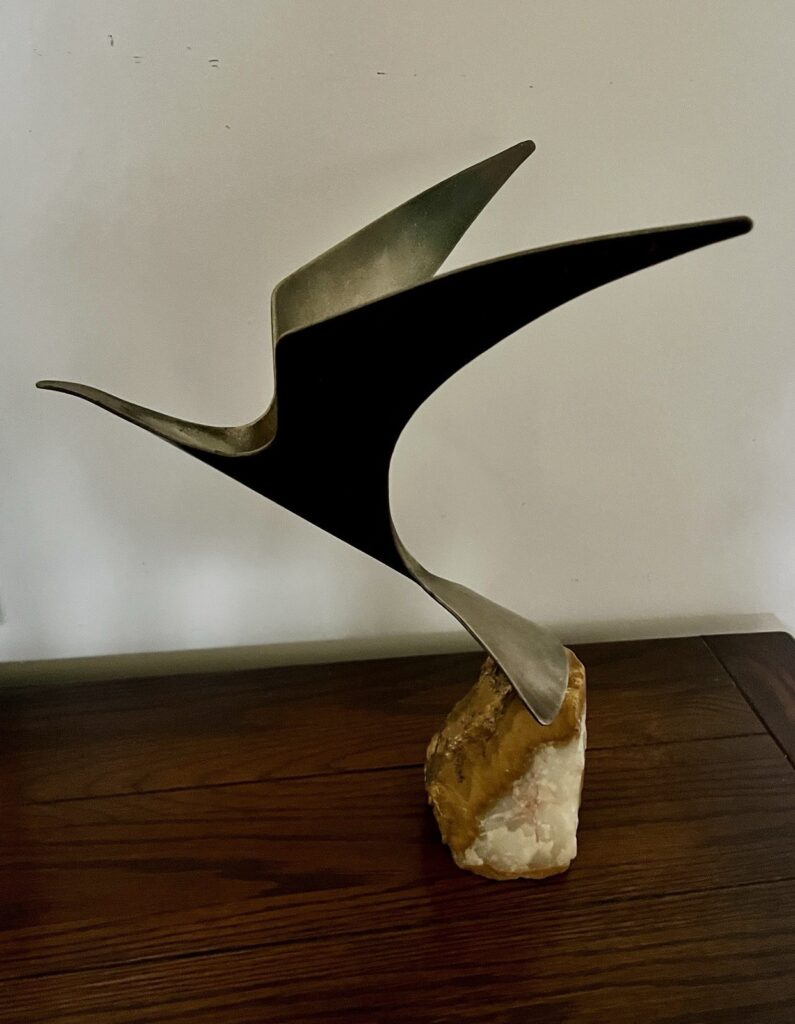
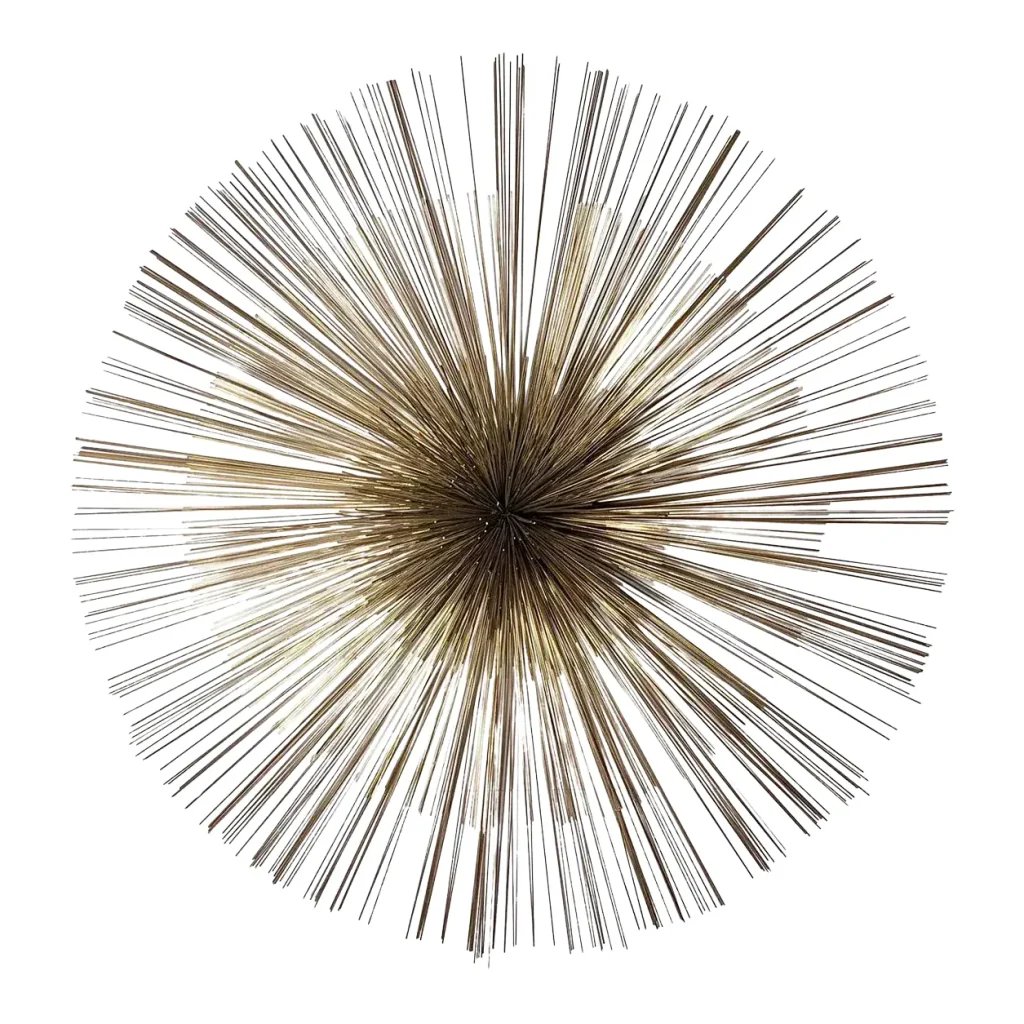
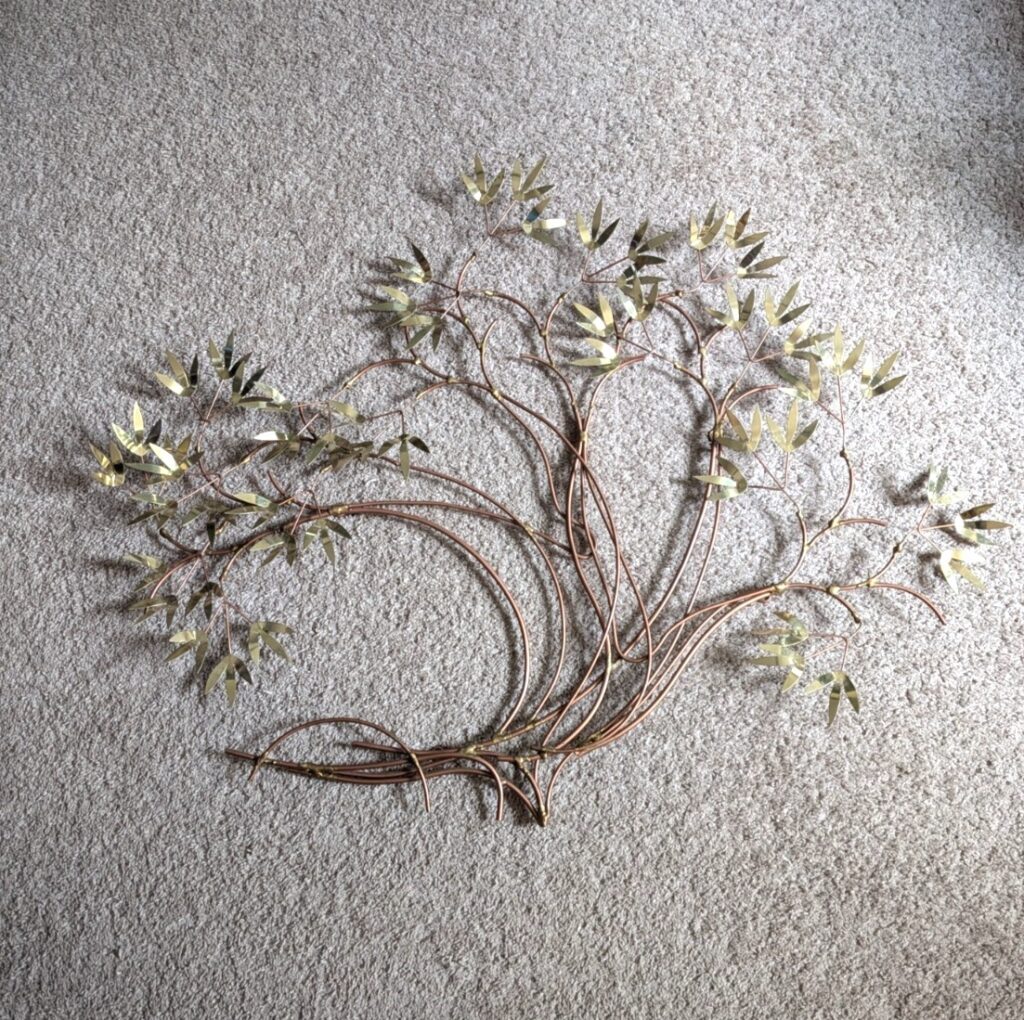
Walk through enough midcentury modern homes in Palm Springs, and you’ll notice something interesting. Somewhere between the bold wallpapers and cool furniture, there’s almost always a piece of sculptural brass or chrome doing its thing — a burst of raindrops, a school of fish, a tangle of branches, a sunburst wall sculpture. Nine times out of ten, flip it over and you’ll find a small signature: C. Jeré.
If you’ve ever wondered who — or what — “Curtis Jeré” actually is, you’re not alone. It sounds like the name of one of America’s most prolific and mysterious artists.
The real story is even better.
Meet the Guys Behind the Name
Curtis Jeré isn’t a person. It’s a mashup — a shared pseudonym cooked up by two brothers-in-law, Curtis “Kurt” Freiler and Jerry Fels, who blended pieces of their own names into one artful signature (pronounced with a little flourish: jhayr-EH).
Curtis Freiler was a German immigrant who’d fled Nazi Germany in 1938 and brought serious manufacturing chops to the table. Jerry Fels was the creative one, a New York-based artist with an eye for form and materials. The two had already spent years running a costume jewelry business under the Renoir and Matisse labels before they decided to swing for something bigger.
The Business They Built
In 1963 or 1964 (accounts differ slightly), they founded Artisan House in Los Angeles — Curtis ran production, Jerry ran design. Together, they set out to do something almost radical for the era: make “gallery-quality art for the masses.” Not one-off pieces for wealthy collectors, but bold, sculptural, handcrafted art that regular folks could afford and hang in their homes. It worked. At its peak, Artisan House employed around 300 artisans, many of them minorities or people with disabilities, who hand-sheared, torch-cut, welded, and finished brass, copper, steel, bronze, and aluminum into shapes nobody else was making at the time.
Artisan House or Curtis Jeré was a genuine manufacturing business with national distribution deals with major department stores and catalog houses. Pieces were distributed by Raymor, a cutting-edge design studio out of New York City, and sold through upscale retailers like Gump’s in San Francisco, Macy’s in New York, and Marshal Fields in Chicago. That combination — real craftsmanship plus a powerful retail distribution network— is what let a couple of guys in an LA workshop end up on walls from coast to coast.
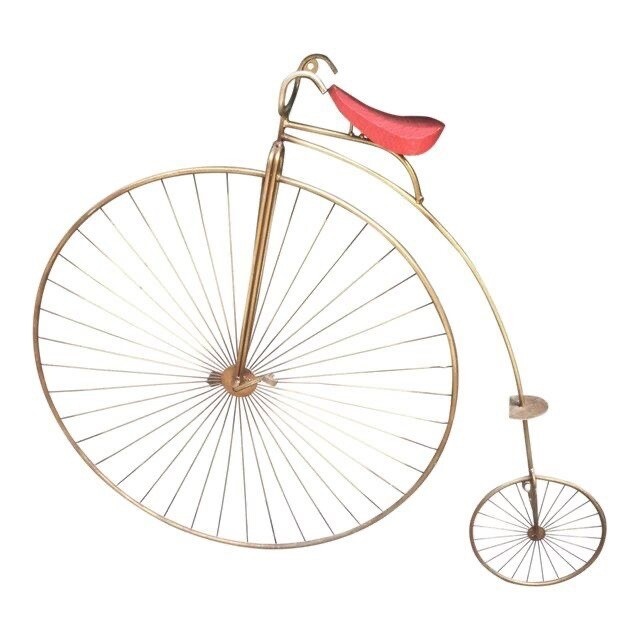
Their catalog was enormous and endlessly inventive. Nobody has nailed down one official number of their unique designs, but over 60 years of production, regional variations, and reissues easily put that number in the thousands. Just scrolling through current eBay listings for “signed Curtis Jere” will give you a sense of their range.
Here’s how the major categories break down:
- Wall art
- Mirrors
- Desktop sculpture
- Free-standing sculpture
- Outdoor sculpture
- Lights and lamps
Recognizing that most midcentury modern homes were small, most Jere pieces were designed to be wall-mounted art for indoor spaces — living rooms, entryways, dining rooms — which is a big part of why their work pairs so naturally with the open, gallery-like walls of midcentury architecture.
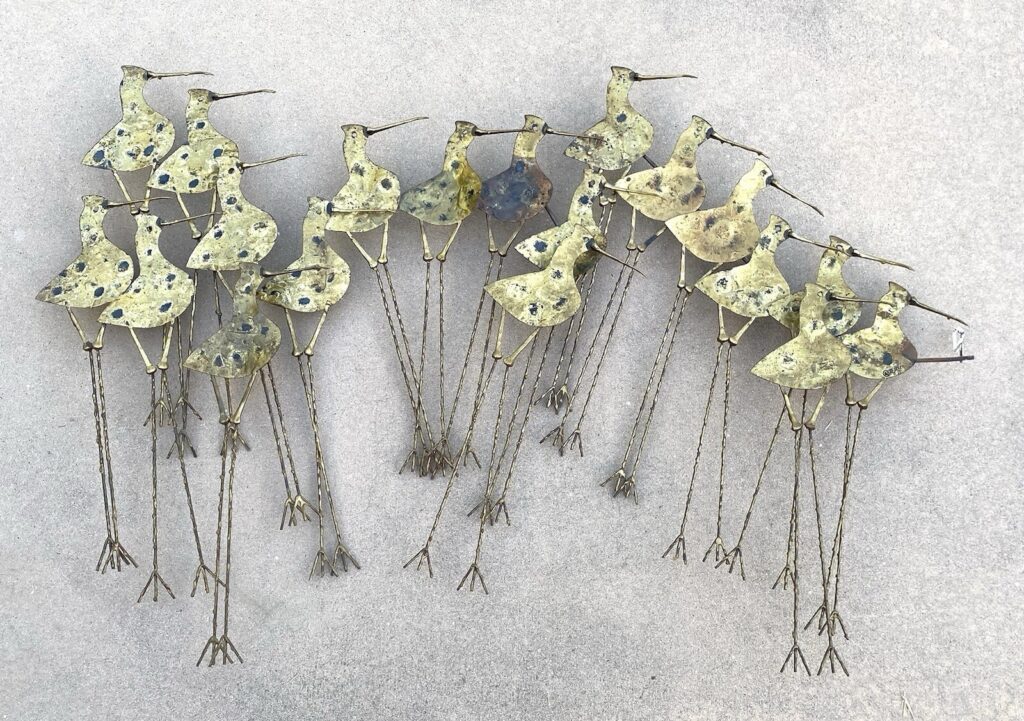
These categories often featured the following subject matter.
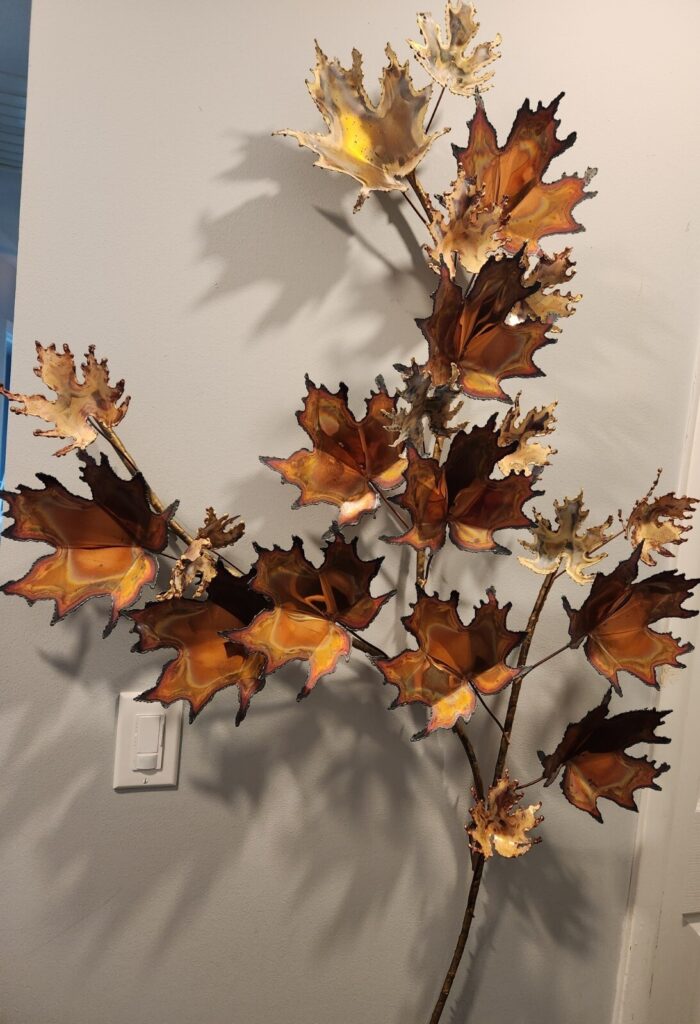
- Nature & botanicals — raindrop trees, evergreen/pine trees, maple and autumn leaves, trumpet vine florals, grasses, dandelions, sea urchins
- Birds — “Birds in Flight” (probably the single most popular Jeré subject), seagulls, herons, cranes, flamingos, eagles, geese
- Water & nautical scenes — sailboats, yacht races, harbor and fishing wharf scenes, ships, ocean waves, duck ponds, dolphins
- Land animals — owls, rearing horses, gazelles, roosters, cats, stags and deer, abstract horse forms on marble bases
- Architecture & cityscapes — train stations, village scenes, French chateaus, “Parisian house” pieces, bandstands, circus Ferris wheels
- Pure abstraction & Brutalism — sunbursts, geometric wall sculptures, kinetic wave and ribbon forms, cubist compositions
- Figures & pop-culture whimsy — a boy scaling a picket fence, a “Martinis and Manhattans” bar scene, street vendor carts, even an RCA “Nipper” dog
- Functional pieces — table and floor lamps, chandeliers, mirrors (some paired with sconces), sculptural wall clocks, bookends, tabletop pieces on marble or onyx bases
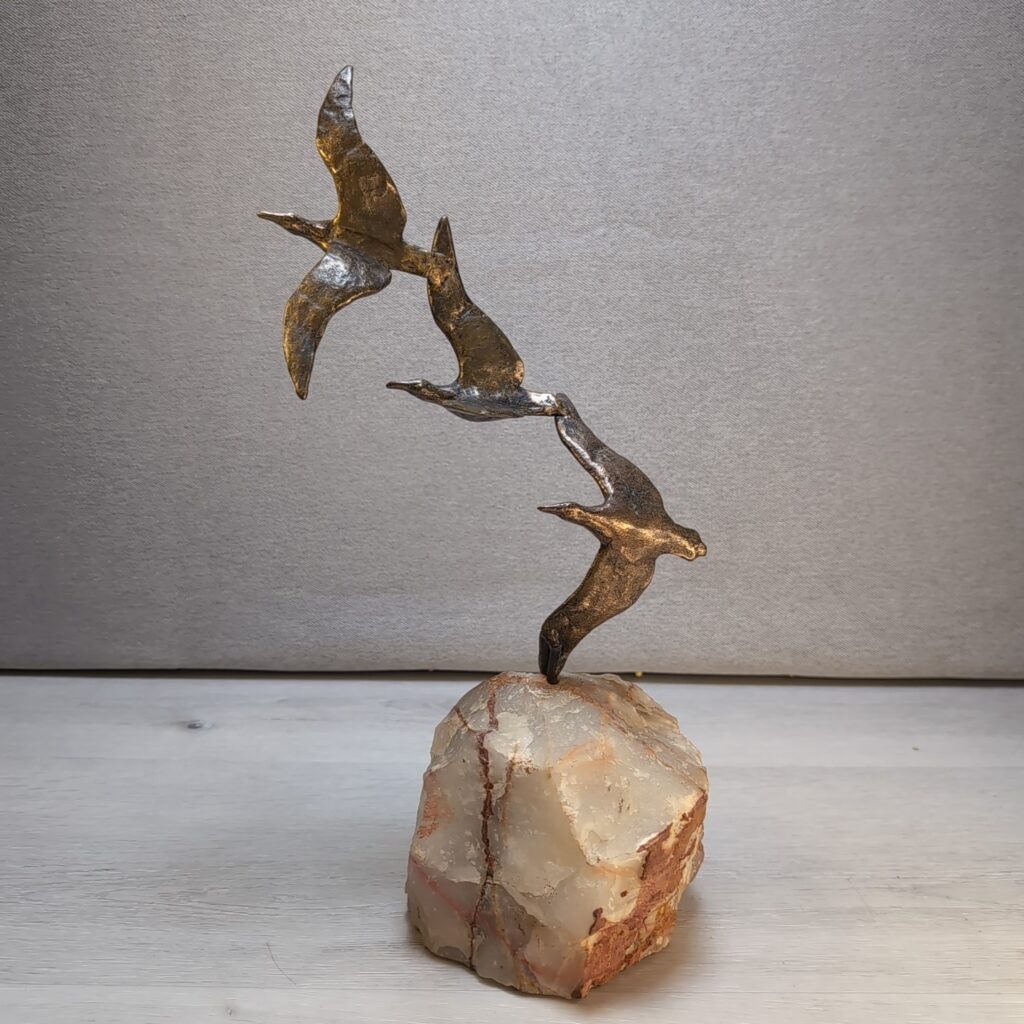
What They Cost Then vs. Now
Here’s where the story gets fun, and a little frustrating for collectors: we don’t have access to a surviving price list from Artisan House from the 1960s–70s. However, I remember when I was a boy, helping my mother pick out a beautiful sailboat scene by C. Jere for my father’s birthday. This was around 1970, and I believe the price was around $50, which would be roughly $430 in 2026 dollars. It was a lot of money then, but it was still affordable. My father loved it.
Fast forward to today, and the Jere pieces have held their value and in some cases appreciated nicely. Depending on size, rarity, condition, and design, vintage Curtis Jeré pieces now typically sell for:
- $300–$1,500 for smaller or more common wall or table mounted pieces
- $1,200–$2,500 for larger, more elaborate designs (big sunbursts, sailboat scenes, chandeliers)
- $2,000–$12,000+ for rare, monumental, or particularly striking examples
- Auction records have climbed as high as $19,000 for standout pieces
Where to Buy
In my opinion, eBay and Facebook Marketplace are still the best places to buy Curtis Jere pieces without having to pay gallery prices. We purchased a starburst wall sculpture to go over our fireplace for about $150 on eBay, and a large 7-foot-tall floor-mounted sculpture for our garden for a little over $1,000. Both pieces would have easily cost 3x as much if bought from a gallery or on a site like 1stDibs.
What Happened to the Business They Built
Freiler and Fels sold Artisan House in 1972, just eight years after founding it — but the company never actually stopped. It’s changed hands multiple times since and still produces sculptures today, including reissues of some original mid-century designs (there’s even been a partnership with designer Jonathan Adler).
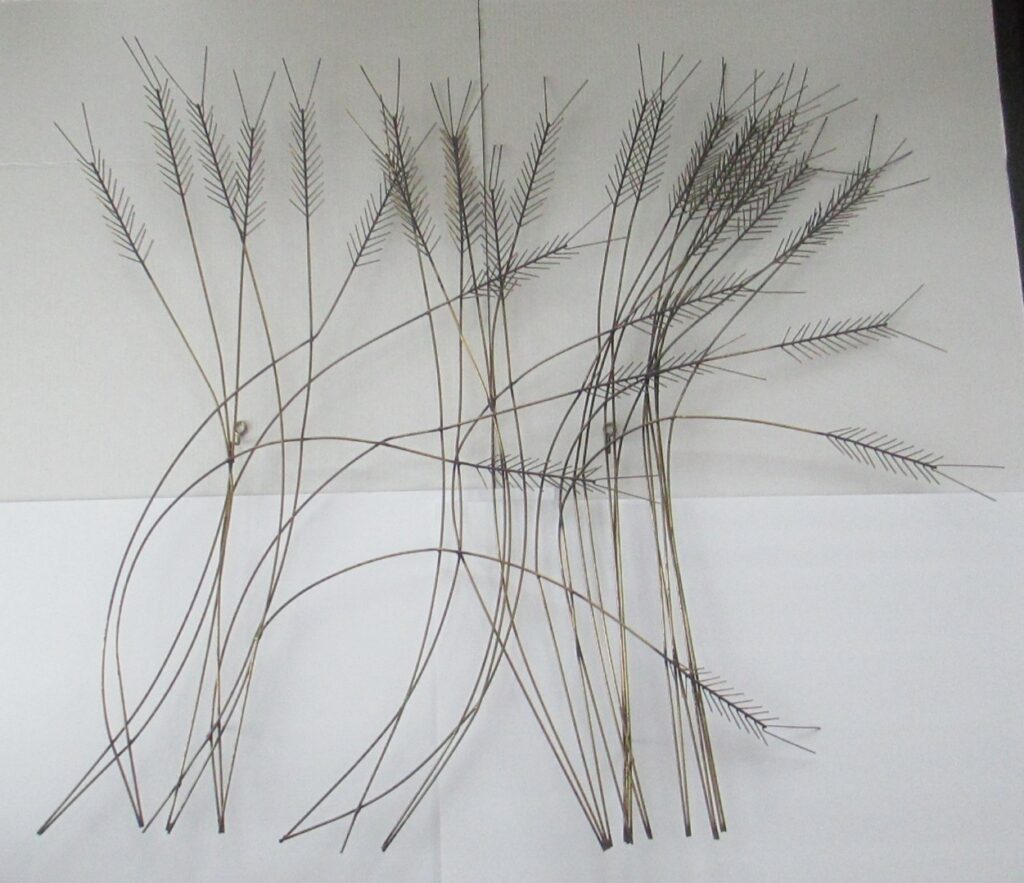
Production moved overseas to China in 2003; so if you’re buying new, expect to pay roughly $500 to $1,500+ for a contemporary piece.
If you are a collector, when and where a piece was made matters: an original 1960s–70s, California-made piece with genuine age and patina is generally much more valuable than a newer reissue piece
Mass-Produced Art, Now Highly Collectible
Here’s what confuses people about Curtis Jeré: these pieces were never meant to be rare. They were factory-made, department-store decor, designed to be affordable enough for a middle-class living room. So why are collectors now paying thousands of dollars for something that was, by design, never scarce?
The answer is baked into the philosophy that gave rise to midcentury modern design in the first place.
“Good design for everyone” was the whole point. MCM as a movement — furniture, architecture, decor — was a reaction against the idea that quality design had to be exclusive. Designers like Charles and Ray Eames, George Nelson, and yes, Freiler and Fels, all shared a genuinely democratic belief: that well-made, beautiful objects shouldn’t be reserved for people who could commission a custom piece or shop at a gallery. Artisan House’s own mission — “gallery-quality art for the masses” — is that exact philosophy in five words.
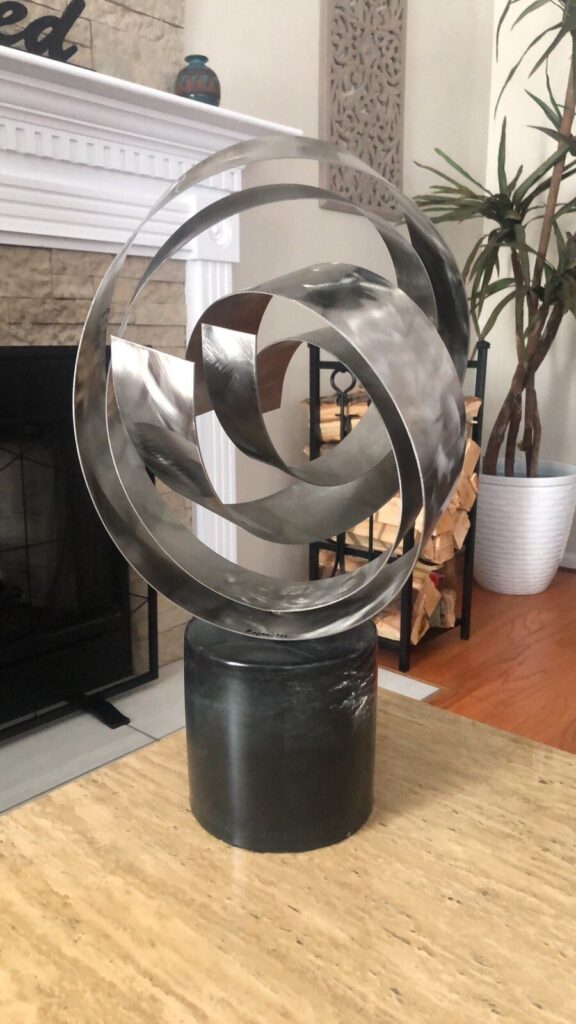
Mass production was a feature, not a compromise. It’s easy to assume “mass-produced” means “cheaply made,” but that’s not what was happening here. Freiler brought serious manufacturing know-how to the table. Production efficiency made the price accessible — it didn’t touch the materials or craftsmanship. It was the same trade-off MCM furniture makers were pulling off with molded plywood and bent metal.
They look expensive because, materially, they kind of are. A large brass or bronze sculpture has real heft and real material cost baked into it – which is why a Jeré piece can hang next a Harry Bertoia sculpture and hold its own.
They hit the sweet spot between modern and nostalgic. This might be the biggest driver of all. A Jeré sunburst or flock of flying birds is unmistakably a product of its era — that torch-cut, hand-finished, Brutalist-meets-organic look shouts late 1960s and ’70s. But the forms themselves read as contemporary in today’s homes. That’s the same trick the best MCM design pulls off: simultaneously “clearly vintage” and “doesn’t look dated” — a rare combination, and a big part of why MCM has never really gone out of style.
They’re still an affordable way to buy into that world. Well-known midcentury modern artists like Harry Bertoia, Alexander Calder, George Rickey were exploring abstraction, organic form, and kinetic movement in metal at the same time as Jere. Calder sculptures now average well over a million dollars at auction, with major pieces reaching into the tens of millions. Rickey’s kinetic works now sell for tens of thousands, with top pieces over $450,000. Even Bertoia’s smaller “Bush” and “Sonambient” sculptures routinely bring $20,000 to $175,000. However, a genuine, signed Curtis Jeré piece, by comparison, can often be had for a few hundred to a couple thousand dollars.
Put it all together, and “mass-produced but collectible” stops looking like a contradiction — it’s proof the original idea worked. Freiler and Fels set out to put real art within reach of ordinary people, and fifty-plus years later, people are still buying into that promise, just at a higher price point than the original one.
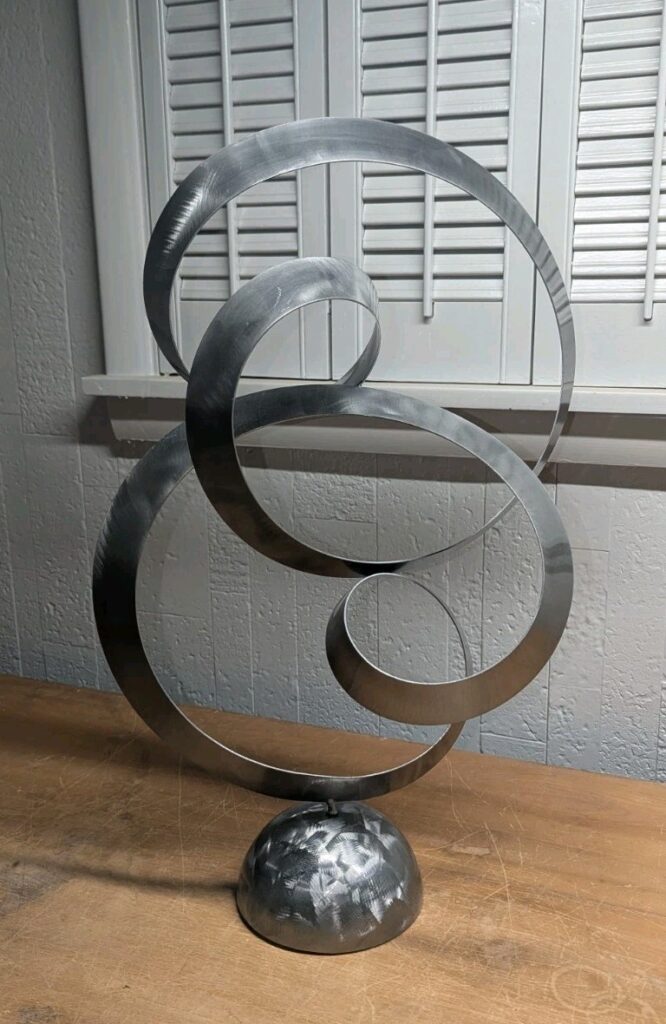
Tips If You’re Hunting for a Vintage C. Jere Piece for Your Home
For a midcentury modern home, a piece of authentic Curtis Jeré metalwork is one of the most period-perfect ways to bring real 1960s–70s California design energy into your space without breaking your budget.
- Look for the signature. Genuine pieces are typically signed “C. Jeré” or “Curtis Jeré,” often with a year.
- Older ≠ more valuable, but it usually helps. Try to buy a California-made piece from the 1960s–70s (pre-1972 sale). They tend to command the strongest interest from serious collectors and hold their value or appreciate in value over time.
- Condition and patina matter. A little age-appropriate patina is part of the charm; beware of repairs or clean, polished finishes which can decrease the piece’s value.
- Buy the piece you love. With such a varied catalog, there’s no single “right” Jeré piece — let the shape and scale work for your wall. This is art that was meant to be enjoyed!
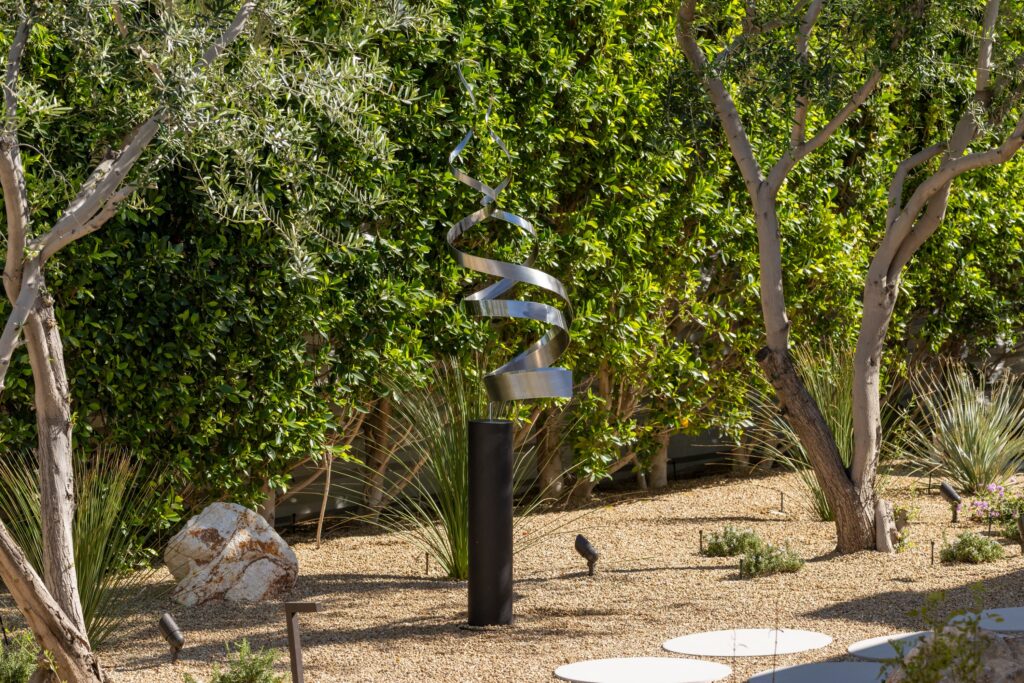
Do you have a Curtis Jeré piece in your Meiselman home? We’d love to hear about it — drop a comment below and tell us where you found it and what drew you to it.
Leave a Reply