
The Teardrop Pool: A Jack Meiselman Signature
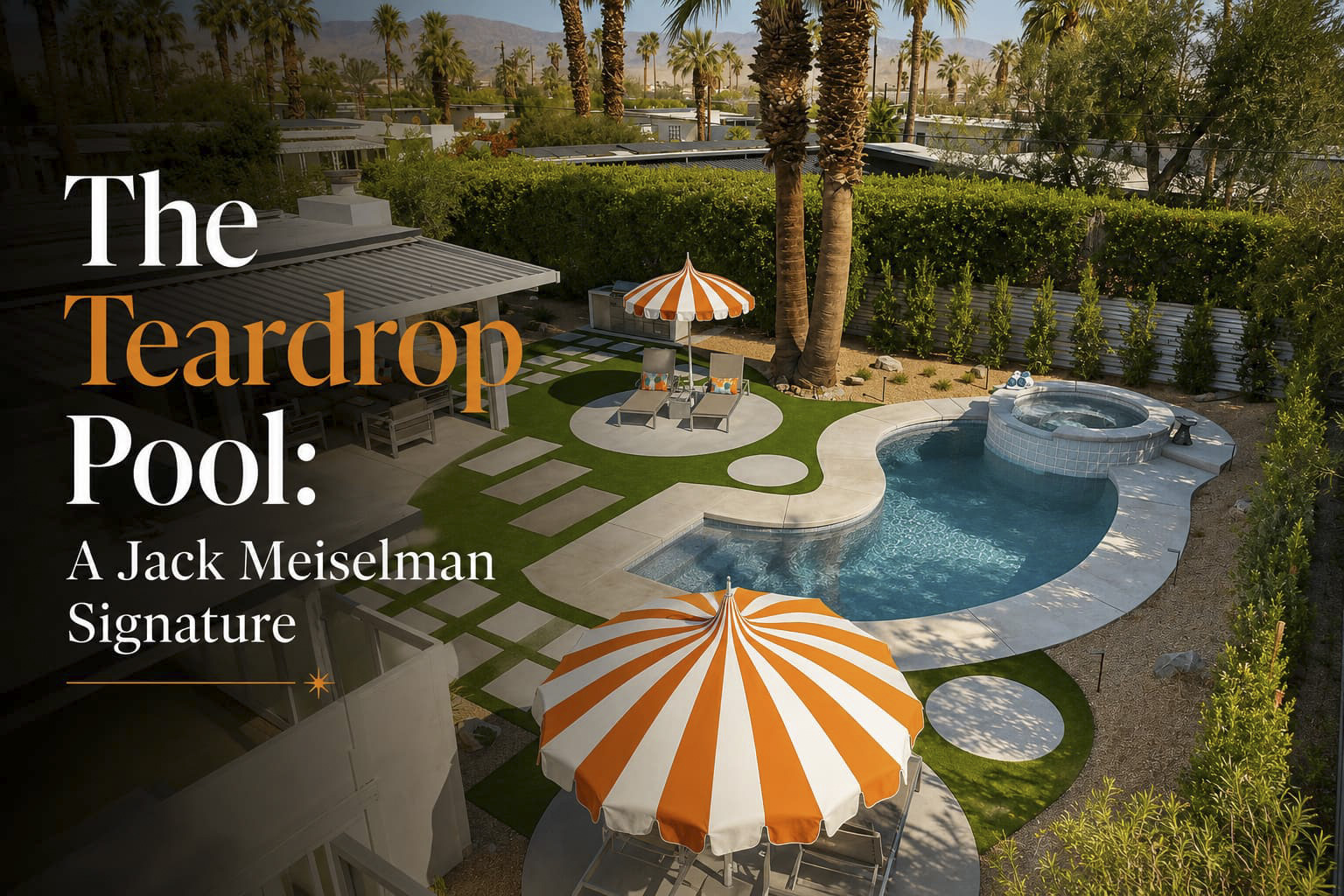
If you have toured enough Palm Springs backyards, you start to notice a pattern. The early Alexander homes? Big, boxy, rectangular pools — the kind that mean business. But wander into a later Meiselman home, and the pool takes on a completely different personality: curvier, more organic, tapering to a point like a drop of water frozen mid-fall. That’s the teardrop or kidney-shaped pool, and it became one of the most recognizable signatures of Meiselman’s later work.
Here’s what makes them tick — and how they stack up against the classic Alexander rectangle.
Shape & Size: Small Footprint, Big Personality
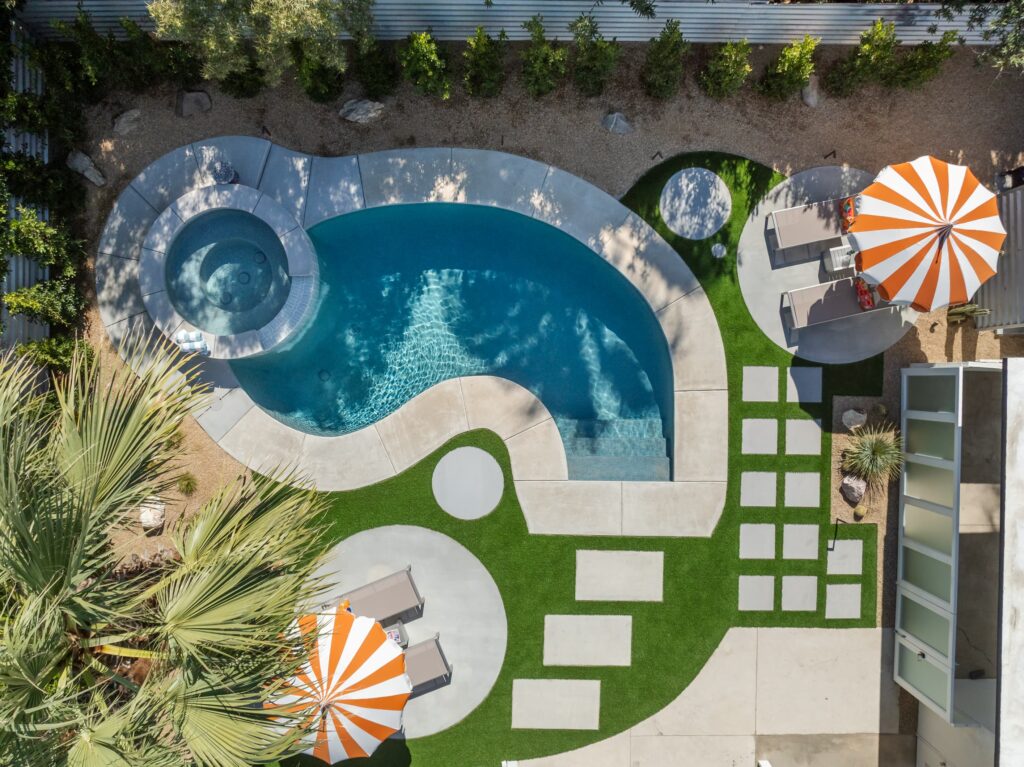
The teardrop or kidney pool looks just like a drop of water – a narrow section at one end that widens into a rounded “body” at the other end, echoing the free-form and organic shapes that swept through midcentury landscape design more broadly, like the Noguchi coffee table.
If you tour Palm Springs using the aerial view in Google Maps, you’ll spot dozens and dozens of homes with these iconic pools. Most of them will be Meiselman homes.
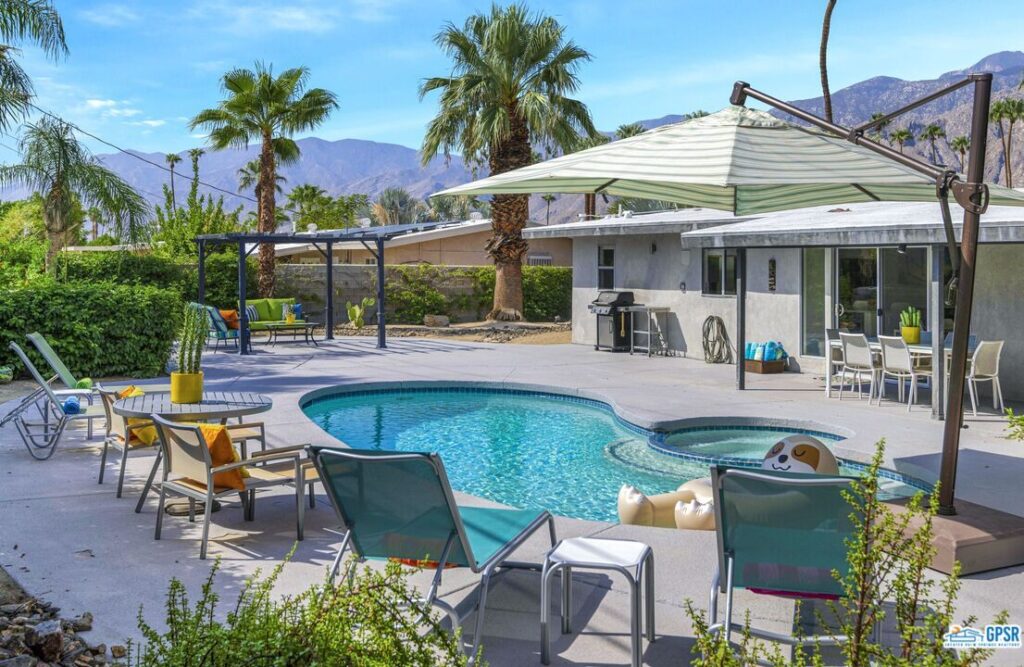
As you can see in the picture above, we really leaned into our pool’s organic shape when we had it resurfaced and added the raised spa and waterfall feature. We love the way it contrasts with the square and rectangular shapes and playfully interacts with the circular shapes in the yard.
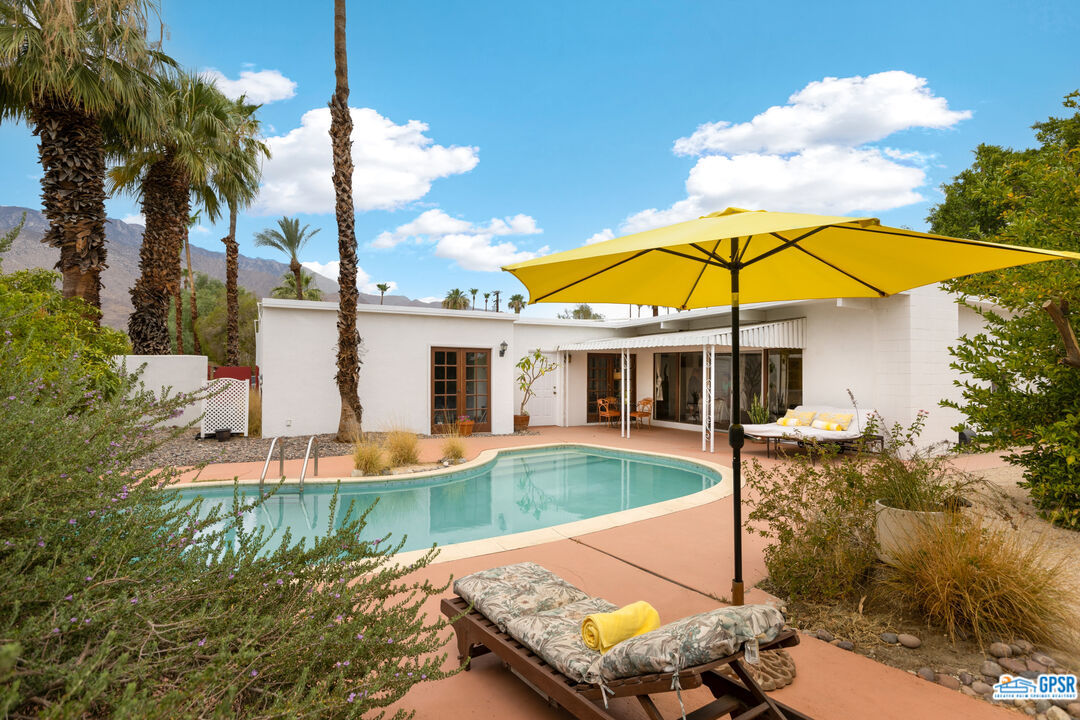
Below is an example of a Meiselman teardrop pool that is in its original configuration, without a spa.
The Near Perfect Dimensions
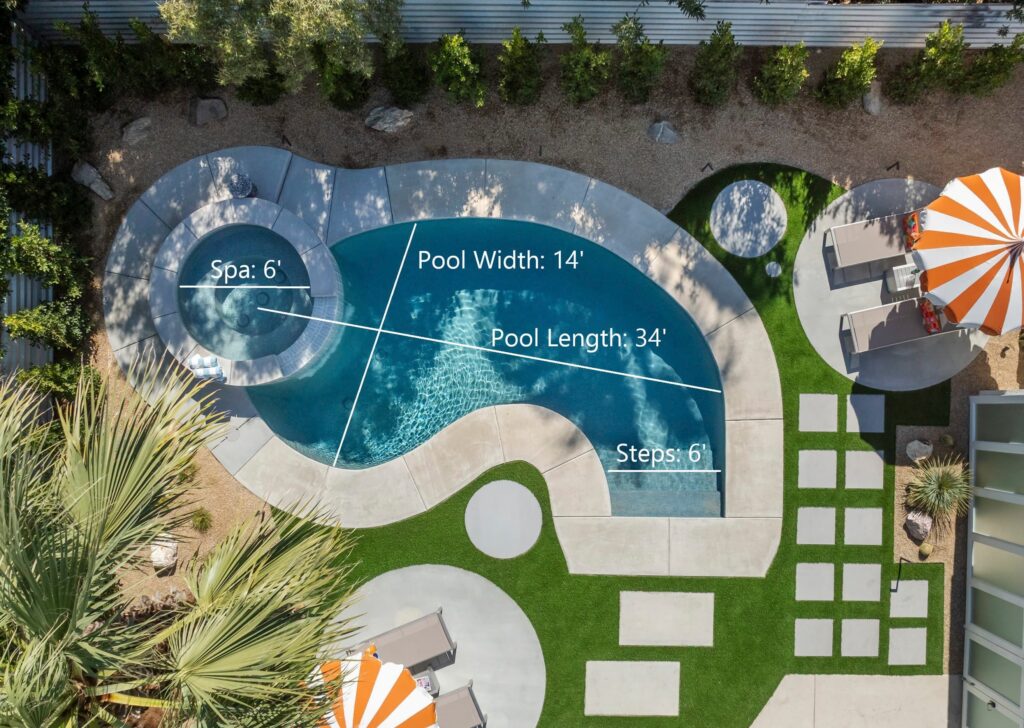
Meiselman’s kidney-shaped pools typically run about 34 feet long, 6 feet at the narrow end, and 14 feet at their widest. Making it a compact, efficient footprint that fits comfortably on the quarter-acre lots Meiselman favored without swallowing the whole backyard.
It’s also, frankly, the perfect size for real life: these pools were built for a family of four to actually use, not a resort-scale statement piece.
Here’s the twist that surprises many: the pool gets deeper as it gets wider. The wide, rounded end is the deep end at 5.5 feet, while the narrow, tapered point is the shallow end at 3 feet.
The narrow end also makes the perfect entry point to the pool, where 6-foot-wide steps lead you gently into the pool before it opens up and gets gradually deeper.
Spa or Hot Tub: A Later Addition, Not an Original Feature
Original Meiselman pools didn’t include a built-in spa — that’s a retrofit, not a period-correct feature. Spas, as the locals call them (or “hot tubs” if you’re from Chicago, like me), started showing up in Palm Springs pools in the late 1980s, as pool contractors began offering attached spas as a popular upgrade, when the original pool equipment and pool surfaces needed to be replaced.
We added our spa when we bought our Meiselman home in 2025 because we knew the pool needed resurfacing and all of the pool equipment needed to be replaced. Our contractor advised us that it made sense to do it all at once, since adding a spa later would increase the cost by 50%. We love relaxing in our spa at night, sipping a glass of wine, and watching the sun set over the mountains.
When homeowners add a spa to a Meiselman teardrop pool, it’s almost always added as an elevated spa with a waterfall feature at the wide, deep end of the pool, like we did at our house. Another popular option is a ground-level spa nestled into the teardrop’s curve. This is a natural spot for it, since that’s where there’s the most room to build one, and it’s closer to the house.
Pros and Cons of the Teardrop
The upside:
- Visual softness. Against the hard geometric lines of a Meiselman roof and glass wall, a curved, organic-shaped pool provides a playful, intentional contrast — the same “organic vs angular” trick top midcentury designers loved.
- Space efficiency. At 34′ x 14′, the pool leaves real yard around it — room to actually landscape, entertain, or have multiple seating areas.
- Lower running costs. A smaller volume of water means less to heat, less to filter, less water loss due to evaporation, and less to clean — real savings on your utility and maintenance bills that add up quickly.
- Right-sized for real use. These pools are genuinely comfortable for four to five people. They aren’t for large pool parties; they’re designed for a family to use and enjoy.
- A natural spa nook. Even when added later, the organic shape offers many options for adding a spa without disrupting the swim area.
The downside:
- Less lap-friendly. The curved walls interrupt a straight swimming line, so if you want to swim laps, a teardrop pool won’t deliver like a rectangular pool will.
- Furniture layout gets creative. Rectangular decks make lining up six loungers in a row easy; a teardrop’s curve means you need to group your loungers in small clusters.
- Limited for bigger groups. Great for four, but tight for a crowd — if you plan to host large pool parties, this shape isn’t built for them.
How It Stacks Up Against the Alexander Rectangle
Alexander Construction, where Jack Meiselman got his start before founding his own firm, leaned hard into the rectangle, and it fit their early brand. The straight lines mirrored the post-and-beam architecture itself, reinforcing that crisp geometric identity Alexander homes are known for.
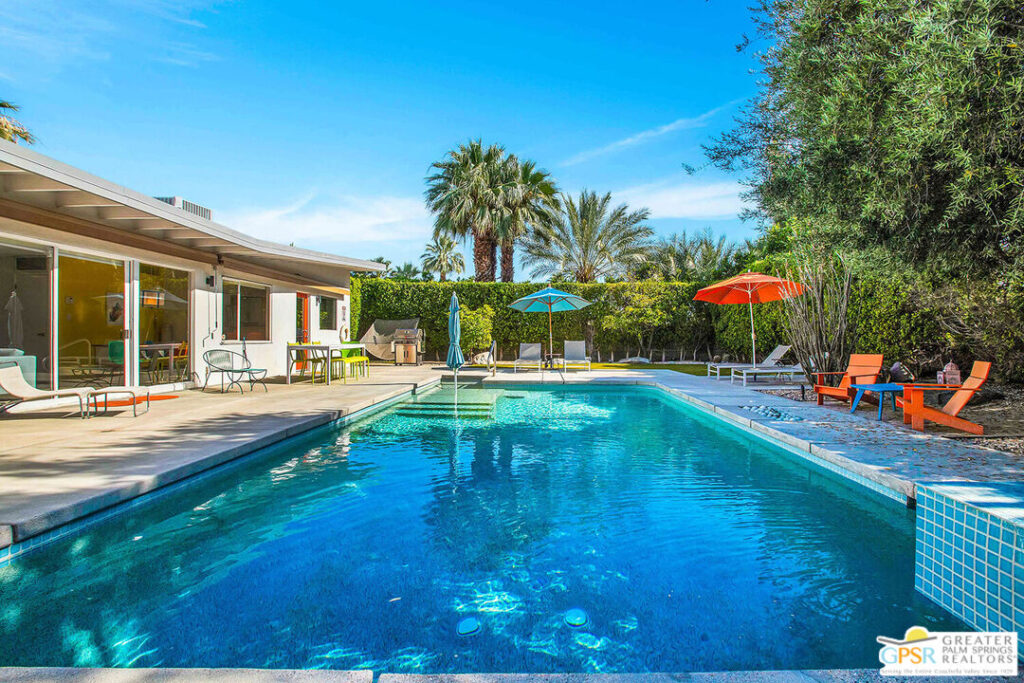
But that scale comes with a tradeoff. Meiselman realized that Alexander’s larger rectangular pools often dominated the backyard, leaving little room for anything else, and his customers said they felt their yards were more pool than yard. Meiselman’s teardrop pools flip that equation around: offering a smaller, more efficient shape that leaves breathing room in the backyard, along with real savings on heating, cleaning, and upkeep.
Where an Alexander pool says “let’s throw a party,” a Meiselman teardrop says “let’s unwind and relax.” Neither is right or wrong; they’re just two different midcentury philosophies playing out in concrete and water.
The Bottom Line
The teardrop pool isn’t just a quirky shape — it’s a window into how Meiselman’s design instincts evolved after leaving Alexander’s shadow. Softer lines, a smaller and more efficient footprint, and a design statement that says “fun” before you even get into the pool.
Do you have a teardrop pool with its own story — an original spa, unusual dimensions, or restoration details? We’d love to hear from you. Drop a comment below or reach out to help us build out the record.
Leave a Reply