
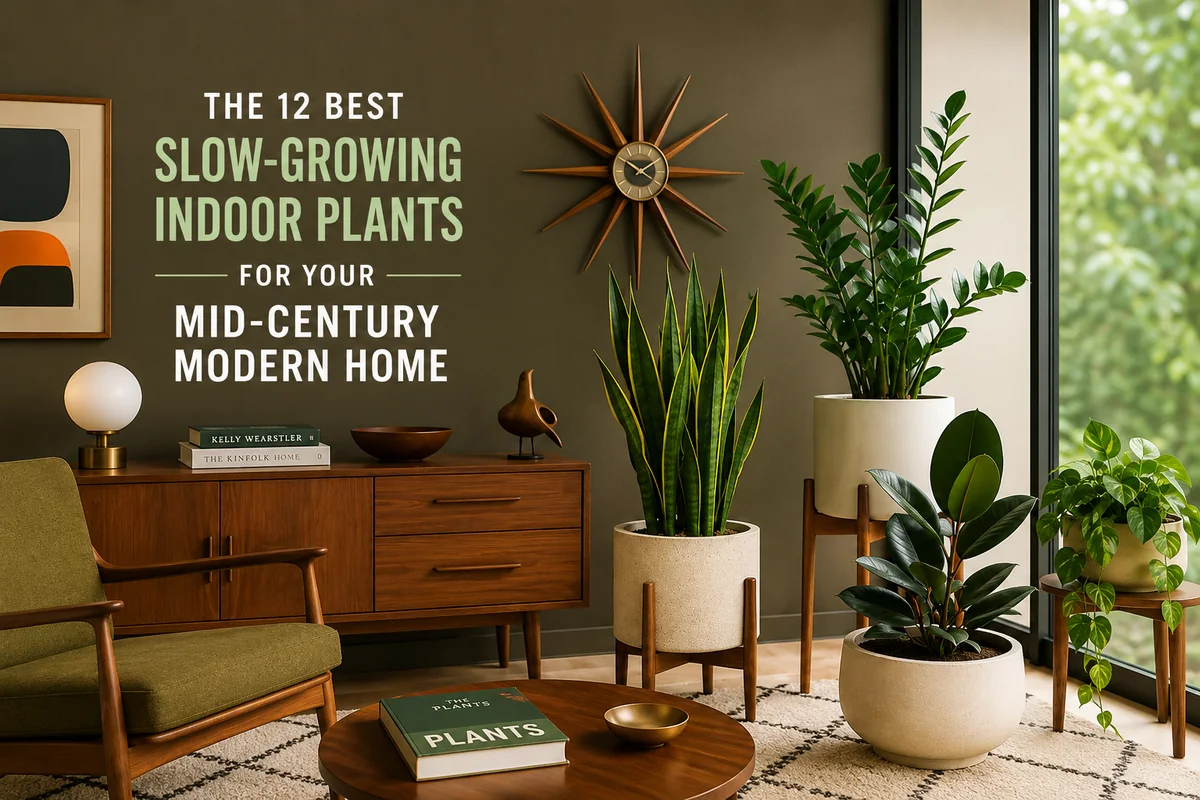
The 12 Best Slow-Growing Indoor Plants for Your Mid-Century Modern Home
Introduction
Palm Springs MCM homes are all about clean lines, warm materials, and that indoor-outdoor flow — so your houseplants need to earn their spot without overwhelming the room.
Below are 12 slow-growing, low-maintenance plants that thrive in the interior, indirect light of a desert home, plus tips on picking pots that actually look like they belong in a Meiselman or Alexander original.
Skip to the FAQ if you just want the quick answers, or sign up for our newsletter at the bottom for more home and garden tips.
Our Recommended Slow-Growing Indoor Plants for Any Midcentury Modern Home
If you’ve ever stood in the living room of a Meiselman midcentury modern home and thought, “this room needs a plant, but not that plant” — I feel you. MCM interiors are unforgiving. Some houseplants just fight the clean lines of an MCM home rather than complementing them. What you want are sculptural, structural plants that hold their shape for years, don’t outgrow their pot in six months, and can handle the kind of soft, indirect light you get behind a wall of glass with an extended roofline overhead.
Here are my 12 favorites — all slow growers, all happy in bright indirect light, and all sculptural shapes that fit beautifully in a midcentury modern home. What makes them especially cool is that they also thrive in the Palm Springs climate, and might actually be in your garden, so they do a great job of bringing the outside inside.
1. Snake Plant (Dracaena trifasciata, formerly Sansevieria)
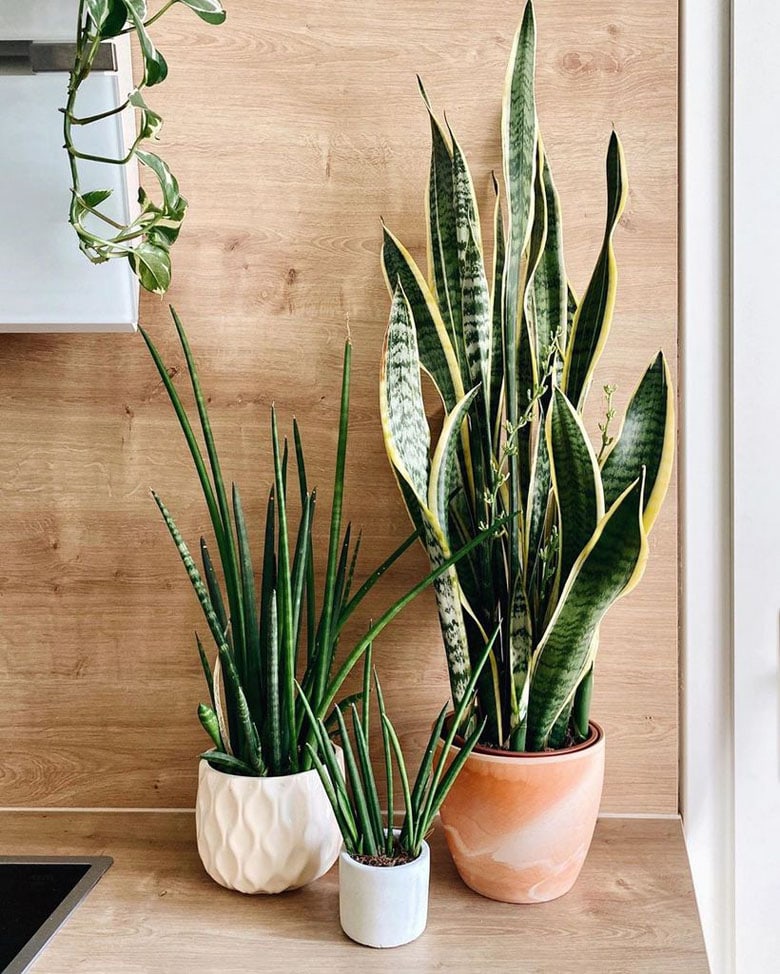
If there’s a house plant that was basically designed for a Meiselman living room, it’s this one. Its stiff, upright, sword-like leaves are practically a line drawing — total contrast to soft furniture, total harmony with post-and-beam architecture. It grows at a glacial pace, tolerates serious neglect, and does great tucked into a corner that only gets bounced light.
Light: Low to bright indirect. Water: Only when soil is bone dry.
2. ZZ Plant (Zamioculcas zamiifolia)
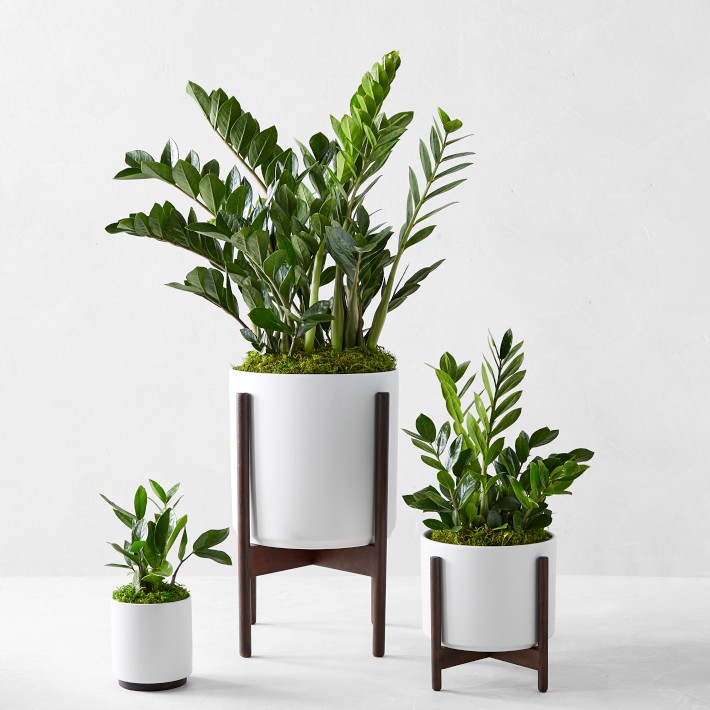
The ZZ plant is the low-maintenance MVP of the desert home. Its glossy, dark green leaves catch light beautifully against white walls or exposed block, and it can go weeks without a drink. It’s one of the slowest growers on this list, so a small specimen will look essentially the same a year from now — which, in a room where you’ve dialed in every sightline, is exactly what you want.
Light: Low to bright indirect, tolerates artificial light. Water: Let dry completely between waterings.
3. Cast Iron Plant (Aspidistra elatior)
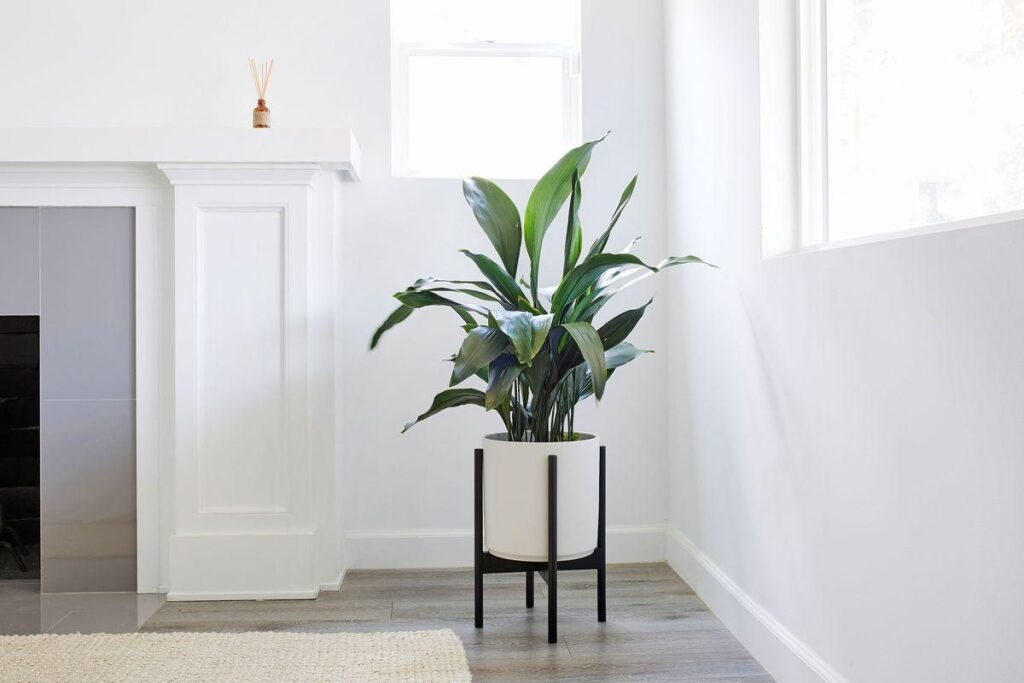
This one’s been a houseplant classic since the Victorian era for a reason — it basically can’t be killed, and its broad, deep green leaves add a lush, textural contrast to all that hard-edged MCM geometry. It’s painfully slow-growing (some say too slow, but I say low-maintenance), and it’s totally happy in a dim corner of the house.
Light: Low to medium indirect. Water: Keep lightly moist, don’t overdo it.
4. Chinese Evergreen (Aglaonema)
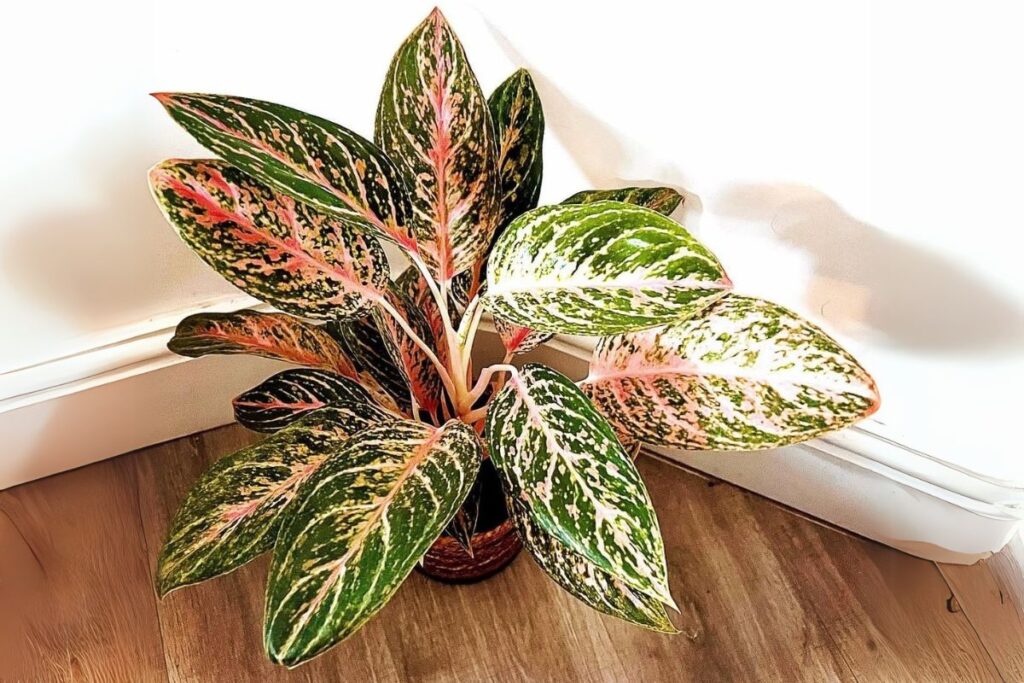
If you want a little more color without sacrificing an easygoing nature, Chinese Evergreen is your plant. The variegated varieties bring in soft silvers and creams that read beautifully against warm wood paneling, and it’s a genuinely slow grower that stays compact for years.
Light: Medium, indirect — solid greens tolerate lower light than variegated types. Water: Moist, not soggy.
5. Parlor Palm (Chamaedorea elegans)
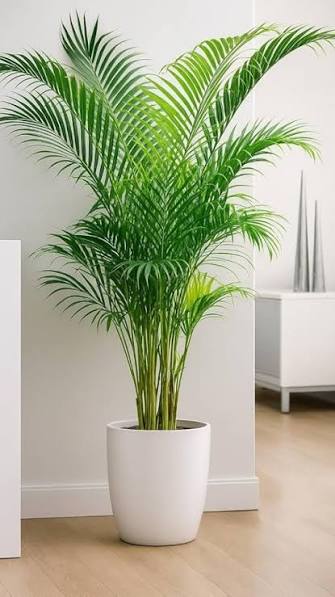
This delicate, feathery palm brings a bit of that classic Palm Springs resort vibe indoors without the fuss of a full-size houseplant tree. It stays a manageable size for a long time and doesn’t mind being a few feet back from a window, which makes it perfect for that shaded corner behind the sectional.
Light: Low to bright indirect. Water: Keep soil evenly moist, but don’t let it sit wet.
6. Ponytail Palm (Beaucarnea recurvata)
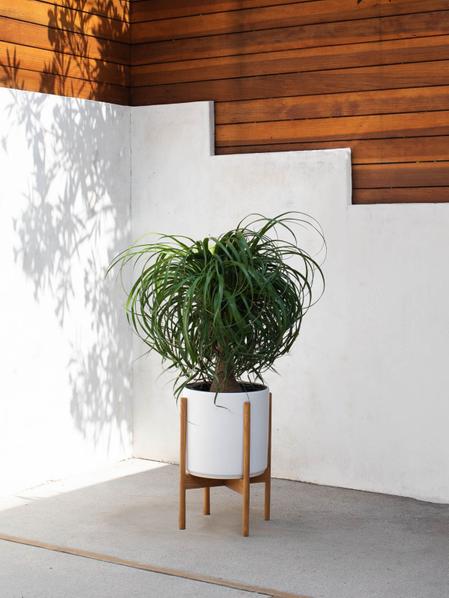
Technically a succulent, not a palm, this desert native is basically the sculptural houseplant equivalent of a butterfly roof — instantly recognizable, a little dramatic, and completely at home in Palm Springs. Its bulbous trunk stores water, so it’s forgiving if you forget to water it, and it grows slowly enough that a small tabletop specimen will stay small for a long time.
Light: Bright indirect, tolerates some direct light. Water: Let dry out fully between waterings.
7. Peperomia
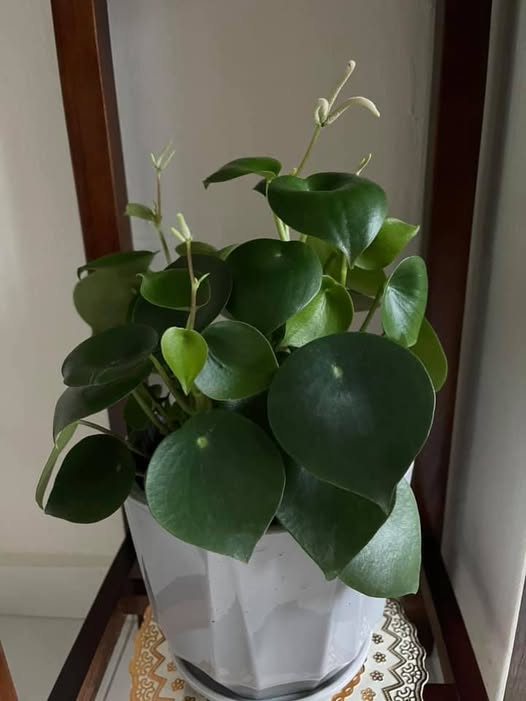
Peperomias are the perfect scale-players — small, tidy, and available in dozens of leaf shapes and textures, from rippled to variegated to almost succulent-looking. They’re genuinely slow growers, ideal for a credenza, a built-in shelf, or a bathroom vanity where you want a little life without a big commitment.
Light: Medium, indirect. Water: Let the top inch of soil dry out.
8. Bird’s Nest Fern (Asplenium nidus)
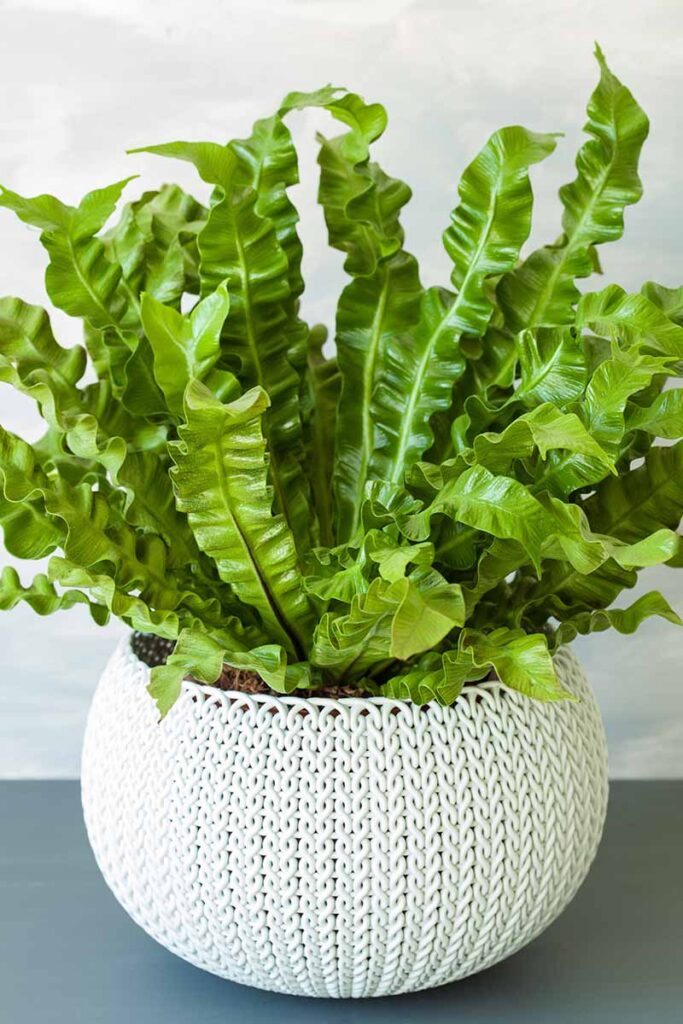
For a softer, more organic texture next to all that hard-edged furniture, the bird’s nest fern is a great pick. Its wavy, spoon-shaped fronds fan out from a central rosette, and it genuinely prefers dim, indirect light — a rare houseplant that’s happiest exactly where your MCM home is darkest.
Light: Low to medium, indirect (avoid direct sun, which scorches the fronds). Water: Keep evenly moist; loves a little extra humidity.
9. Rubber Plant (Ficus elastica)
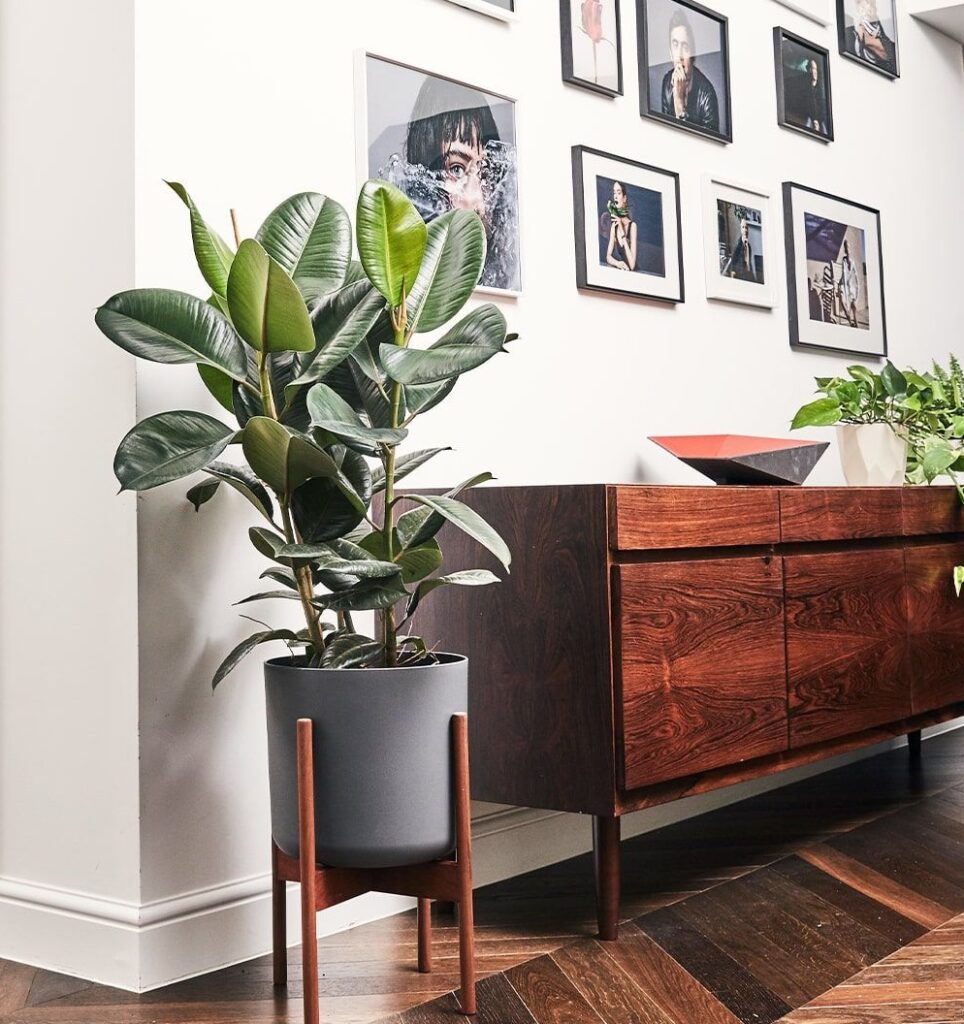
If you want a bigger, more statement-making plant for a corner near your glass wall, the rubber plant delivers glossy, oversized leaves in deep burgundy or classic green. It grows slowly enough indoors that you won’t be fighting it for space every season, and its bold, simple leaf shape feels right at home with clean architectural lines.
Light: Bright, indirect (some gentle morning sun is fine). Water: Let the top of the soil dry between waterings.
10. Dracaena Marginata (Dragon Tree)
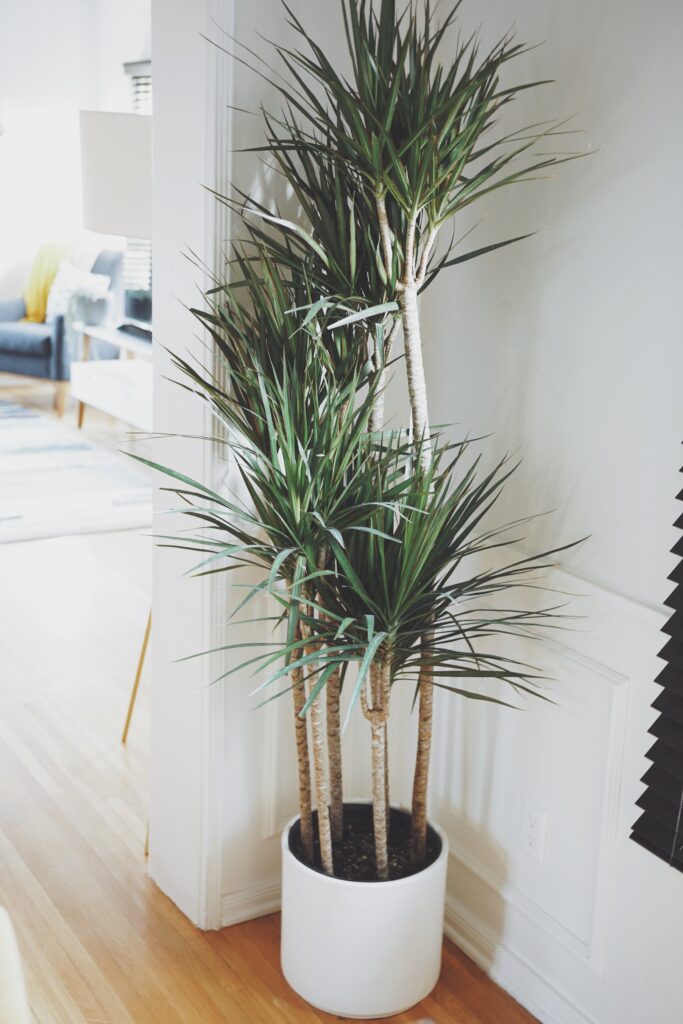
With its slender, twisting trunk and spiky rosettes of leaves, dracaena marginata brings vertical drama to a room without taking up much floor footprint — great for a narrow spot next to a doorway or in a reading nook. It’s a slow, steady grower and about as low-maintenance as houseplants get.
Light: Bright to medium indirect. Water: Let soil dry between waterings; sensitive to fluoridated tap water, so filtered or rain water is a nice touch if you can manage it.
11. Kentia Palm (Howea forsteriana)
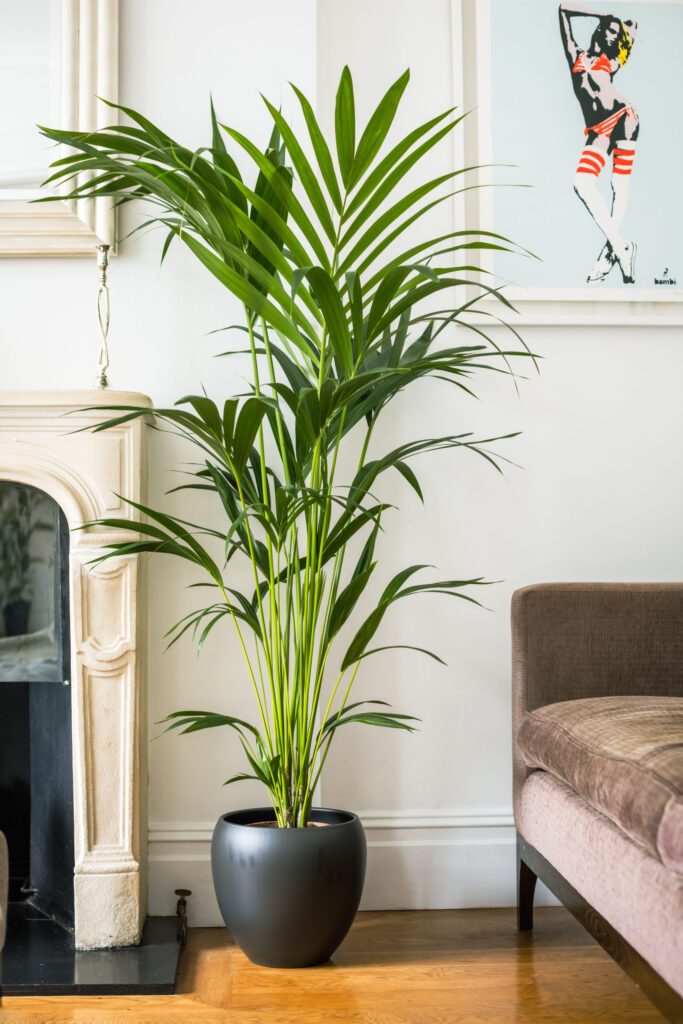
so it’s the perfect plant to bring the outdoors inside.
This is the palm you see in every beautifully restored Palm Springs interior, and for good reason — its arching fronds are elegant without being fussy, it tolerates lower light better than almost any other palm, and it grows so slowly that the specimen you buy today will look nearly the same in five years. It’s an investment plant, but worth it for a living room that needs a strong vertical anchor.
Light: Low to bright, indirect. Water: Keep evenly moist, let the top inch dry between waterings.
12. Dwarf Umbrella Tree (Schefflera arboricola)
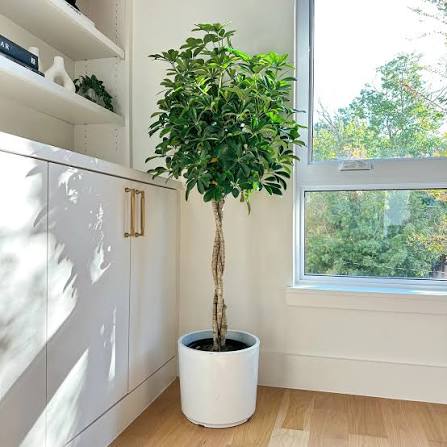
The dwarf umbrella tree’s glossy, hand-shaped leaflets add movement and softness against rigid architectural lines, and the dwarf variety stays compact and slow-growing indoors, which makes it a great choice for a spot near a sliding glass door where it’ll get soft, filtered light most of the day.
Light: Medium to bright, indirect. Water: Let the top of the soil dry out between waterings.
Why the Right Pot Matters as Much as the Plant
Here’s the secret to decorating a midcentury modern home in Palm Springs with plants: the wrong pot can undo all the work you just put into picking the right plant. A cutesy glazed pot with fussy Spanish detailing, a pot with the wrong shape, dimensions, or color will fight your architecture instead of complementing it. MCM interiors reward restraint — simple, sculptural forms, matte or lightly glazed stoneware, warm neutral tones, and clean cylindrical or tapered silhouettes.
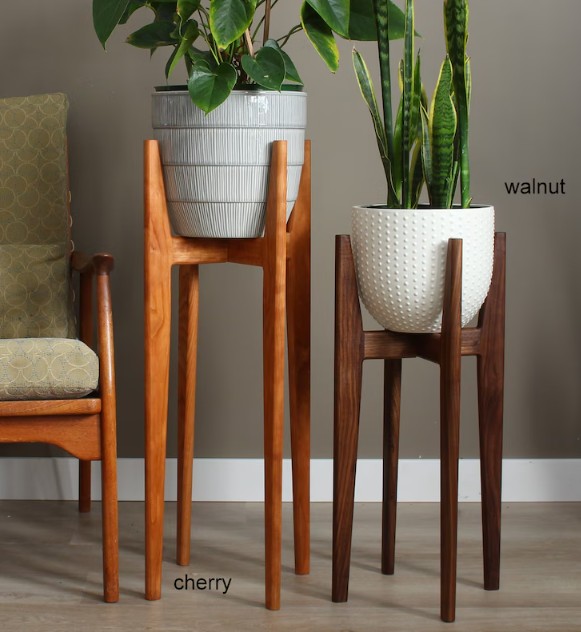
A few practical notes: pair taller architectural plants (Kentia palm, dracaena, rubber plant) with a simple floor-standing pot on a low wooden stand to keep the plant’s silhouette the star of the show.
https://www.etsy.com/listing/595674608/indoor-plant-stand-made-with-solid
For tabletop plants (peperomia, bird’s nest fern), a low, wide dish planter reads more period-appropriate than a taller, narrower pot.
A few sources worth browsing for MCM-appropriate planters:
- Léon & George — handcrafted stoneware planters in clean, streamlined mid-century forms
- AllModern — a wide range of ceramic and terracotta pots with mid-century wood stands
- Etsy’s Mid-Century Modern Planter shop — great for genuine vintage architectural pottery pieces, including Gainey and Architectural Pottery-style finds
Ready for More Midcentury Modern Home Inspiration?
If this kind of thing is your jam, you’ll love what we send out in the Meiselman Registry newsletter — home features, neighborhood history, restoration tips, and yes, more plant and design guidance like this. Sign up for the Meiselman Registry newsletter and we’ll keep the good stuff coming straight to your inbox.
FAQ
Do these plants really do okay without direct sun? Yes — every plant on this list is chosen specifically because it tolerates bright, indirect light, which is what most Palm Springs MCM interiors actually get thanks to deep roofline overhangs and glass walls that face shaded courtyards. None of these need a spot in direct desert sun (and a few would actually scorch in it).
How often should I water slow-growing indoor plants? Most of the plants above prefer to dry out between waterings — usually once every 1–3 weeks depending on your home’s humidity and the season. When in doubt, underwater rather than overwater; root rot from soggy soil is the #1 killer of these plants, not neglect.
Are all of these plants pet-safe? Parlor palm, ponytail palm, and kentia palm are all considered non-toxic to cats and dogs. Snake plant, ZZ plant, dracaena, and rubber plant are mildly toxic if ingested, so keep those up on a stand or shelf if you’ve got a curious pet.
Why do slow-growing plants work better in an MCM home than fast growers? Because you’ve already dialed in your sightlines and proportions. A fast grower (like a pothos or a monstera) can outgrow its spot in a single season and start crowding a room that was designed around clean, uncluttered lines. Slow growers hold their scale for years, so the plant stays in visual balance with the architecture instead of competing with it.
What if my Meiselman home doesn’t get much natural light at all? Lean into cast iron plant, bird’s nest fern, snake plant, or ZZ plant — all four are genuinely happy in low light and are some of the most forgiving houseplants you can own.
Leave a Reply