
Sunrise Park: Close to Everything, Far from Ordinary
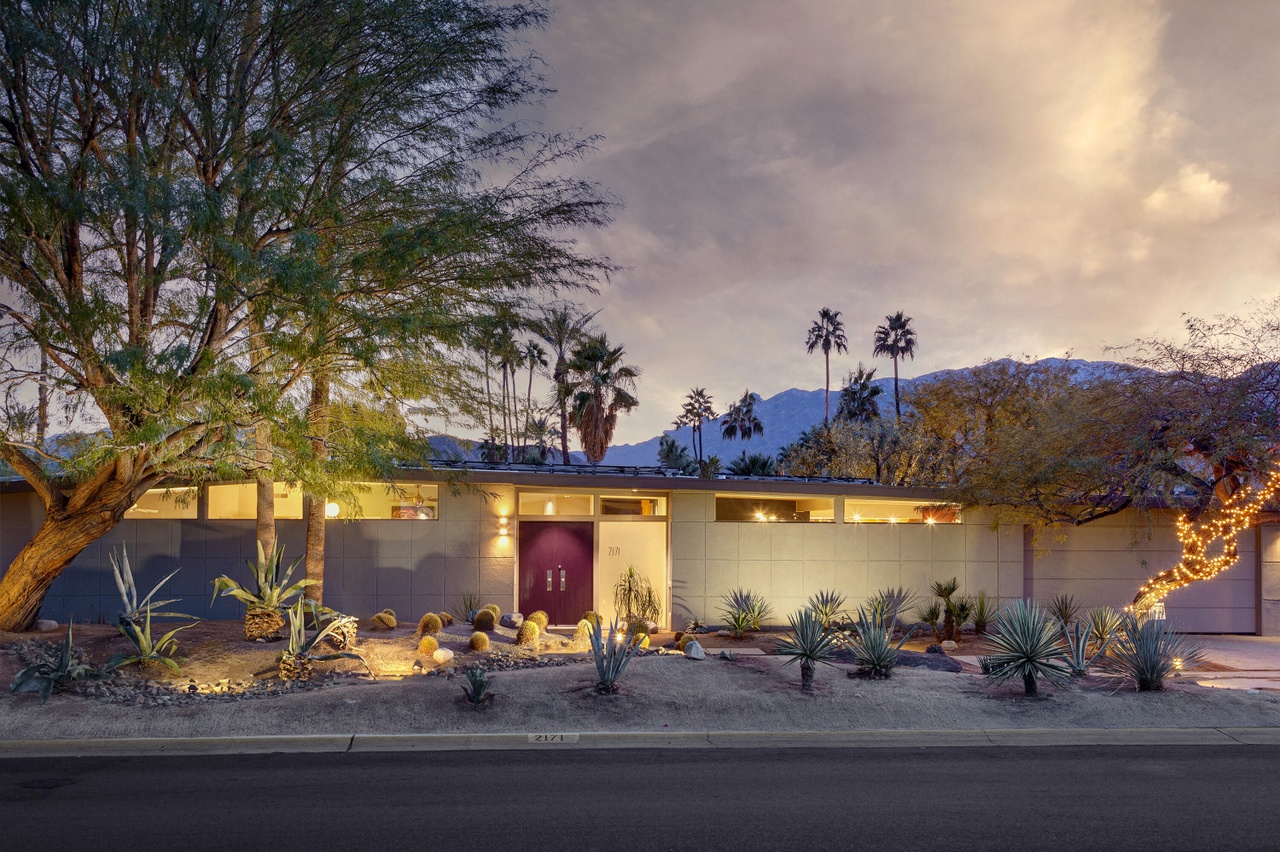
There’s a reason Sunrise Park’s unofficial motto is “Close to everything, but far from ordinary.” Tucked into the heart of Palm Springs — bounded by Alejo Road to the north, Ramon Road to the south, Farrell Drive to the east, and Sunrise Way to the west — this neighborhood is the rare kind of place where genuine architectural history and everyday livability actually coexist. It’s not trying to be a showpiece. It just is one.
If you’ve spent any time tracking Jack Meiselman’s footprint across Palm Springs, Sunrise Park is essential territory. This is where his story, the Alexander Construction Company’s story, and a remarkably deep bench of Desert Modernist talent come together in one of the city’s most eclectic and architecturally rich residential neighborhoods.
From Desert Palms Estates to Sunrise Park
The neighborhood’s roots go back to the early 1950s, when the area was known as Desert Palms Estates. Among the first architects to leave a mark here was William F. Cody, who in 1951 designed a series of homes for developer Jack Meiselman within the Desert Palms Estates tract. Cody himself lived in Sunrise Park — and that detail says something. When the architects who designed a neighborhood choose to plant roots there themselves, you know the place is something special.
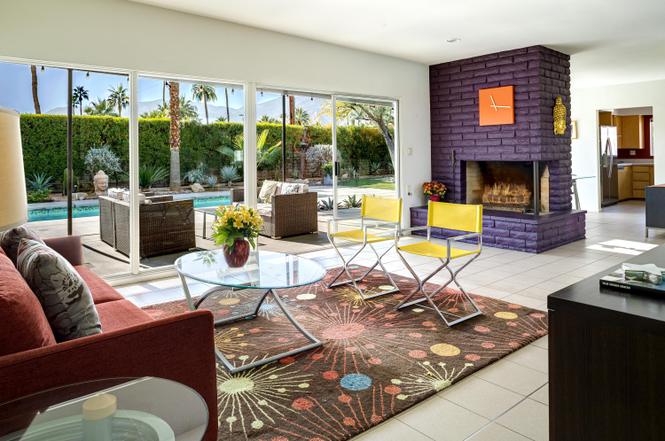
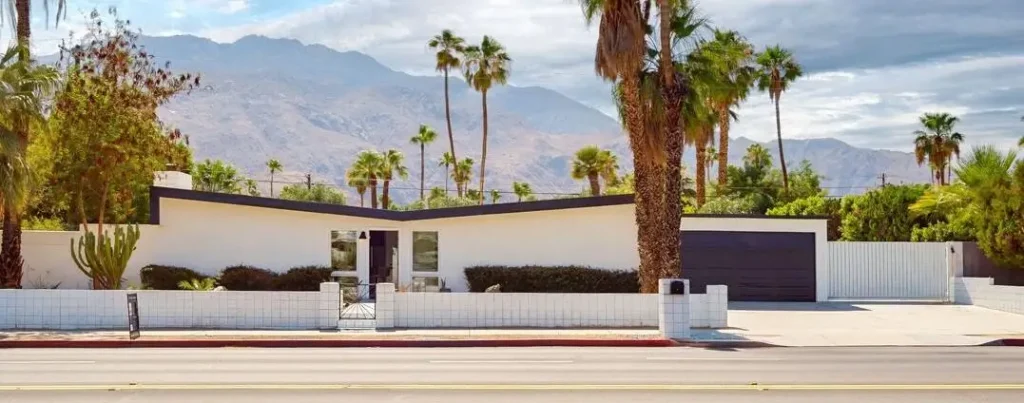
Jack and his wife Bernie Meiselman were central to shaping this neighborhood. Between the late 1950s and early 1960s, the Meiselmans constructed approximately 350 homes across Palm Springs, with a significant portion in Sunrise Park. These homes bore all the hallmarks of Desert Modernism that the Meiselmans became known for: butterfly roofs, clerestory windows, post-and-beam construction, and walls of glass designed to blur the line between inside and outside. They were also built for comfort in the desert — central heating and air conditioning were standard, which was genuinely unusual at the time.
The Alexander Construction Company was equally active here. Their Enchanted Homes tracts in Sunrise Park used the “Ramon Rise” floor plan by the firm of Palmer & Krisel — the same plan that anchored their Enchanted Village in Little Beverly Hills and Enchanted Estates in Sunmor — giving the neighborhood a cohesive architectural thread that connects it to those sister communities across the city.
An Architectural Roster That’s Almost Unfair
What really sets Sunrise Park apart is the sheer depth of design talent that worked here. This isn’t a one-architect neighborhood. Innovative and influential architects including Donald Wexler, William Krisel, Dan Palmer, Robert H. Ricciardi, and Hugh Kaptur all designed homes in Sunrise Park. And like Cody, both Kaptur and Cody chose Sunrise Park as the place to build their own family homes — a quiet endorsement that carries more weight than any marketing brochure ever could.
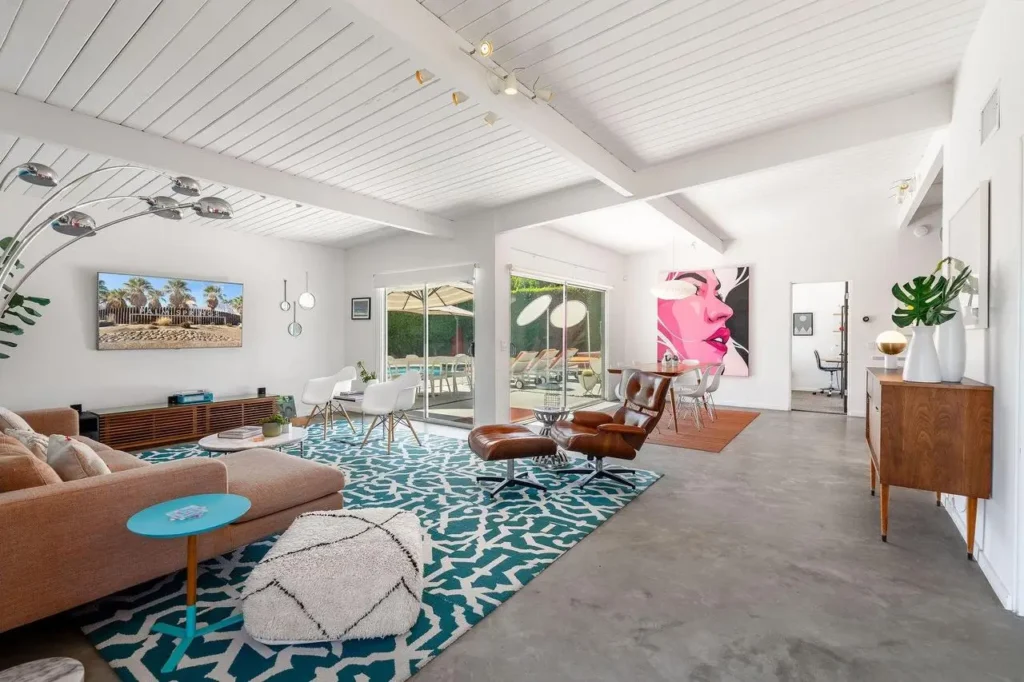
The result is an eclectic architectural collection that spans from Atomic Ranch to late-1960s Mod. Tract developments with evocative names like Enchanted Homes and Desert Palms Estates sit alongside custom architect-designed residences. No two blocks look quite the same, and that variety is a big part of the neighborhood’s charm.
The Residents: A Neighborhood With Range
The people who’ve called Sunrise Park home are as interesting as the homes themselves. Hotel magnate Conrad Hilton was a resident here — fitting, perhaps, for a man who understood the art of the perfect desert retreat. Huell Howser, the beloved host of PBS’s long-running California’s Gold, lived in the neighborhood for many years, bringing his signature enthusiasm for California history and architecture to a community that has plenty of both.
The neighborhood also holds a quiet architectural legacy: it’s where William Cody built his own residence in 1946, experimenting with indoor-outdoor living and modern spatial planning years before those ideas became the dominant language of Desert Modernism.
What the Neighborhood Looks Like Today
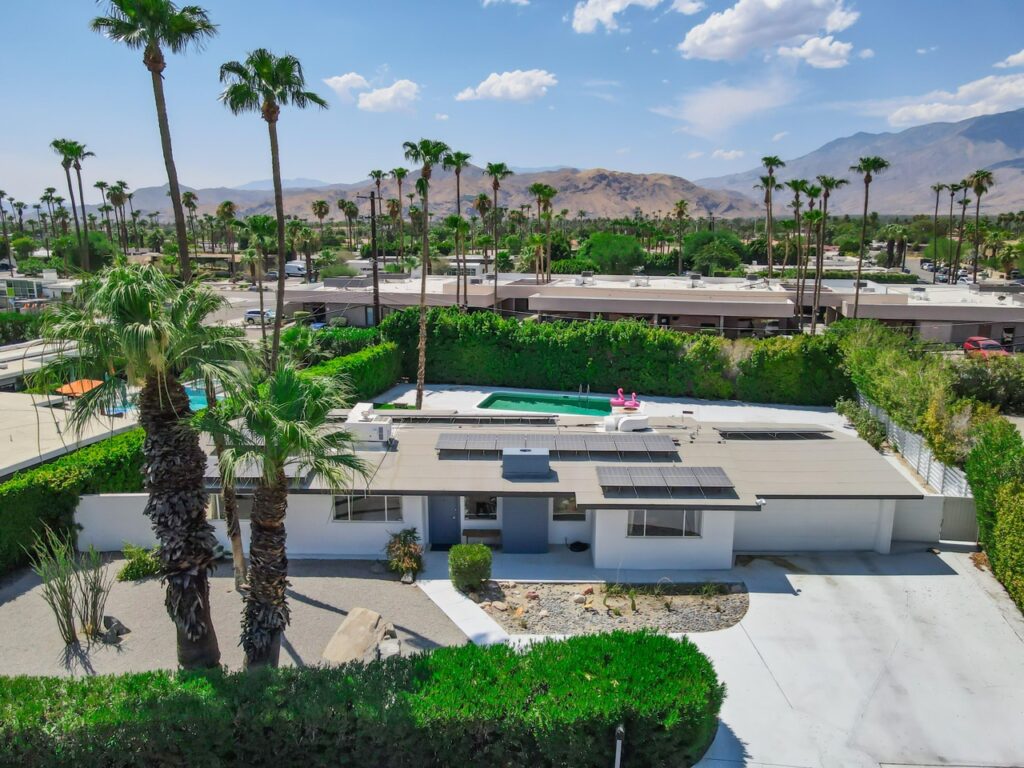
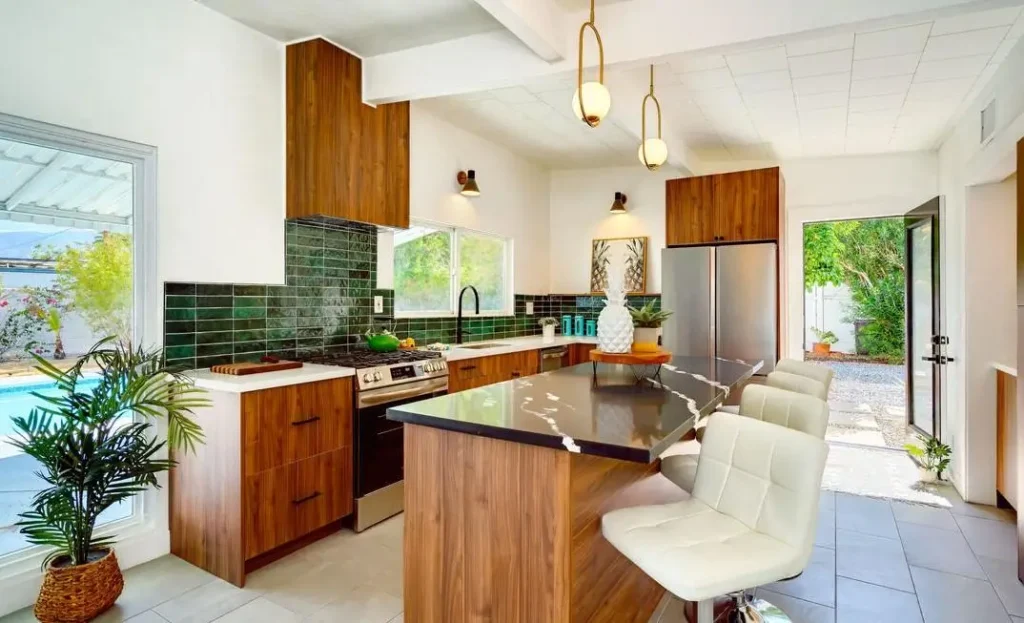
Sunrise Park today is a mixed-use residential neighborhood in the best possible sense. The backbone is single-family MCM and ranch-style homes — most dating to the 1950s and 1960s, mostly on generous quarter-acre lots with private pools, palm and citrus trees, and those irresistible San Jacinto Mountain views. Single-family home prices have climbed significantly, generally ranging from around $1 million to $2.5 million depending on size, condition, and renovation scope.
But Sunrise Park is also home to several condominium communities and apartment buildings, making it one of the more tenure-diverse neighborhoods in Palm Springs. Condo communities like Americana Gardens and the Sophia development offer smaller-footprint options at a range of price points, with units spanning from under 700 square feet to about 1,200 square feet. Condos in older complexes are priced roughly in the $250,000–$400,000 range, while newer units in developments like Sophia start closer to $500,000. Senior living facilities and small apartment buildings round out the residential mix, adding a cross-generational quality that many Palm Springs neighborhoods lack.
The neighborhood’s 2020 census shows it has approximately 877 residents.
The Park That Gives the Neighborhood Its Name
No profile of Sunrise Park is complete without talking about its namesake green space. Sunrise Park – the actual park – anchors the neighborhood’s southwest corner and is the largest city park in Palm Springs, spanning nearly 40 acres.
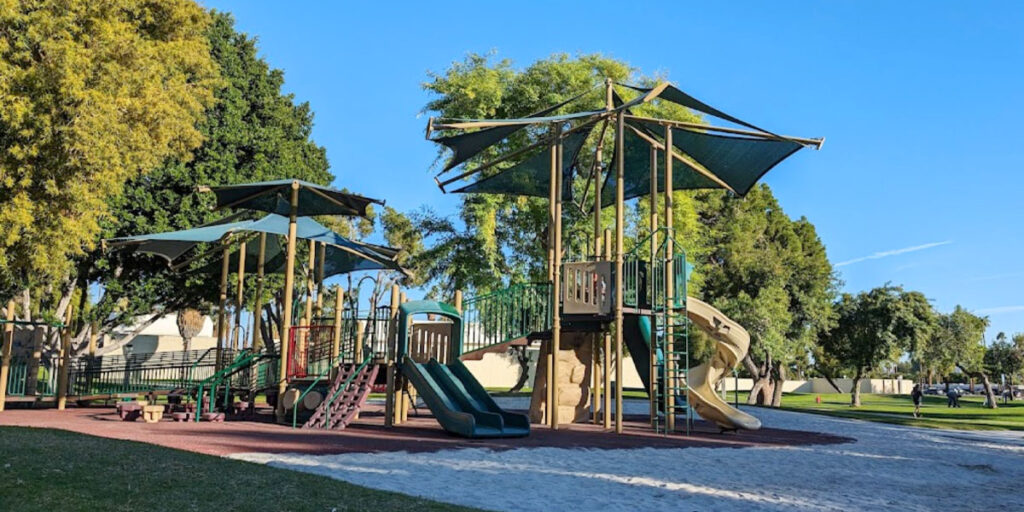
It’s home to the Palm Springs Leisure Center and Swim Center (with an Olympic-sized outdoor pool), Skate Park, Palm Springs Stadium (where the Palm Springs Power collegiate baseball team plays summer games), the Palm Springs Public Library, the Mizell Senior Center, and the Boys and Girls Club. The Palm Springs Cultural Center and the historic Camelot Theatre are also within the neighborhood’s boundaries.
This is the kind of neighborhood where you can walk to the library, catch a baseball game, grab a coffee, and come home to a beautiful Meiselman or William Krisel house. That combination is genuinely rare.
Sunrise Park and the Meiselman Registry
For Meiselman Registry purposes, Sunrise Park is critical territory. It’s one of the neighborhoods where Jack Meiselman’s homes are most concentrated, and where his homes sit side-by-side with Alexander-built Krisel designs, early Cody works, and later contributions from the full spectrum of Desert Modernist talent.
This is why Modernism Week has recognized Sunrise Park with recurring neighborhood tours that consistently sell out, drawing visitors who love the neighborhood’s architectural diversity and authenticity. It’s not a museum district. Real people live here, walk their dogs here, and invite their neighbors over. That’s the magic.
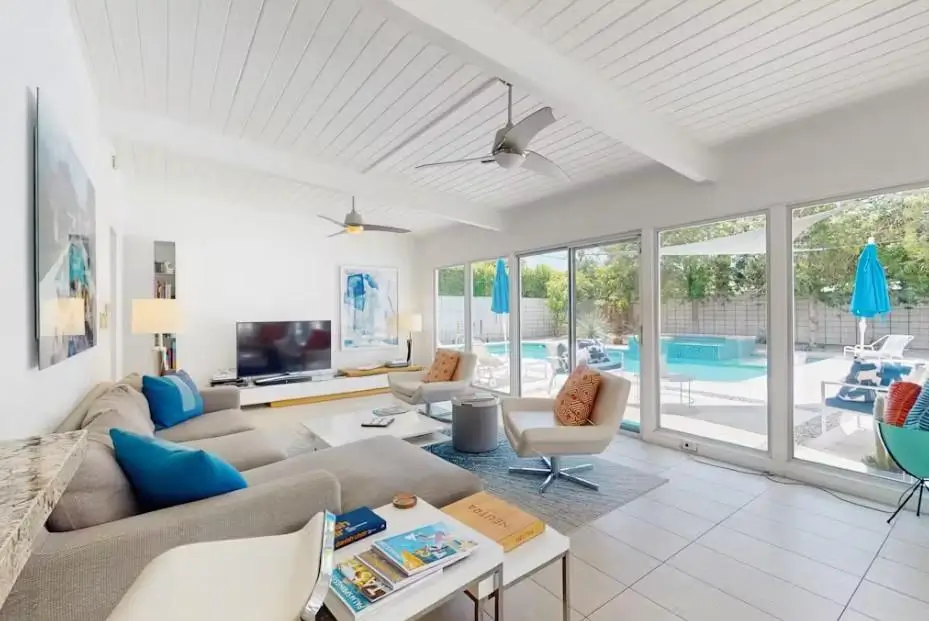
Have a Meiselman home in Sunrise Park? We’d love to feature your property in the Registry.
Register Your Home Here
One response to “Sunrise Park: Close to Everything, Far from Ordinary”
-
[…] Springs’ most desirable neighborhoods, including Little Beverly Hills, Desert Park Estates, Sunrise Park, Oasis del Sol, and Victoria Park. And get this: these homes that once sold for $20,000 now command […]
Leave a Reply