
The Iconic Arne Jacobsen Egg Chair
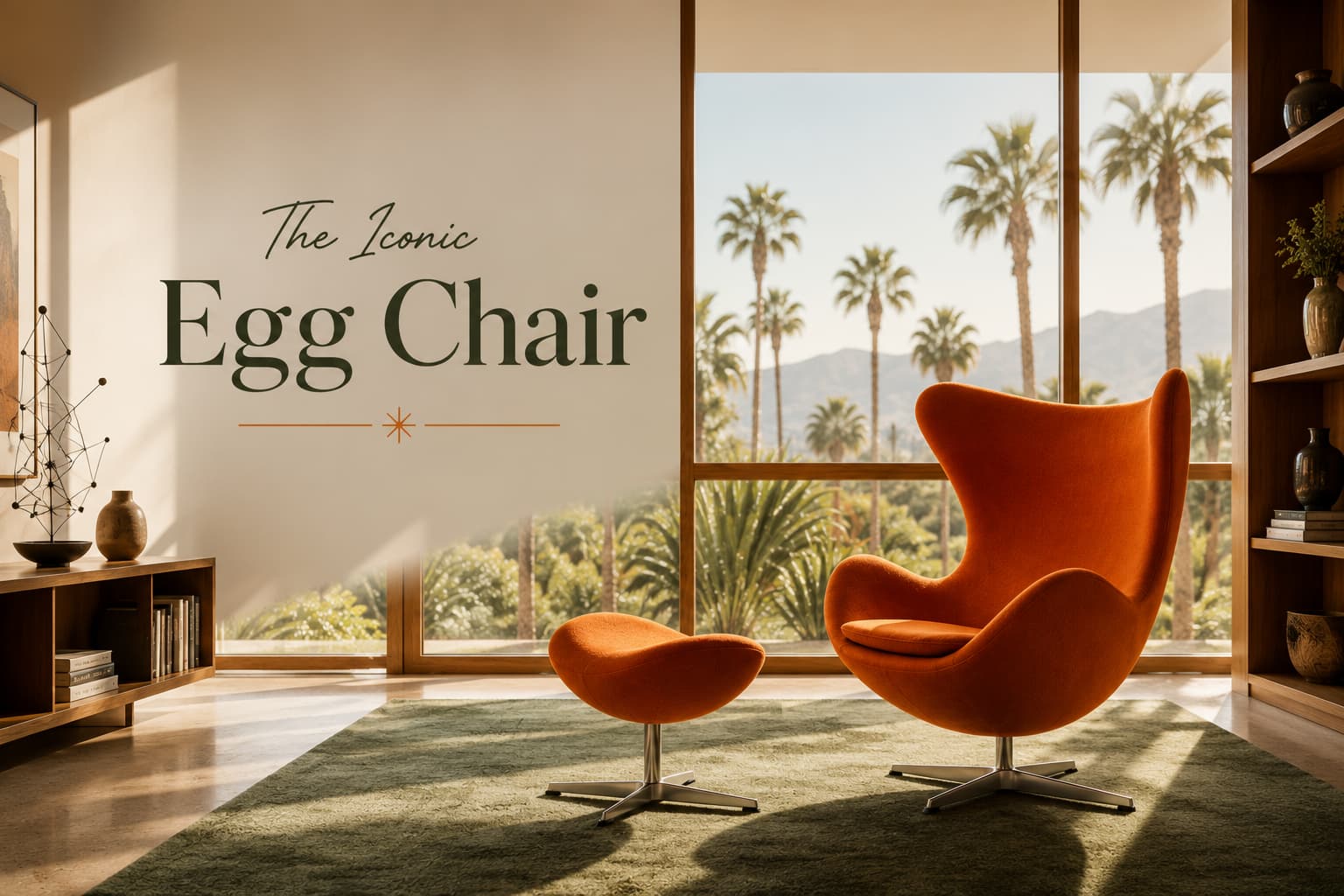
In the pantheon of mid-century modern furniture, few pieces command attention quite like the Egg Chair. With its bold, curvaceous form that seems to have been sculpted rather than made, this Danish design icon stands as a testament to the power of innovation and artistic vision.
The Danish Master
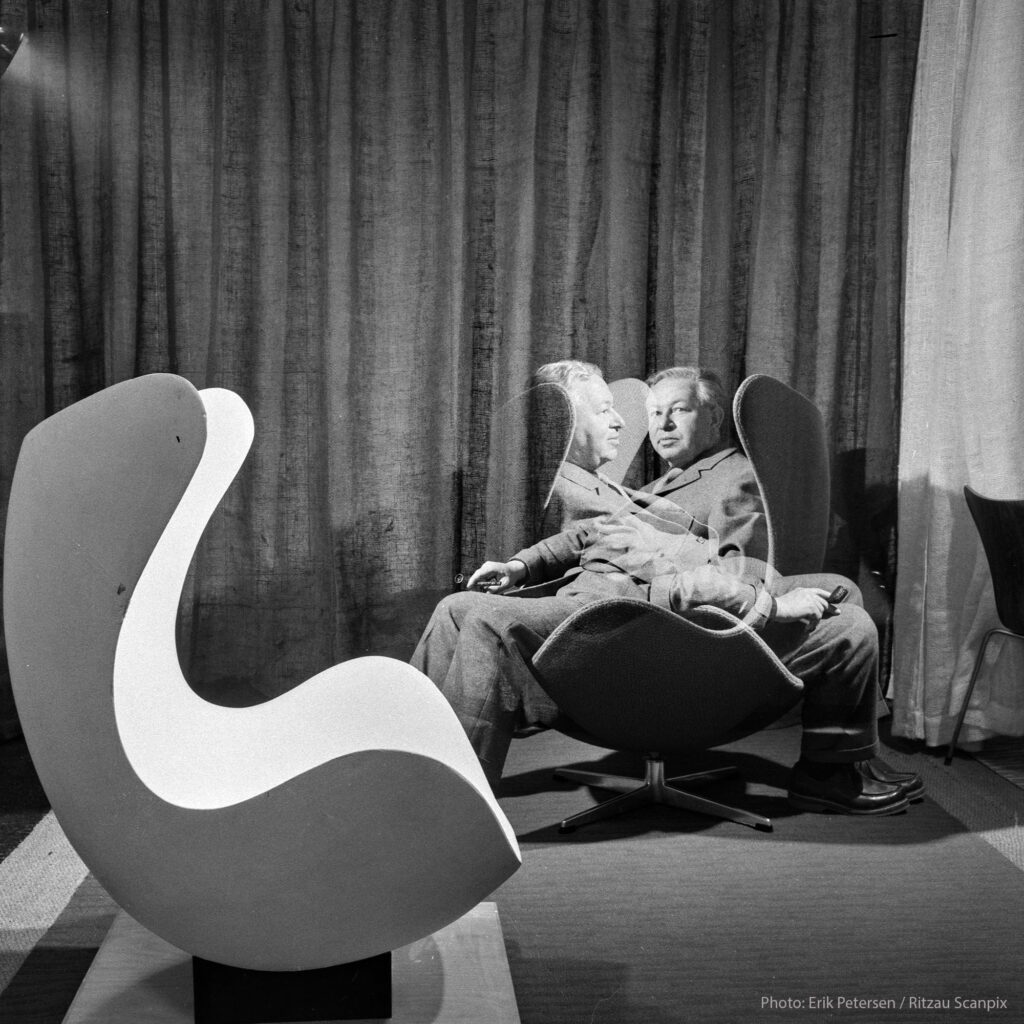
Arne Jacobsen was Denmark’s Renaissance man of design. Born in Copenhagen in 1902, he was an architect, designer, and perfectionist who believed every element of a building—from its structure down to its door handles—should work in harmony. Jacobsen’s architectural projects are landmarks of modernist design, but he’s equally celebrated for his furniture, which includes the Series 7 chair (one of the best-selling chairs of all time) and the elegantly minimal Swan Chair.
Jacobsen was known for his meticulous attention to detail and his willingness to experiment with new forms and materials. He approached furniture design with an architect’s eye for proportion and space, creating pieces that were as much sculpture as seating.
A Hotel’s Grand Vision
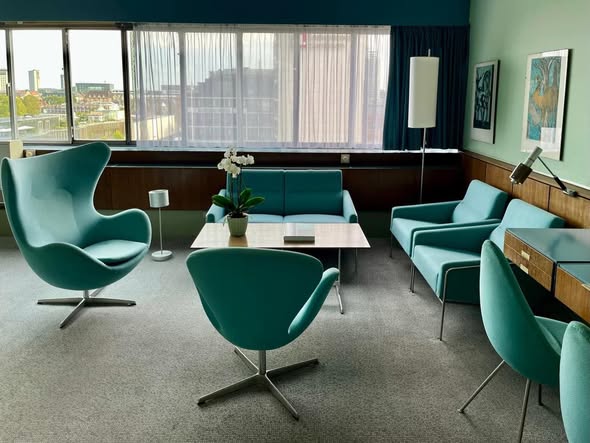
The Egg Chair was born from one of Jacobsen’s most ambitious architectural projects: the SAS Royal Hotel in Copenhagen, completed in 1958. Jacobsen was commissioned to design not just the building but every aspect of its interior, from the architecture to the textiles, lighting, and furniture. The hotel was to be a showcase of modern Danish design, and Jacobsen seized the opportunity to create something truly revolutionary.
For the hotel’s lobby and lounge areas, Jacobsen envisioned a chair that would provide intimacy in a public space—a private retreat within the bustling hotel environment. The result was the Egg Chair, with its enveloping shell that wrapped around the sitter like a protective cocoon. The high back and curved sides created a sense of enclosure and privacy, while the tilt-and-swivel mechanism added functionality and playfulness.
Breaking the Mold
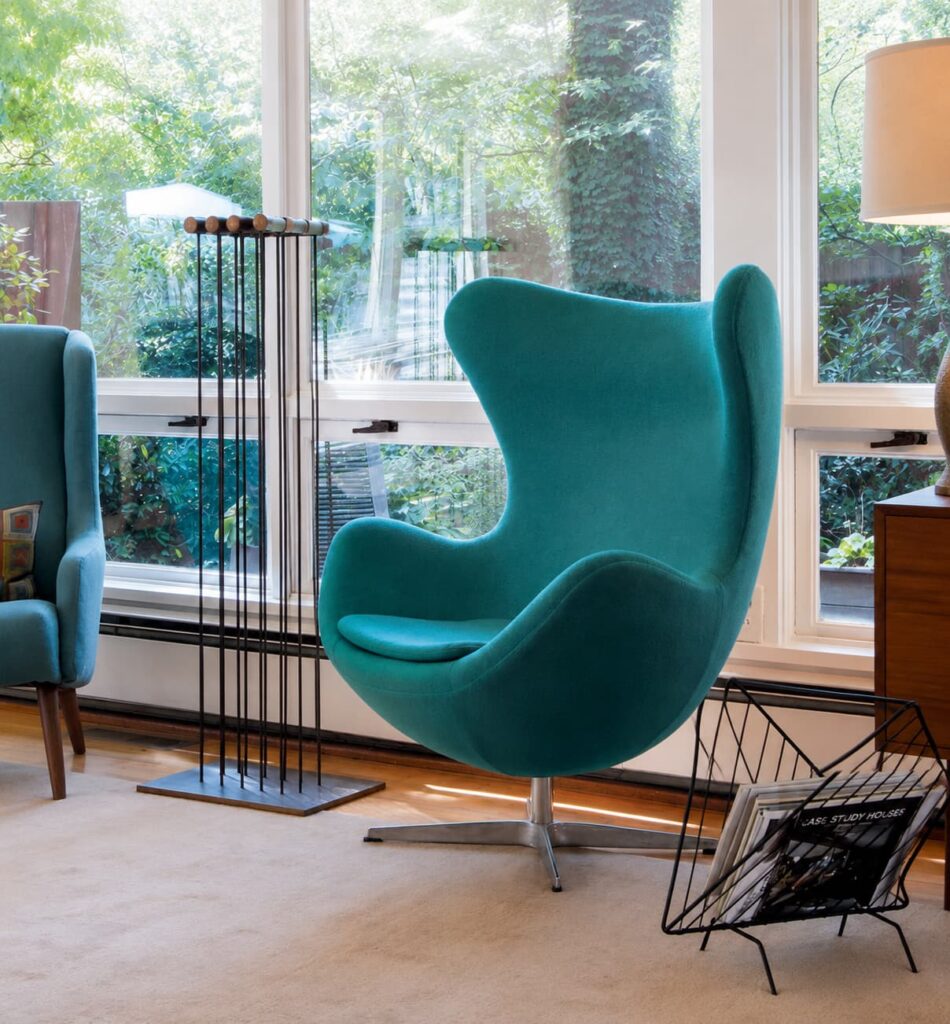
What made the Egg Chair truly groundbreaking was its construction. Jacobsen worked with foam padding shaped over a molded fiberglass shell, upholstered in fabric or leather, and mounted on an aluminum swivel base. The chair had no straight lines, no visible seams on the front—just one continuous, flowing form that seemed impossibly organic.
Creating this shape required Jacobsen to work almost like a sculptor, molding and refining the form in his garage over months of experimentation. The story goes that he shaped the prototype in clay, working and reworking the curves until they achieved the perfect balance of comfort and aesthetics. This hands-on approach resulted in a chair whose proportions feel instinctively right—embracing without confining, bold without being overwhelming.
A Mid-Century Modern Statement
The Egg Chair epitomizes the golden age of Scandinavian design. It embodies the Danish concept of “hygge”—that sense of cozy contentment—while also representing the era’s embrace of bold, sculptural forms. Unlike the more restrained minimalism often associated with Scandinavian design, the Egg Chair makes an unapologetic statement. It’s furniture as art, commanding visual attention while delivering exceptional comfort.
The chair became an instant icon, appearing in stylish interiors around the world. Its timeless appeal has only grown over the decades, making it a favorite of design enthusiasts, hotels, and anyone seeking to make a dramatic design statement.
The Price of Authenticity
An authentic Egg Chair, manufactured by Fritz Hansen (the Danish company that has produced it since its inception), represents a significant investment in design heritage. New Egg Chairs typically start around $11,000, with prices climbing higher for premium leather upholstery or limited edition fabrics. The coordinating ottoman adds another $3,000 to $4,000.
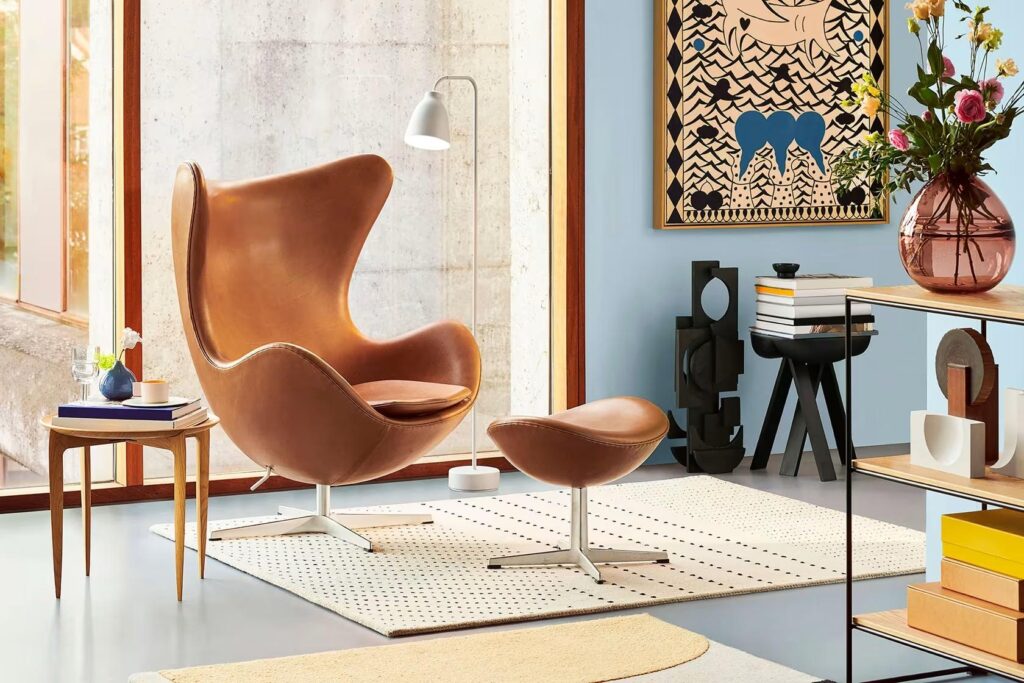
These prices reflect not just the chair’s iconic status but also the craftsmanship involved in its production. Each authentic Egg Chair is still upholstered by hand, requiring skilled craftspeople to stretch the fabric or leather perfectly over the complex curves of the shell. Vintage examples in excellent condition can command similar or even higher prices in the collector’s market, especially early productions from the 1960s.
The Replica Market
Given the Egg Chair’s hefty price tag, it’s no surprise that numerous replicas have flooded the market. Retailers like Wayfair, ModernInDesign, Modterior, Thorvald and Design, and other online furniture stores offer reproduction Egg Chairs ranging from $1,100 to $8,000, depending on materials and construction quality.

These replicas capture the chair’s distinctive silhouette and swivel functionality, often using similar construction methods with molded shells and upholstered finishes. However, the differences between an authentic Fritz Hansen piece and a replica can be significant. The authentic chair’s proportions were refined over decades, the foam density is precisely calibrated for optimal comfort, and the upholstery work is hand-done by master craftspeople. The swivel mechanism, the quality of the base, and the longevity of the materials all distinguish the original from its imitators.
That said, a well-made replica can still offer much of the visual drama and comfort that makes the Egg Chair so appealing, at a much more affordable price.
A Design for the Ages
Whether you invest in an authentic Fritz Hansen masterpiece or choose a quality replica, the Egg Chair remains one of the most compelling designs of the 20th century. More than 65 years after its debut, Jacobsen’s creation continues to captivate with its perfect marriage of form and function, sculpture and comfort. In a world of fleeting trends, the Egg Chair stands as a reminder that truly great design is timeless—a cocoon of comfort that transcends eras and styles.
Leave a Reply