
Meiselman vs Alexander – Different Takes on the Same Elevations & Rooflines

The Elevations
From the street, a Meiselman and an Alexander have a lot in common — and that’s intentional. Both builders were working from the same MCM playbook: stucco walls, decorative breeze block, floor-to-ceiling windows, sliding glass doors, and clerestory windows running along the roofline. Both builders understood that the desert called for homes that connected inside to outside, opened up to breezes, and played with light in interesting ways.
But look a little closer and the differences start to emerge.
Alexander Elevations: Go Big or Go Home
Alexander homes have a bolder, more theatrical street presence. Those clerestory windows? They’re big. When you see an Alexander butterfly or gable roofline from the street, there’s a dramatic band of glass running the full span of the wing — letting light pour in and making the roofline feel like it’s almost floating. The effect is undeniably striking, and it’s part of why Alexander homes have become so iconic in the MCM world.
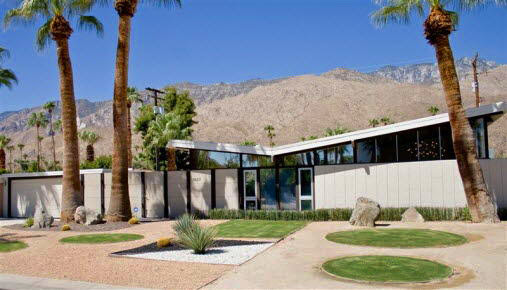
The Alexanders also offered their homes in five distinct exterior elevations — El Dorado, Enchantment, Fiesta, Fleetwood, and Suburba — which gave their neighborhoods a deliberately varied streetscape even when the underlying floor plans were similar. Walk down an Alexander block and the rooflines and facades create a rhythm that feels anything but cookie-cutter.
Meiselman Elevations: Restrained and Refined
Meiselman elevations use all the same vocabulary — stucco, breeze block, clerestory windows, floor-to-ceiling glass — but with a more restrained hand. The clerestory windows are present, but they’re smaller. The rooflines make their moves without telegraphing quite so loudly. There’s a subtlety to a Meiselman elevation that some people love precisely because it’s a little quieter.
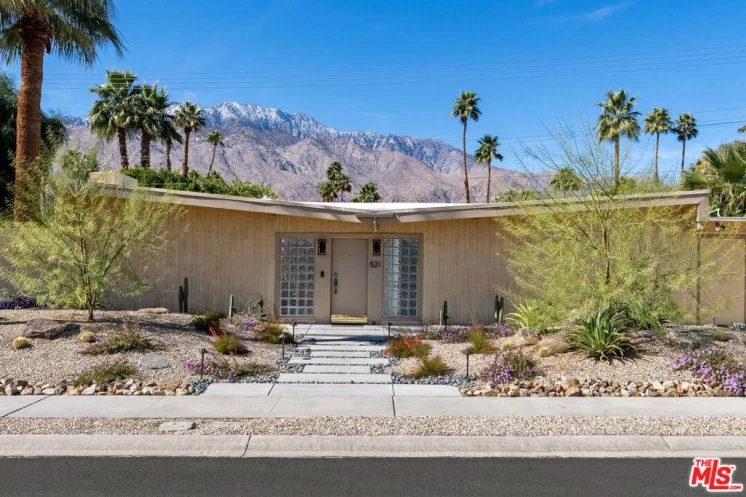
This isn’t a case of one approach being right and one being wrong — it’s two distinct design sensibilities responding to the same brief. Alexander says: make a statement. Meiselman says: let the architecture speak at a slightly lower volume.
Alexander elevations say ‘Look at me.’ Meiselman elevations say ‘Come closer.’ Both are great additions to the Palm Springs .
The Rooflines: Same Menu, Different Portions
Here’s a fun fact that surprises a lot of people: both Meiselman and Alexander offered essentially the same menu of rooflines. Flat roofs, gabled roofs, butterfly roofs, pitched roofs — you’ll find all of them in both builders’ portfolios. So you can’t identify a Meiselman vs. an Alexander just by looking at the roof shape.
What you can do is look at how dramatically those rooflines are expressed.
Alexander Rooflines: Drama Is the Point
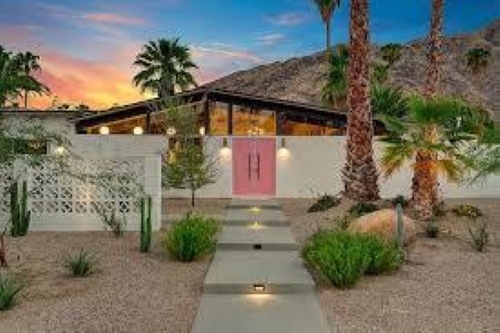
When an Alexander goes butterfly, it really goes butterfly. The wings sweep up steeply, and those large clerestory windows underneath amplify the effect — pulling in light and making the roofline feel like a piece of sculpture. The gable roofs get the same treatment: pronounced pitch, bold presence, lots of glass up in the peak. Alexander rooflines are doing something theatrical, and they know it.
Meiselman Rooflines: The Subtle Statement
Meiselman rooflines use the same forms, but with a lower pitch and more restrained expression. A Meiselman butterfly is still a butterfly — but it’s a quieter one. The clerestory windows are smaller, the pitch is gentler, and the overall effect is less ‘landmark’ and more ‘this house has great bones.’ There’s an understatement to Meiselman rooflines that actually photographs beautifully in the right light.
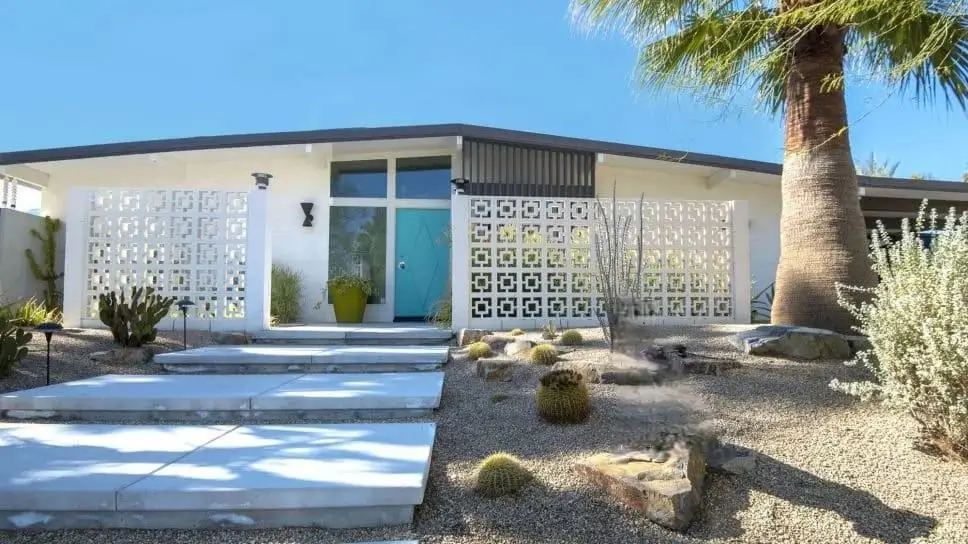
Think of it this way: if Alexander rooflines are a bold serif headline, Meiselman rooflines are elegant body copy. Different purposes. Both work exactly as intended.
| Meiselman | Alexander |
| Flat, gabled, butterfly, and pitched rooflines | Flat, gabled, butterfly, and pitched rooflines |
| Lower pitch on gabled and butterfly roofs | More pronounced, dramatic pitch on gabled and butterfly roofs |
| Smaller, more restrained clerestory windows | Large, dramatic clerestory windows under gable and butterfly wings |
| Restrained elevation — quieter street presence | Bold, theatrical elevation — strong streetscape statement |
| Stucco, breeze block, floor-to-ceiling glass | Stucco, breeze block, floor-to-ceiling glass |
The Bottom Line
If you’re trying to choose between a Meiselman and an Alexander — or you’re just trying to figure out what you’re looking at on a Sunday afternoon drive through Racquet Club Estates — here’s the shorthand:
Go Meiselman if you want a home that’s optimized for vacation-home living: a split bedroom plan that gives real privacy, a galley kitchen that’s smarter for entertaining than it looks, and an elevation that’s slightly more refined rather than flashy.
Go Alexander if you want more volume and drama: an open kitchen that flows into the great room, bedrooms clustered together for family convenience, and a roofline that makes a statement from the street.
But honestly? The best possible scenario is what you get in a neighborhood like Sunrise Park or Little Beverly Hills — where Meiselmans and Alexanders are mixed in together, side by side, each one making the other look even better by comparison. That’s not a rivalry. That’s a neighborhood.
Want to learn more about Meiselman homes in Palm Springs?
Visit meiselmanregistry.org and follow @meiselmanregistry on Instagram.
Leave a Reply