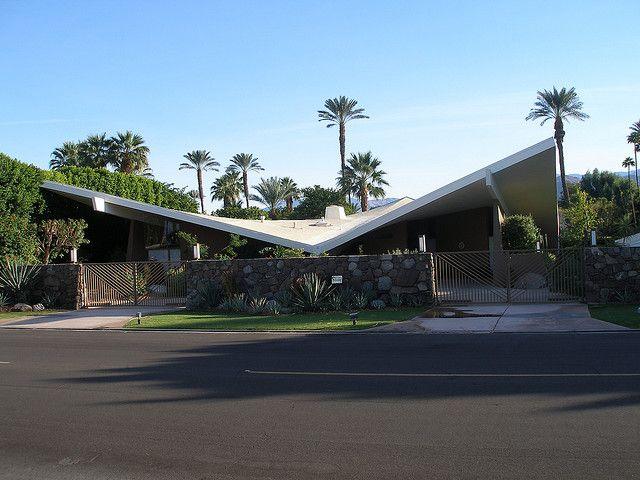
When the Future Came to Town: Googie Architecture in Palm Springs
Before there was Google, there was Googie. Never heard of Googie? We’ll you’re not alone. Googie is a futuristic, mid-century modern architectural style (popular 1950s–1970s) defined by dramatic angles, sweeping curves, and space-age motifs such as rocket ships and atomic shapes. And it’s one of the things that attracted Susan and me to Palm Springs.
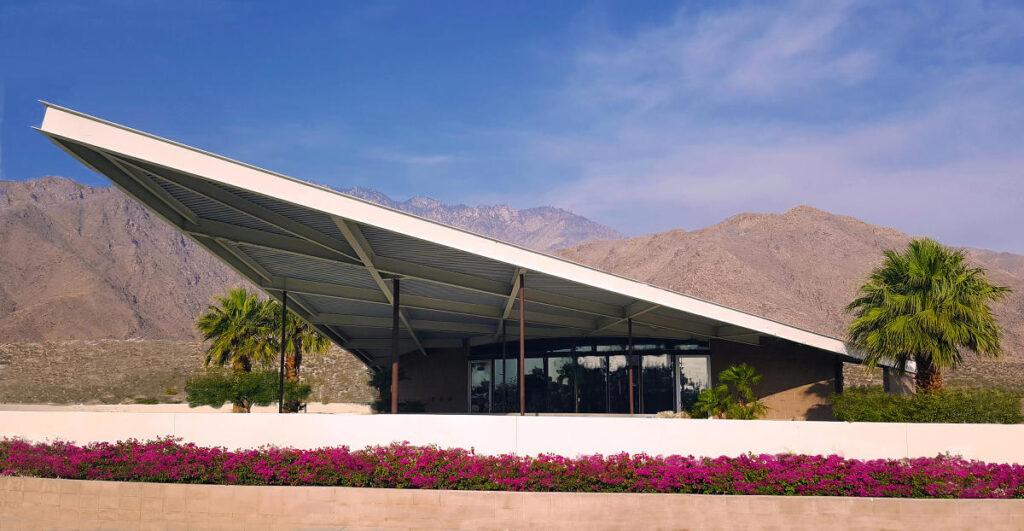
I’ll admit it — the first time Susan and I visited the Palm Springs Visitors Center, we pulled over just to stare at it. That soaring, wing-like canopy, slanting skyward as if about to take off, the whole thing looking both ancient and futuristic against the backdrop of the San Jacinto Mountains. We’d driven past it a couple of times, and said “WOW”, but one afternoon we decided to stop and really look at it. This place thinks it’s the future. And honestly? It’s not wrong.
What we were looking at, of course, was Googie architecture — one of the most delightfully unhinged design movements in American history, and one that left a surprisingly deep mark on Palm Springs and the Coachella Valley. If you’re a fan of mid-century modern design (and if you’re hanging around the Meiselman Registry, I’m guessing you are), understanding Googie is like finding the secret decoder ring for a whole slice of postwar American culture.
The Future, Powered By Neon
Googie emerged in the late 1940s out of Southern California, born from a collision of postwar optimism, booming car culture, and a collective national obsession with the Space Age. The name itself comes from a now-demolished West Hollywood coffee shop called Googie’s, designed in 1949 by architect John Lautner — yes, that John Lautner, who you’ll meet again in a moment right here in Palm Springs.
Architecture critic Douglas Haskell coined the term after seeing Lautner’s eye-catching design, though initially as a bit of a jab. The style’s entire job was to scream at you from a moving car — upswept rooflines that defied gravity, parabolic arches, boomerang shapes, starburst motifs, acres of plate glass, and neon signs that made the night look like a party. These weren’t buildings so much as giant roadside billboards that happened to serve coffee and gas. The whole aesthetic was pure, uncut American optimism — the future, democratized and available at every highway off-ramp.
Palm Springs: Googie's Desert Outpost
Palm Springs in the 1950s was a destination city catering to Hollywood glamour and wealthy weekenders, and the Googie sensibility fit right in. Drive up and down Palm Canyon Drive and Highway 111 and the tell-tale signs are still lurking if you know what to look for.
The Palm Springs Visitors Center (2901 N. Palm Canyon Drive) is the crown jewel and the first building most visitors see arriving from the north on Highway 111 — which was entirely the point. Designed in 1965 by Albert Frey and Robson C. Chambers as the Tramway Enco Gas Station, it features that showstopping hyperbolic paraboloid canopy: a 95-foot steel and corrugated metal wing that angles skyward like it caught a desert thermal and never came back down. Frey called it practical — shade for the gas pumps — but let’s be real, it’s a statement. The building was nearly demolished in the 1990s, saved by its retro-perfect design, and placed on the National Register of Historic Places in 2015. Today it hands out maps. It absolutely should be handing out astronaut ice cream.
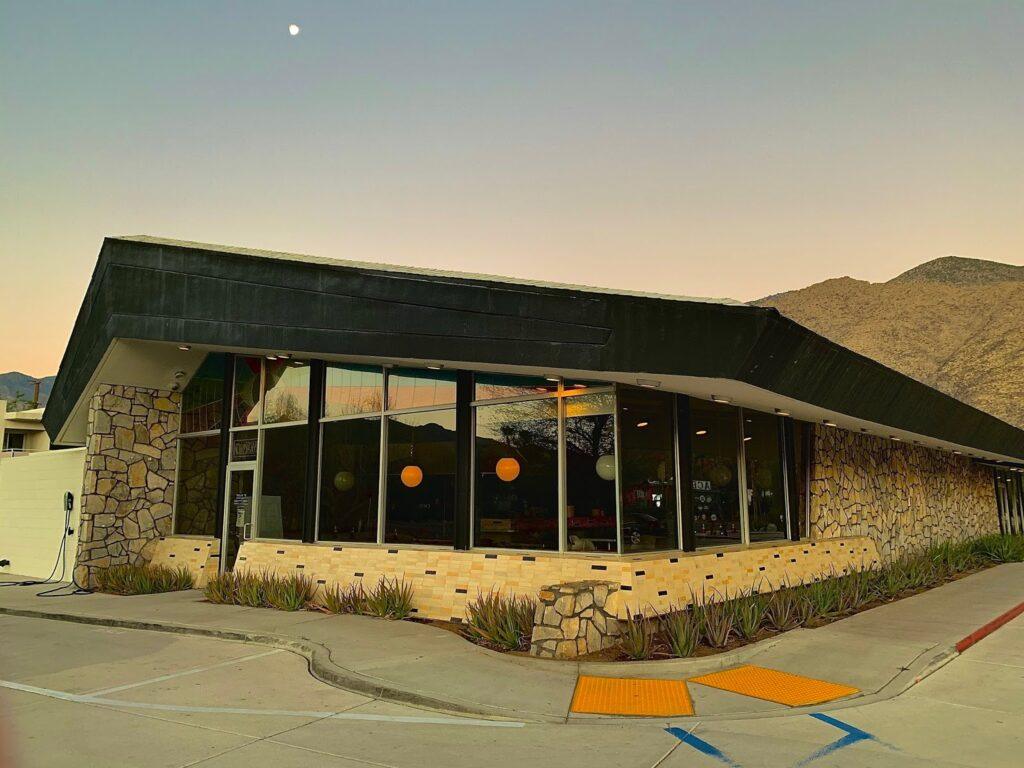
Kings Highway (701 E. Palm Canyon Drive) was originally a Denny’s — which sounds unexciting until you learn it was designed by the legendary Googie firm Armet & Davis, the Los Angeles duo responsible for some of the most iconic Space Age diners in California. The building has since been reimagined as a hip modernist restaurant and bar, but those Googie bones are still very much there. Next time you’re having a cocktail on the patio, you’re basically drinking inside a piece of architectural history.
Then there’s the story of what we lost. William F. Cody’s Huddle Springs Restaurant (1957) was described as one of the finest Googie structures in the desert — and it was torn down to make room for a hotel that was never even built. Let that one sting for a minute. It’s a reminder of just how close we came to losing so much of this era’s commercial architecture before anyone thought to care.
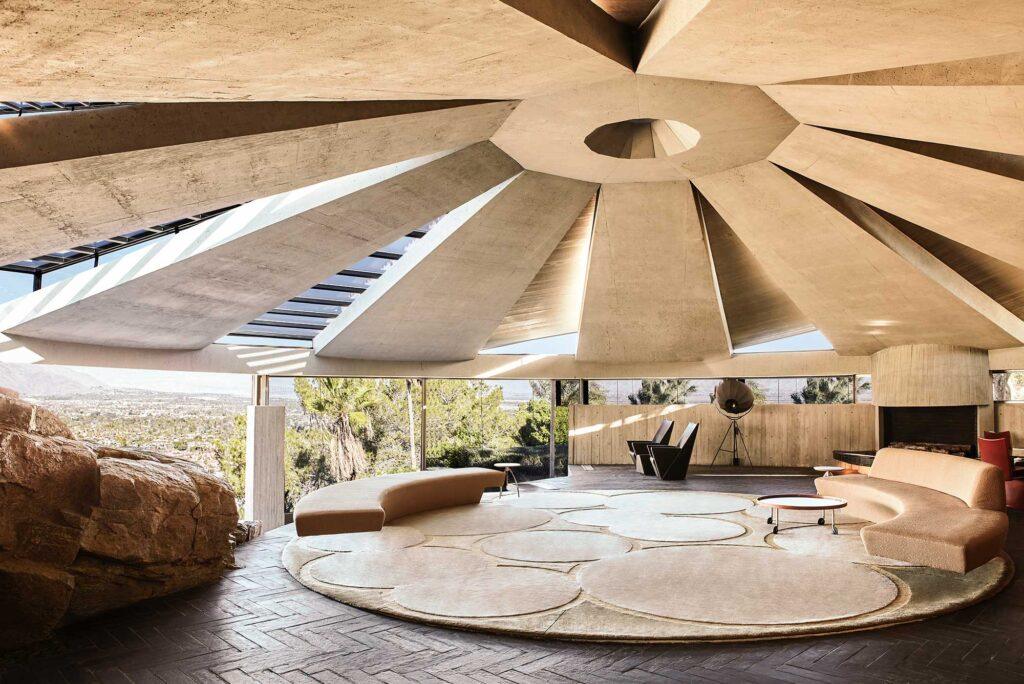
And don’t overlook John Lautner’s Elrod House (1968), tucked into Southridge with its circular living room under a 30-foot domed concrete ceiling that looks like the villain’s lair in a Bond film — because it literally was (see: Diamonds Are Forever). Lautner’s work sits right at the intersection of Googie and high residential modernism, proof that Space Age drama didn’t have to stop at the coffee shop door.
How Googie Snuck Into Your Living Room
Here’s the thing about Googie that I find endlessly fascinating: it didn’t stay outside. Those same atomic-age motifs that made roadside diners unmissable from a Buick doing 60 mph? They filtered directly into mid-century residential design and interiors.
Open up a 1955 design catalog and you’ll find boomerang-shaped coffee tables, kidney-shaped pools, starburst wall clocks, and Formica countertops printed with atomic patterns (there was literally a pattern called “Boomerang” — you couldn’t make this up). The same parabolic optimism that gave us flying-saucer gas stations gave us curved sectional sofas, amoeba-shaped rugs, and those gorgeous splayed-leg credenzas that everyone on Instagram is currently hunting for.
Fiberglass chairs, chrome lamp bases, vinyl upholstery in turquoise and coral and chartreuse — these were all part of the same cultural conversation. The Space Age wasn’t just happening outside on the highway. Americans wanted it in their living rooms too. They wanted their breakfast nook to feel like a launchpad.
For the mid-century modern homes being built in Palm Springs during this same era — including the tract developments and custom homes of the Meiselman era — this Googie energy was part of the ambient design culture. You see it in the bold rooflines, the generous use of glass, and the way interior and exterior blurred together as if the desert itself was meant to be part of the living space. The exuberant atomic spirit of Googie and the more restrained vocabulary of Desert Modernism weren’t at war with each other — they were drinking from the same cultural well.
The Future, Preserved
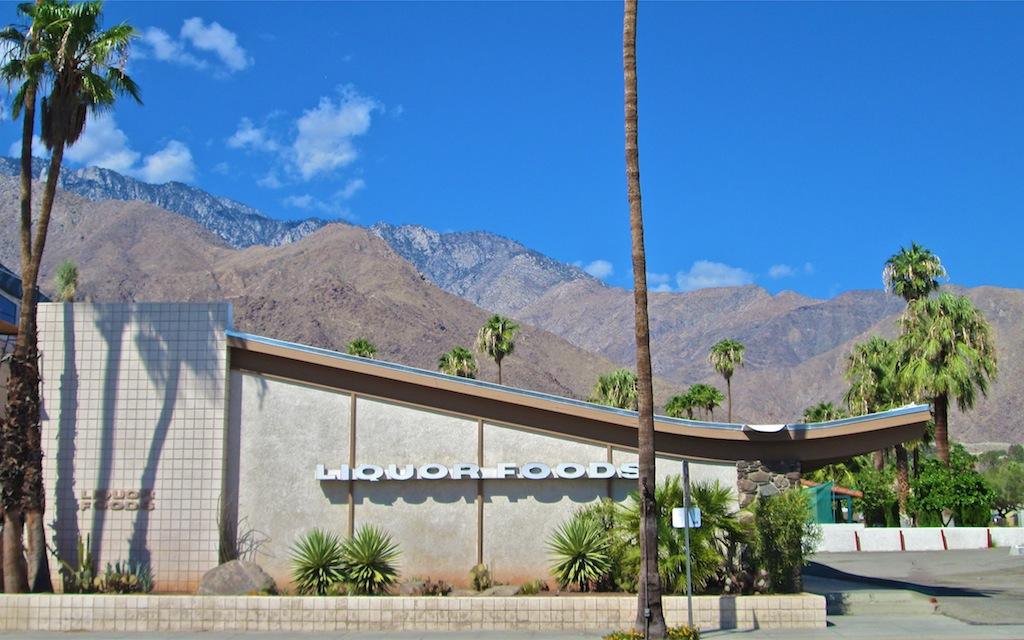 What I love about Googie is that it was never pretentious. It wasn’t built for critics or museums — it was built for everybody, designed to catch your eye when you were just trying to find a place to get a burger and fill up the tank. And yet here we are, preserving it, photographing it, writing articles about it, because it turns out that populist optimism made excellent architecture.
Palm Springs got lucky. Enough of its mid-century commercial and residential fabric survived that the city has become a living museum of postwar design. Every building that’s still standing — from Frey’s soaring Visitors Center to the Googie-inflected bones of Kings Highway — is a small act of defiance against the forgetting.