When a Dream Feature Becomes a Nightmare
If you’ve ever looked at photos of classic Palm Springs midcentury modern homes, the pool is almost always the centerpiece. That organic, kidney-shaped basin reflecting the mountains. The seamless transition from indoor living space to outdoor oasis. The shimmer of water catching the desert light.
Our pool was one of the features that had sold us on 606 Monterey Road in the first place. That original teardrop shape was pure 1960s Palm Springs. The views from the pool deck were spectacular. And the potential—once we resurfaced it, updated the equipment, and added a spa with a waterfall feature—was exactly what we’d dreamed of.
What we didn’t know when we signed the contract was that this dream feature would become one of the most frustrating, stressful, and poorly managed aspects of our entire restoration.
Starting with High Expectations
We hired Premier Pools & Spas (www.ppas.com) as our pool contractor, largely based on Wade’s recommendation. He had a close relationship with the company and felt confident they could deliver quality work. Even though their quote of $68,730 was one of the most expensive we’d received—about $8,000 higher than competing bids—we decided it was worth paying more for a contractor who came recommended and who Wade could help keep on track.
The scope of work was comprehensive:
- Remove the old plaster surface and reline the pool with a premium Pebble Tec finish
- Replace all the pool equipment with a state-of-the-art Pentair system, including WiFi-enabled controls
- Install a six-person spa with a waterfall feature that would cascade into the pool
- Install LED lighting in the pool and spa
- Install new tile around the spa perimeter
We signed the construction contract on June 4, 2025. The contract stated the project would be completed “on or about September 18th, 2025″—a timeline of just over three months, which seemed reasonable for the scope of work.
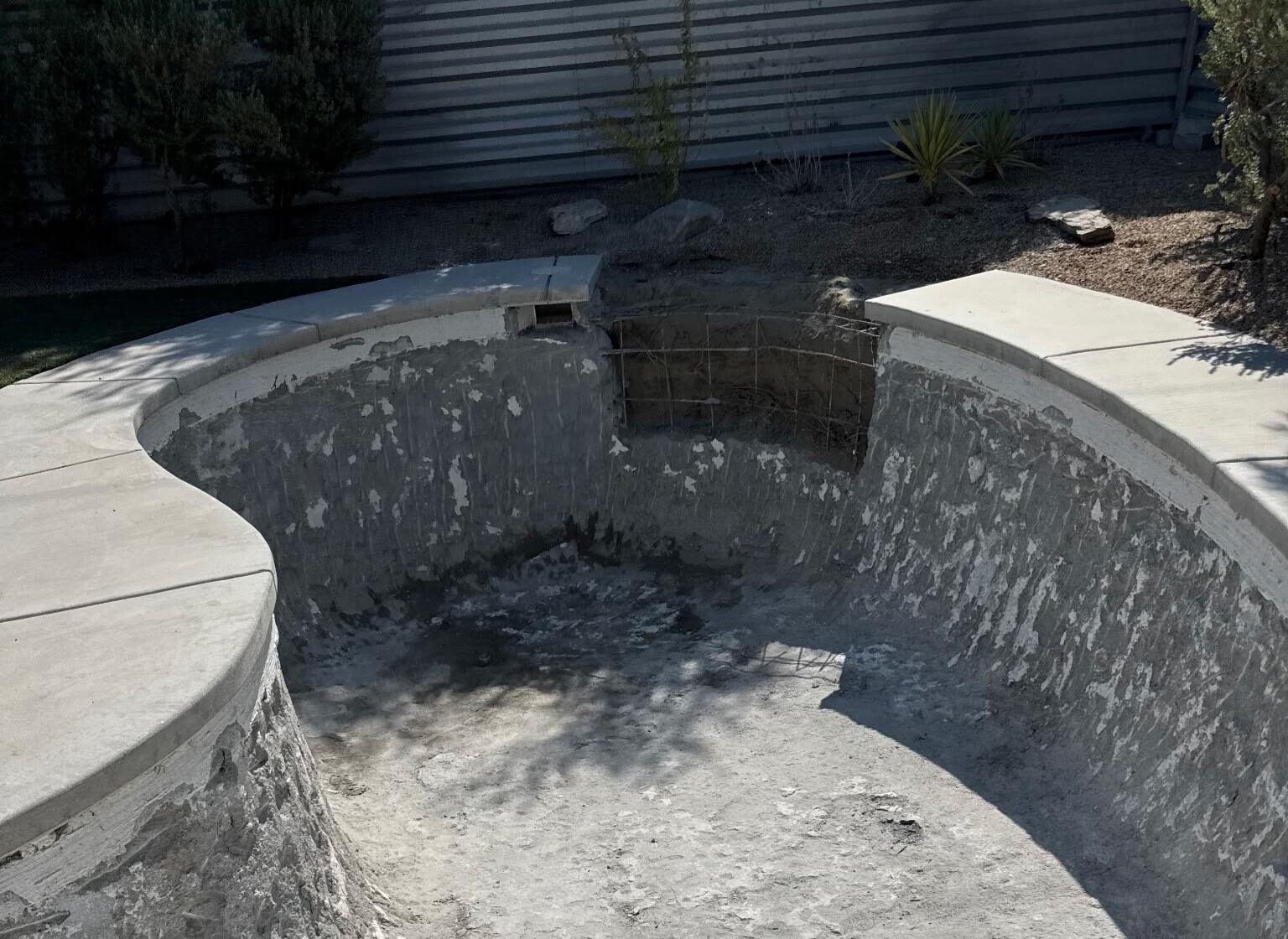
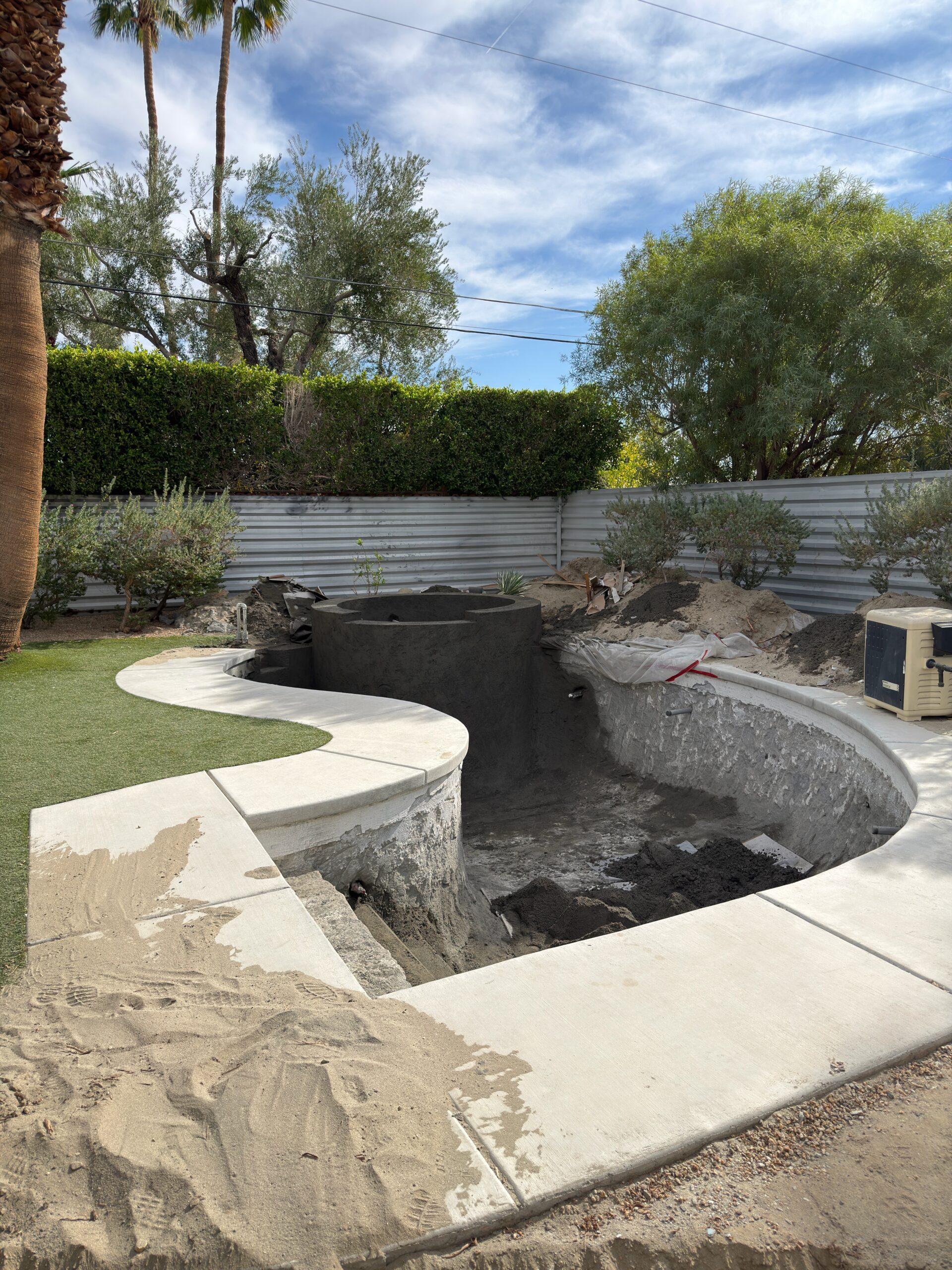
The project got off to a strong start. Within a few weeks, the contractor had removed the old plaster surface from the pool. The vintage tile came off. The underlying concrete structure was exposed and prepped for the new surface. Things were moving.
And then everything ground to a halt.
Permitting Purgatory, Pool Edition
Remember the permitting nightmare we dealt with on the house renovation? Well, the pool had its own version.
We’d obtained a permit to drain the pool—check. We’d obtained a separate permit to install the new spa—check. But when it came time to apply the gunite to the spa, we discovered we needed yet another permit.
Just to spray concrete into a hole we’d already gotten permission to dig.
We had to wait four weeks for the city to issue that permit. Four weeks of no progress. Four weeks of an empty pool and an unfinished spa. Four weeks of paying for a property we couldn’t use or rent.
This was frustrating but manageable. Permitting delays in Palm Springs were something we’d learned to expect, however unreasonable they seemed. What we didn’t expect was what came next.
Lost in the System
Somewhere during that four-week permitting waiting period, our project seemed to get completely lost in Premier Pools & Spa’s process.
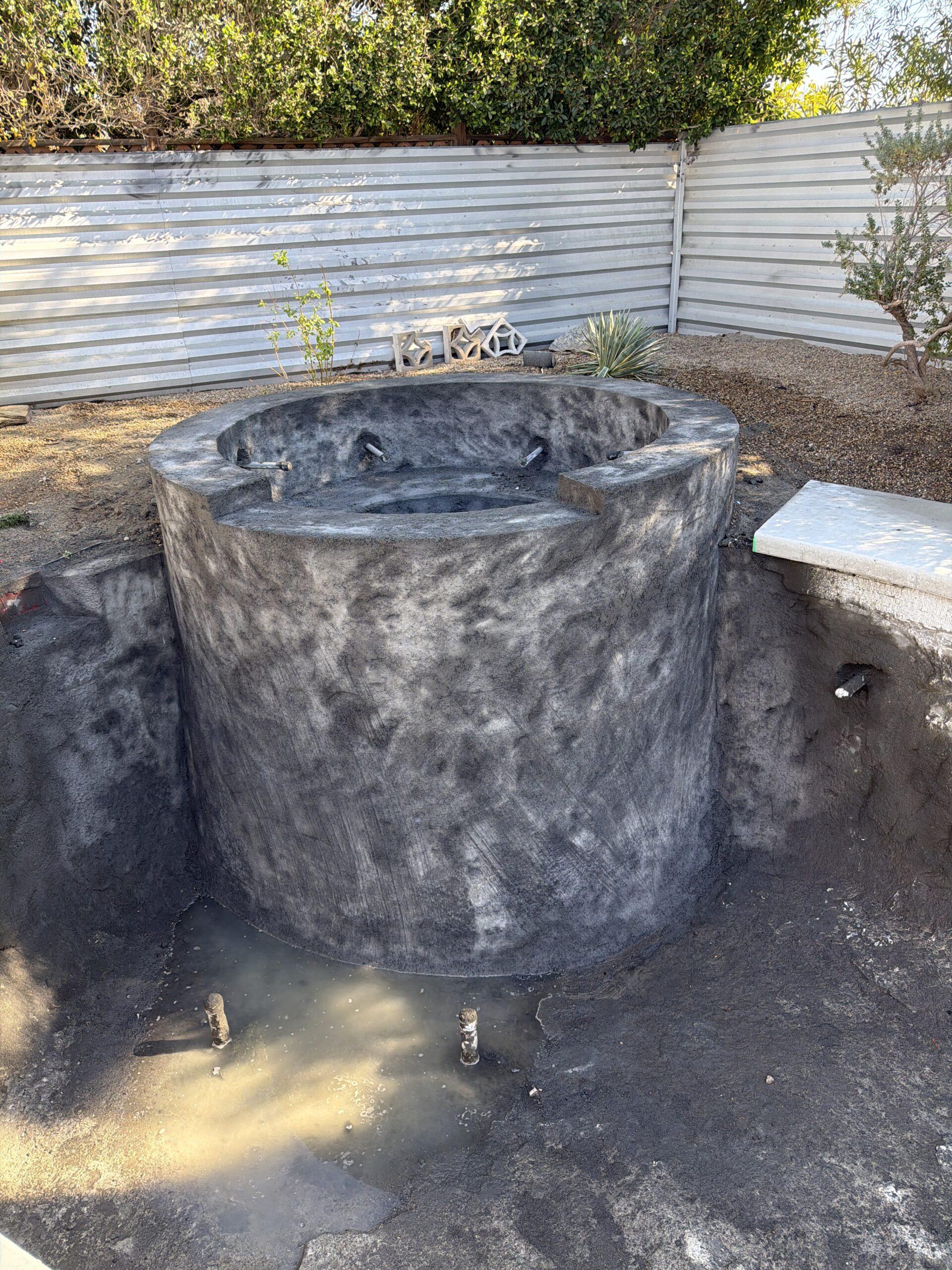
Despite repeated follow-ups from both us and Wade, work did not resume on our project until August 14—when they hand-dug the hole for the spa and then… disappeared again.
Our project got lost again for several months.
From mid-August through late November, virtually no work happened on our pool. The hole sat empty. The spa remained unfinished. The equipment wasn’t installed. And every week that passed represented lost rental revenue and mounting frustration.
In October, Susan started calling them at least once a week to get updates. There was always an excuse. They were waiting on materials. They had other projects that had come up. The crew was assigned to another job. The weather wasn’t cooperating. The explanations varied, but the result was always the same: no progress.
When Frustration Turns to Action
By November, we’d had enough. The delays weren’t just annoying—they were literally costing us thousands of dollars in lost rental revenue. We’d had to turn down multiple booking requests because we couldn’t guarantee the pool would be functional. We’d pushed back the timeline for refinancing the property because lenders want to see a completed, rentable asset.
We shared all of this with Premier Pools & Spas in clear terms. These delays were having real financial consequences. We needed the project completed.
There was some movement, but not enough. Early December came and the pool still wasn’t done.
That’s when we put our foot down. We were inviting our kids to come enjoy our new house over the holidays. We’d planned this months in advance. The pool and spa needed to be finished before Christmas—not negotiable.
The Mad Rush and the Compromises
What followed was a frantic three-week push to get everything completed before the holiday deadline.
Suddenly, after months of excuses and delays, crews showed up almost every other day. The pebble finish was installed. The new LED lights went in. The spa took shape. The new concrete decking was poured. The equipment was connected and tested. Things that apparently couldn’t happen for months somehow all happened in three weeks.
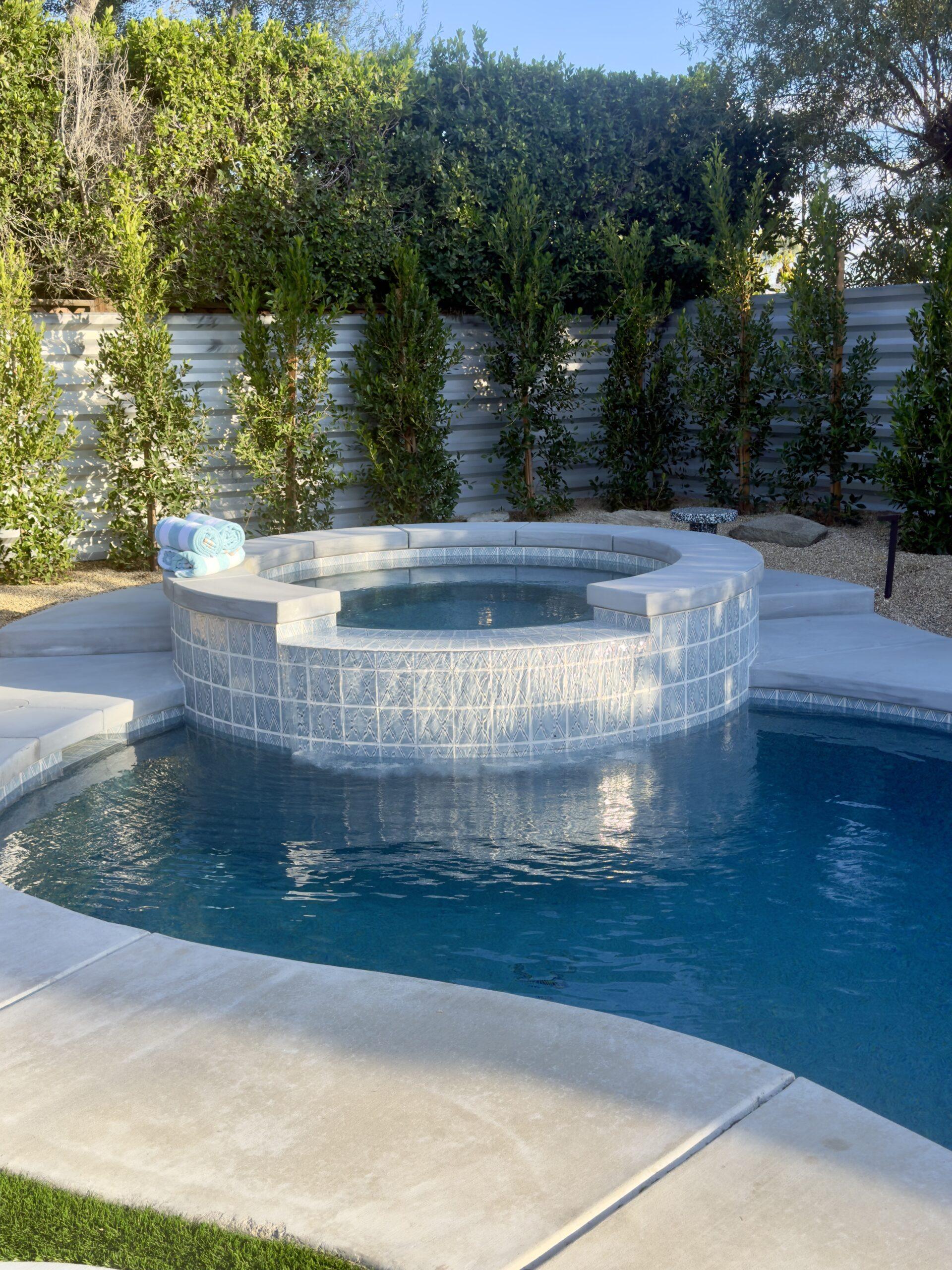
On Christmas Eve, we were finally able to enjoy a soak in our new spa with our kids. The water was warm, the jets worked, the waterfall cascaded beautifully into the pool, and the mountain views were spectacular. After six months of stress and frustration, we finally had the pool and spa we’d envisioned.
The project was three months overdue—completed in late December rather than mid-September—but it was finally done.
Or so we thought.
The Price of Rushing: Compromised Specs
As we spent more time with the pool & spa over the following days, we started noticing things that weren’t right.
The tile on the outside of the spa didn’t match what we’d selected in our contract. It was a different color, a different style—completely wrong. When we asked the contractor about it, he admitted he’d changed the spec to get the project done faster. He offered to come back and replace it if we wanted, but the tone suggested he hoped we’d just accept it and move on.
We also noticed the two 12-foot diameter concrete circles around the pool deck were eight inches above ground level—awkward, trip-hazard bumps that looked terrible and served no purpose. When we asked about them, we learned they’d been poured without properly excavating the soil beneath them. Again, a shortcut taken to meet our deadline.
We insisted they fix the bad concrete decking. The concrete circles needed to be removed and replaced properly, and we wanted a credit for the money we’d paid for the improper installation. As for the spa tile, we made it clear they would be coming back to replace it with what we’d actually contracted for.
To their credit, they agreed to make both corrections. But the fact that we had to catch these problems, confront them about them, and insist they fix them was exhausting. This should have been done right the first time.
Postscript
If this were a glossy magazine spread, this is where the story would end: champagne in hand, sitting in our new spa, hearing the waterfall splashing into the pool, with the San Jacinto Mountains glowing pink in the distance.
But real life has a habit of tapping you on the shoulder after the final check clears.
Once the pool and spa were “finished” and we made our final payment, a new chapter of frustration began—one that had nothing to do with permitting purgatory or concrete circles.
It started one morning, the spa wouldn’t heat. After some investigation, we learned that Premier’s maintenance crew had disconnected the valves that allow water to flow from the pool to the spa on their first service visit. In other words, our brand-new pool & spa didn’t work.
It took a full week just to get Jason scheduled to come out and reconnect what never should have been disconnected in the first place.
Then there was the matter of the four-button control pad—the one that allows guests to control the spa temperature from the pool deck instead of hiking over to the equipment area. They never installed it.
Susan called. And called. And called. Half a dozen times over three weeks.
When they finally showed up, they didn’t have the controller.
They thought we had it. We did not.
Two more days of calls and texts later, someone returned with the actual equipment and finally installed it—but none of the buttons were labeled. No instructions were left. No explanation was offered. It was a sleek little mystery box bolted to the wall. Press a button and see what happens.
Worse, during installation, they somehow disabled the wireless remote system that allows us to control the pool and spa from our phones and caused a short that disabled power to the pool equipment and our sprinkler system. The entire pool and spa were now dead.
So once again, Susan became project manager, quality control supervisor, and customer service liaison. Several more days of unanswered calls and texts were required to get them to come fix the mistakes they made.
This is the part no one tells you about when you hire a “premium” contractor. The real test isn’t how they perform when payments are outstanding. It’s how they behave once the money has cleared.
Looking back at the entire experience—from months of delays to rushed corrections, from swapped materials to disconnected systems—I can say this plainly:
We would not recommend Premier Pools & Spas to anyone.
Not because the finished pool isn’t beautiful. It is.
Not because the equipment isn’t high quality. It is.
But because a contractor is more than plaster and pipes. A contractor is management, communication, accountability, and follow-through. And on those measures, this experience failed repeatedly.
What Went Wrong and What We Learned
Looking back on the pool project, several things are clear:
The contractor took on more work than they could manage. Our project kept getting pushed aside for other jobs, which suggests they were overcommitted and poor at prioritizing or managing their workload.
There was a fundamental lack of communication. We shouldn’t have had to call weekly for updates. A professional contractor should be proactively communicating about delays, scheduling, and any issues that arise.
The permitting delay became an excuse for much longer inaction. Yes, the four-week wait for the gunite permit was frustrating. But that doesn’t explain months of subsequent inactivity. The permitting issue was real, but it became a convenient excuse for general project mismanagement.
Quality suffered when work was finally rushed. When they finally did focus on our project in those last two weeks, they cut corners to meet the deadline we’d imposed. Wrong materials, improper installation—these are the consequences of cramming months of work into days.
Wade’s involvement helped, but it wasn’t enough. Even with Wade’s relationship with the company’s owner and his attempts to keep them on track, the project spiraled. This suggests the problems ran deeper than just our specific job—there were systemic issues with how the company managed projects.
We paid a premium for substandard service. Remember, we’d chosen Premier Pools & Spas specifically because they were more expensive and came recommended. We thought we were paying for quality and reliability. Instead, we got a terrible experience.
The Bottom Line
Would we use Premier Pools & Spas again? No.
Would we recommend them to others? No.
Was it worth the stress, the delays, and the constant fighting to keep the project moving? That’s harder to answer. We love the finished product—the Pebble Tec surface is gorgeous, the Pentair equipment works flawlessly, and the spa with its waterfall feature is everything we’d hoped for. But the journey to get there was so unnecessarily difficult that it colors our memory of the entire experience.
Key Takeaways for Your Pool Project
If you’re planning a pool renovation or installation in Palm Springs, here’s what we learned:
A contractor’s reputation and relationships matter, but they’re not guarantees. Even with Wade’s recommendation and relationship with Premier Pools, the project was mismanaged. Do your own due diligence, check recent references (not just portfolio photos), and trust your instincts if red flags emerge.
Build contract penalties for delays into your agreement. Our contract had a completion date but no consequences for missing it. A well-structured contract should include financial penalties for unreasonable delays.
Insist on regular, scheduled progress updates. Don’t wait for problems to emerge—build communication expectations into the contract from the start. Weekly update calls or emails should be standard, not something you have to chase.
Document everything. Take photos at every stage, keep detailed notes of conversations and commitments, and maintain a paper trail of all communications. When problems arise, documentation is your best defense.
Don’t be afraid to get aggressive when necessary. We were patient—maybe too patient—for months. When we finally put our foot down and imposed hard deadlines with consequences, work suddenly happened. Sometimes you need to be the bad guy.
Inspect the work carefully before final payment. We caught the wrong tile and improper concrete work, but only because we carefully examined everything. Don’t assume it was done right—verify it.
Factor delays into your planning. Even with a contract that specifies completion dates, build buffer time into your expectations, especially if you’re counting on rental income or personal use by specific dates.
The pool and spa are now among our favorite features of the house. On a warm evening, sitting in the spa with a glass of wine, watching the sun set behind the mountains while the waterfall gently cascades into the pool, it’s hard to remember the frustration of getting here.