Part 6 - Permitting and Planning: Navigating Palm Springs Regulations
There’s a question that Wade and virtually every tradesperson we met with asked us early in the process: “Do you want to get a permit for this work?”
At first, it seemed like an odd question. Of course we wanted to follow the rules. But as we learned more about Palm Springs’ permitting requirements, we began to understand why contractors always ask. The permitting process in Palm Springs is notoriously complex, expensive, and time-consuming—to the point where many homeowners and contractors try to avoid it whenever possible.
We’d heard the horror stories. One neighbor told us they’d had to spend $900 on a permit just to install a new mailbox in a breezeway block structure at the end of their driveway. Another had waited three months for approval to replace a fence. These weren’t major structural projects—they were routine maintenance and repairs.
It seemed crazy to need a permit to change your mailbox, or to make basic repairs like replacing an electrical panel, or to replace a fence and gate that looked exactly like the old one. If we were making structural changes, that would make sense. But for routine work?
We were about to learn the hard way that in Palm Springs, everything requires a permit.
Starting with the Electrical: A Slippery Slope
Wade advised us that we needed a permit for the electrical work, which made sense since electrical systems are safety-critical. We didn’t argue. We told the electrician to file for the permit, paid the fees, and Wade’s electrician proceeded with replacing the electrical panel and upgrading our service.
As required, when the installation was complete, a building inspector swung by to inspect the work. He said it looked good. Then he asked if he could walk through the house to see the work.
That’s when our troubles began.
When a Routine Inspection Becomes an Inquisition

The inspector walked through the house, looking at various elements of the renovation. He spotted that the cabinet installers had used the wrong gauge wire for the new under-cabinet lights—a minor issue that Wade would have corrected immediately.
But then the inspector asked if we’d done any rewiring in the house.
Wade told him, ‘No, we only replaced the electrical panel.’ He even showed the inspector photos he’d taken of the walls with the drywall removed for the plumbing work, clearly showing the old wires were still in place.
The inspector didn’t believe him.
Instead, he demanded that Wade remove sections of drywall in different rooms throughout the house so he could see inside the walls to verify that the wiring hadn’t been changed. Never mind that we’d already patched, painted, and in some cases retiled those walls. Never mind the photos showing the original wiring intact. The inspector wanted to see for himself, and he had the authority to make it happen.
Next, he went into the bathrooms.
“Did you obtain a permit to redo these showers?” he asked.
Wade explained that he didn’t think that was necessary since we were just retiling existing showers—not moving plumbing, not changing the layout, just replacing worn tile with new tile.
The inspector disagreed. He required Wade to remove sections of newly installed tile and drywall in each bathroom so he could verify that the shower pan lining had been installed correctly.
Let me pause here to emphasize what this meant: We had to destroy sections of work we’d just completed and paid for—work that had been done correctly—simply so an inspector could verify that yes, indeed, it had been done correctly.
But the inspector wasn’t finished. Because he suspected we’d been working without permits, he flagged our property for a full permit review. During this review period, no work could proceed inside the house. In fact, they required that all power to the house be turned off. Everything came to a grinding halt—within sight of the finish line.
Six Weeks in Permitting Purgatory
The administrative nightmare that followed took six weeks to resolve. Six weeks when we couldn’t move forward, couldn’t finish the work, couldn’t use our house. Six weeks of paying for a property we couldn’t occupy while bureaucracy ground through its process.
As “punishment” for doing work without permits, all of our permit fees were doubled, and Wade had to pay a fine.
To his enormous credit, Wade handled this situation with professionalism and grace. Despite what we all considered unreasonable behavior on the city’s part, Wade paid all of the extra costs associated with the permits and fines. He never suggested passing these costs on to us, never complained, never made us feel like this was our fault for not getting permits we didn’t know we needed.
There’s more. Because the inspector turned the power off at the house during this review period, our automatic sprinkler system wouldn’t work. In the Palm Springs summer heat, two days without water would kill the landscape plants we’d invested in. So, Wade paid one of his crew members to manually swing by the house every single day to turn on the sprinkler system by hand.
Every day. For six weeks.
This is the mark of a truly exceptional contractor—someone who takes responsibility not just for the work itself, but for protecting the entire investment you’ve made in your home.
The Pool Permitting Saga
While the house was in permitting purgatory, the pool project ran into its own version of bureaucratic complications.
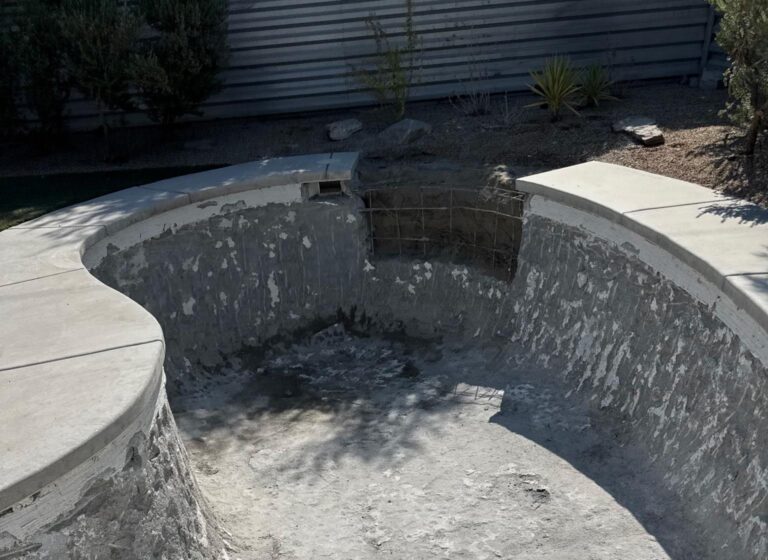
We’d obtained a permit to drain the pool. We’d obtained a separate permit to install the new spa. But when it came time to apply the Gunite to the spa—literally just spraying concrete—we discovered we needed yet another permit.
We had to wait four weeks for the city to issue that permit. Four weeks to get permission to spray concrete into a hole that we’d already gotten permission to dig.
No work could proceed during that time. The pool sat empty. The spa remained unfinished. And we continued paying for a property we couldn’t use.
The Silver Lining: Adding Solar
With no work happening inside the house and no progress on the pool, Susan and I found ourselves with unexpected time to address something we’d been considering: solar panels.
We’d just received our first electricity bill for the house: close to $1,000 for the month of July. When you’re running air conditioning in the desert in summer, electricity costs can be staggering. We learned that solar systems in the Palm Springs area pay for themselves in about five years—a compelling return on investment.
We also learned that the federal tax credits for solar systems were scheduled to end later that year under the Trump administration. If we were going to do this, the time to act was now.
We hired GOAT Solar to design and install our system. Unlike every other permit we’d dealt with, the solar permit was approved quickly, and the installation moved smoothly. Within about four weeks—including a two-week waiting period for Southern California Edison to temporarily disconnect our power and allow the solar installers to connect our system to the grid—we had a complete solar array installed on our roof.
The system cost $37,000, bringing our total project cost to $252,043.
Was this more than we’d planned to spend? Absolutely. But given the electricity costs and the impending expiration of tax credits, it made financial sense. And at least this part of the project proceeded without drama.
The Permit Absurdity Continues
Remember that washer/dryer tower we planned to install in the kitchen to save space? Well, it needed a 220-volt power line. That required a permit.
The cost of that permit? $500.
For context, the total cost of running the power line and installing the outlet was about $1,500. The permit increased the cost of that project by 25%—to plug in a dryer.
Resolution (Finally)
After six weeks of waiting, making repeated calls, and visiting the building department in person, the inspector finally returned to complete his review. He came out three more times to inspect various aspects of the work:
He examined the walls Wade had opened up and decided that yes, the wires had not been touched. We could repair the walls.
He looked at the shower pan liners Wade had exposed and decided that yes, they’d been installed correctly. We could repair those walls and retile them.
He verified the electrical panel installation and decided that yes, it had been installed correctly. We could turn the power back on.
Everything Wade had told him from the beginning was true. All the destruction, all the delays, all the additional costs—none of it had been necessary.
After the six-week delay, we were finally able to allow tradespeople back into the house to finish the remaining tasks. Susan flew to Palm Springs for two weeks to do a walk-through with Wade, check the completed work, and address any final issues.
We were close to the finish line. But we’d learned some expensive lessons along the way.
Key Takeaways
Our experience with Palm Springs permitting taught us lessons we wish we’d known from the beginning:
Have honest conversations with your contractor about the pros and cons of getting all necessary permits. This isn’t about encouraging you to break the law—it’s about understanding the realistic costs, timelines, and risks involved. Some contractors will push for permits on everything; others will try to minimize them. Have an open discussion about the tradeoffs.
Understand the requirements for each permit, their costs, and how long approval takes. Don’t assume permits are quick rubber stamps. In Palm Springs, they can take weeks or months and cost hundreds or thousands of dollars—even for minor work.
Find out whether the city approves permits directly or outsources the review process. Third-party reviewers can add significant delays—in some cases, two to three months, depending on the nature of the project and permit.
Even though it costs more upfront and creates delays, getting permits from the start is better than being shut down mid-project. We learned this the hard way. The extra permit fees, fines, and six-week delay cost us far more—in both money and stress—than getting all the permits upfront would have.
Budget for permitting as a significant line item. We spent thousands of dollars on permits and related fees. This should be part of your renovation budget from the beginning, not a surprise cost you discover midstream.
Choose a contractor who has experience with local permitting. Wade had over 20 years of experience as a general contractor in Cochella Valley, knew what permits are required and when, and was able to navigate the process. A contractor without that local knowledge would have struggled even more.
Document everything. Wade’s photos of the walls before and during work proved invaluable, even though the inspector didn’t initially accept them. Always have your contractor photograph every stage of work, especially anything that will be covered up.
Be patient and maintain perspective. As frustrating as the permitting process was, it wasn’t the end of the world. It delayed things, cost us money, and tested our nerves—but in the end, we got through it and moved forward.
Looking back, would we do anything differently? Absolutely. We’d have filed for every conceivable permit from the beginning, even the ones that seemed absurd. The extra upfront cost and time would have been far preferable to the nightmare of being shut down mid-project.
But we survived. The house survived. And Wade’s professionalism throughout the ordeal reinforced that we’d chosen the right contractor to guide us through this restoration.