Part 4 - The Big Picture: Our Restoration Plan and Budget
There’s a scene that plays out in almost every home renovation project. You start with a clear, reasonable list of must-dos. You tell yourself you’re going to be disciplined, focused, strategic. You’re going to stick to the essentials.
And then you start actually living with the space, working with professionals who know what they’re doing, and suddenly that reasonable list starts to grow.
Susan and I experienced this phenomenon firsthand as we developed our restoration plan for 606 Monterey Road. What began as a modest update evolved into a comprehensive restoration that would touch nearly every corner of the house. Here’s how that happened—and what it taught us about the reality of restoring a midcentury modern home.
The Original Plan: Keep It Simple
When we bought the house, our goal was explicitly to find something that didn’t need much work. We wanted a livable home that we could slowly and thoughtfully improve over time, not a gut renovation that would consume our lives and our bank account.
Based on our initial walkthrough and the home inspection, we identified what we thought were the essential projects:
The kitchen needed updating with custom cabinets and new countertops. The existing 1960s kitchen was charming in a time-capsule sort of way, but the cabinets were falling apart, and the laminate countertops were beyond saving.
The carpeting in the bedrooms had to be replaced. Dated, worn, and frankly a bit musty—this was non-negotiable.
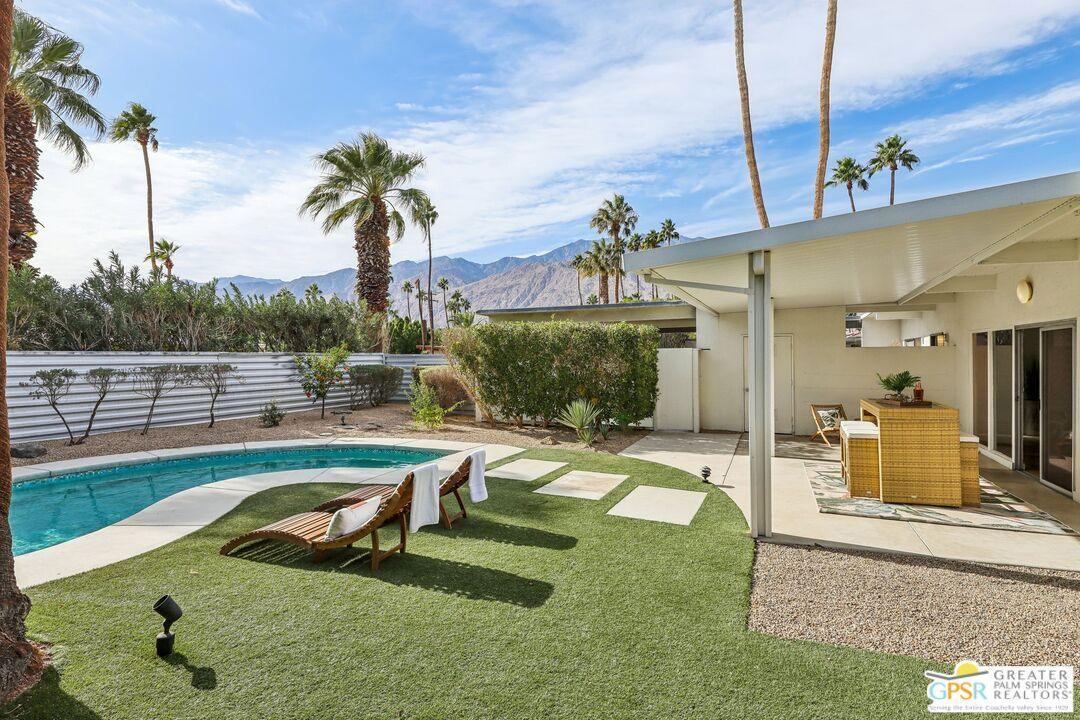
The pool needed to be resurfaced. The plaster was deteriorating, and the tile was failing in places.
We wanted to add a spa. This was more want than need, but we figured if we were redoing the pool anyway, now was the time.
The gate from the carport to the pool area had to be repaired. That beautiful wood and glass partition we’d loved during our first visit? It was structurally unsound and needed attention.
The north garden wall had to be replaced. The decorative block wall was literally falling down.
This seemed like a manageable scope. We’d handle the immediate necessities, make the house comfortable and functional, and then tackle additional projects as time and budget allowed.
That plan lasted about two weeks after we hired Wade.
Scope Creep—Or Is It Scope Wisdom?
Wade Petrowich of MalTec Builders, came to our first planning meeting with a contractor’s eye and decades of experience restoring midcentury modern homes. He walked through our punch list, nodding at some items, raising eyebrows at others, and then he started asking questions.
“You’re planning to redo the kitchen?” he asked.
“Yes,” we confirmed.
“And you’re keeping these floors?” He gestured at the natural stone tile that covered most of the common areas.
Susan made a face. She’d been diplomatic about the floors up to this point, but when pressed, she admitted the truth: “I’ve never really loved them. I’ve always admired MCM homes with terrazzo floors.”
Wade nodded. “Here’s the thing. Once we redo the kitchen—tear out cabinets, install new ones, new countertops—it’s going to be much more difficult and expensive to redo the floors later. We’ll have to work around all that new cabinetry. But if we do the floors first, while everything’s accessible, the process is straightforward.”
He paused, letting that sink in.
“So if you’re ever going to do the floors, now is the time.”
This is how scope creep begins—or what I’ve come to think of as “scope wisdom.” Wade wasn’t trying to upsell us. He was preventing us from making a decision that we’d regret and that would cost us more money in the long run.
We added terrazzo-style porcelain tile flooring throughout the common areas to the list.
The bathrooms followed a similar logic. We already knew we had to tear into the walls to replace the plumbing. Wade pointed out that once the walls were open and the tile was damaged, we’d essentially be looking at half-finished bathrooms. The incremental cost of completing a full renovation while everything was already torn apart was much less than coming back later to finish the job.
We decided to completely rehab both bathrooms—new tile on the floors and walls, custom vanities, new lighting, new toilets. If we were going to do it, we were going to do it right.
Then there was the carport partition. That wobbly wood and glass wall was one of the home’s signature features—the element that created privacy between the street and the pool area while maintaining the indoor-outdoor flow that’s essential to midcentury modern design. We’d originally planned to simply repair it, but Wade had concerns about its long-term stability.
“I can rebuild it in wood,” he said, “but you’re going to have the same issues down the road. Desert sun is hard on wood, especially in this application. What if we fabricate a new wall in painted steel and glass? It’ll be stronger, more durable, and we can design it to honor the original while improving on it.”
We loved the idea. Steel and glass felt appropriate to the period and the style, and the promise of a maintenance-free solution was appealing.
Oh, and while we were at it, why not replace the glass in the front door to match the new glass wall in the carport? Visual consistency matters in midcentury modern design.
The list kept growing, but each addition made sense. We weren’t adding frivolous upgrades—we were making intelligent decisions about when and how to address issues that would need addressing eventually anyway.
The Complete Scope: What We Decided to Do
Wade worked with us over several weeks to develop a detailed project proposal for what had evolved into a full-scope remodel and upgrade of 606 Monterey Road. The work would include interior renovations to the flooring, guest bathroom, primary bathroom, and kitchen, as well as exterior and utility upgrades including the electrical panel, a new HVAC system, complete re-piping of the waterlines, and fabrication of the metal and glass panels for the carport.
Here’s the complete breakdown of the project scope and costs:
FLOORING: Replace tile throughout common areas with porcelain terrazzo tile – $8,260
GUEST BATHROOM: Complete rehab with new tile on floor and walls, custom vanity, new lighting, and toilet – $14,565
PRIMARY BATHROOM: Complete rehab with new tile on floor and walls, custom vanity, new lighting, and toilet – $15,675
KITCHEN: Custom cabinets and new countertops – $39,087
FIREPLACE: Paint – $450
UTILITY DOOR: Replace door to utility closet – $900
FABRICATION OF METAL PANEL/GLASS/POST/GATE DOORS: Replace existing wall and gate in carport – $13,450
ELECTRICAL PANEL UPGRADE: Replace the panel and troubleshoot any blown outlets – $7,000
LAUNDRY WATER LINES: Install new water lines to washer/dryer tower in kitchen – $1,510
WATERLINE RE-PIPE: Re-pipe entire house with PEX lines – $16,100
OUTSIDE SHOWER WALL: Install a new outdoor shower at back of house – $2,716
INSTALL NEW HVAC SYSTEM: Install new AC unit and furnace – $13,750
WASTE REMOVAL: $1,300
MISCELLANEOUS ITEMS: Small handyman-type projects like installing light fixtures, replacing ceiling fans, etc. – $3,050
Total estimated cost from Wade: $137,813
Finish Materials Budget
This figure didn’t include finish materials—we were responsible for providing all the tile, grout, fixtures, and other finish materials for the showers, floors, and walls. It also didn’t include the pool renovation, which Wade recommended we handle separately.
This was another $8,500.
The Pool: A Separate Project
Wade suggested we work directly with Premier Pools & Spas for the pool and outdoor kitchen rather than having him act as the general contractor on that portion of the project. This would save us the general contractor markup on a substantial piece of work, and Wade had a close relationship with the owner of Premier Pools, which meant he could help keep things on track even though he wasn’t officially managing that aspect.
The pool scope included:
- Resurface the pool with Pebble Tec (a premium, durable surface)
- Install a new seven-foot spa with a waterfall into the pool
- Install all new WiFi-enabled pool equipment
- Install a new Mont Alpi outdoor kitchen with grill and refrigerator
- Run new gas and electric lines to support the outdoor kitchen
Premier Pools & Spas came in at $68,730.
This was one of the most expensive quotes we received for the pool work—we got several other bids that were $10,000 to $15,000 less. But we decided it was worth spending a bit more based on Wade’s recommendation and his relationship with the company. We felt that even though he wasn’t the official general contractor on the pool project, his oversight and ability to coordinate between the pool work and the interior renovation would be invaluable.
Word of warning: Learn more about our poor experience with Premier Pools & Spas.
The Total Investment
When we added it all up, our total initial project cost came to $215,043.
This was substantially more than we’d budgeted when we first walked into 606 Monterey Road. Remember, we’d been looking for a house that didn’t need much work. We’d found a house that was livable and functional—and then we’d decided to completely transform it.
Were we being reckless? Maybe. But here’s how we rationalized it:
First, we were doing all of this work at once, which meant we could coordinate projects, share costs (like waste removal), and avoid the much higher expense of doing multiple separate renovation projects over time.
Second, we were addressing deferred maintenance and hidden problems (like the plumbing and electrical systems) that would have cost us significantly more to fix reactively when they failed.
Third, we were making thoughtful decisions about when to restore versus when to update, always with an eye toward honoring the home’s midcentury modern character while making it functional for contemporary life.
Fourth, and perhaps most importantly, we were creating the home we actually wanted to live in—not just a home we could tolerate until we had time and money to improve it.
Still, when we signed Wade’s contract, there was a moment of vertigo. This was real. This was happening. We were about to spend more money than we’d ever spent on anything except our primary residence in Chicago.
Susan looked at me. I looked at her.
“Are we really doing this?” she asked.
“We’re really doing this,” I confirmed.
And with that, our restoration journey officially began.
What We Wish We'd Known
Looking back on this planning phase, several insights stand out:
Budget for the domino effect. One renovation almost always leads to another. When you start opening walls or replacing systems, you’ll discover additional work that needs to be done or opportunities to do related work more efficiently. Build this into your expectations and your budget from the start.
Listen to experienced contractors. Wade’s advice about doing the floors before the kitchen, and completing the bathroom renovations while the walls were already open, saved us tens of thousands of dollars and significant hassle. Trust professionals who’ve done this before.
Don’t be penny-wise and pound-foolish. We were redoing this house to make it a place we wanted to live in, but also as a rental investment property, so we were always mindful of what similar rental homes looked like and what our home would need to offer to attract short-term vacation renters.
Make decisions holistically. Every choice affects other choices. The terrazzo-style flooring influenced our tile selections for the bathrooms. The new carport wall informed our decision about the front door glass. Think about how all the elements work together.
Accept that your scope will grow. Unless you have superhuman discipline, your renovation scope will expand as you work through the details—plan for this financially and emotionally.
Document everything. Wade’s detailed proposal became our bible throughout the renovation. Having every element spelled out with clear costs prevented misunderstandings and helped us track the project’s progress.
In the next article, we’ll dive into one of the most critical decisions we made during the planning process: how we assessed what to restore, what to update, and where to draw the line between historical preservation and contemporary functionality.
Service Providers Referred to in this Article
Wade Petrowich
MalTec Builders
Jason Lewis
Premier Pools & Spas