
The Embrace of Modern Design: The Womb Chair
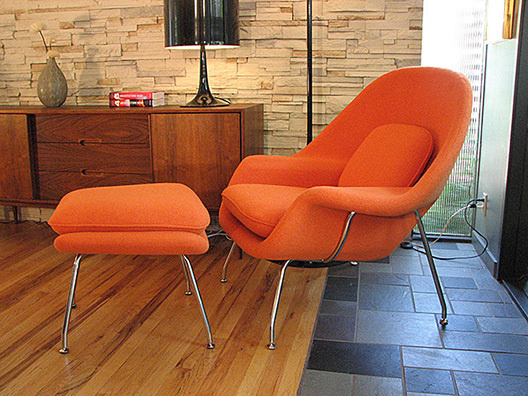
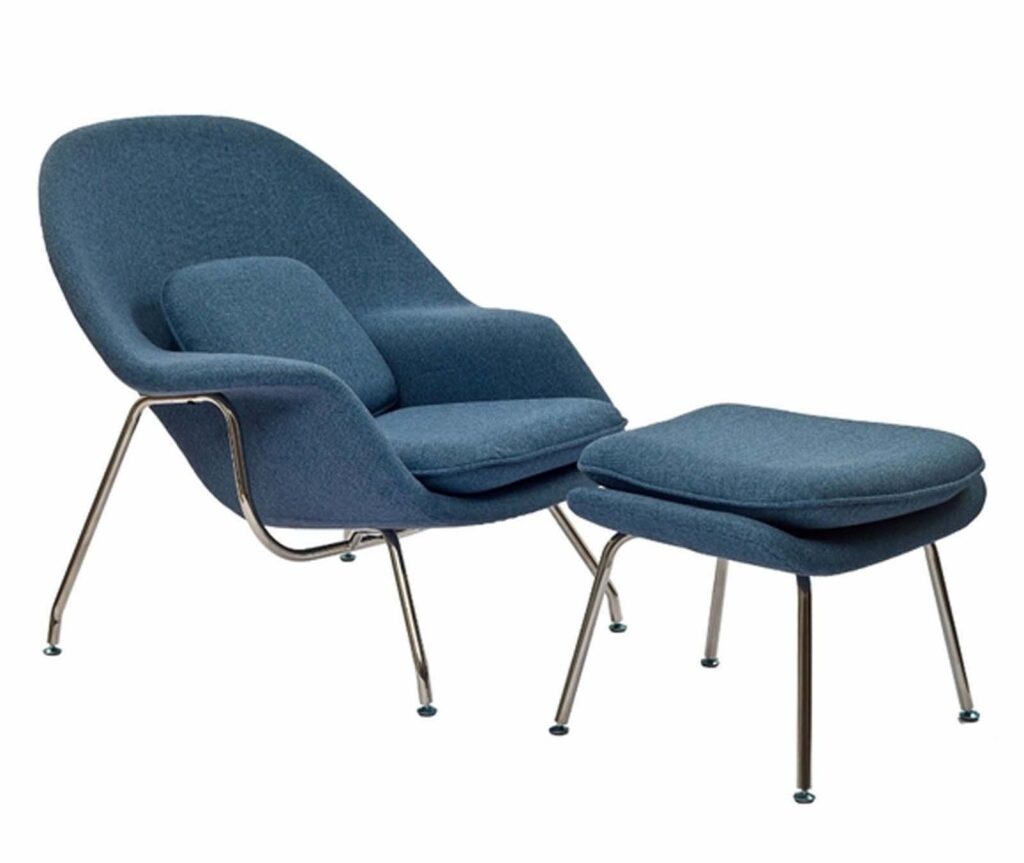
If the Eames Lounge Chair is the distinguished gentleman of mid-century modern furniture, the Womb Chair is its cozy, enveloping counterpart—a sculptural cocoon that invites you to curl up and forget the outside world. With its sweeping organic curves and inviting proportions, this iconic design has been offering comfort and style since the late 1940s. Our good friends Randi and Allen have one, and whenever we visit their house, it’s my favorite chair to sit and relax in.
The Mind Behind the Masterpiece
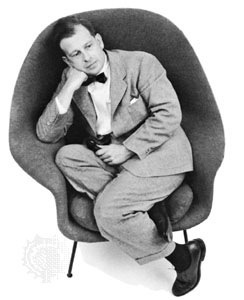
The Womb Chair was designed by Eero Saarinen, a Finnish-American architect and industrial designer who left an indelible mark on 20th-century design. Saarinen, the son of renowned architect Eliel Saarinen, became famous for his futuristic approach to both architecture and furniture. His portfolio includes landmarks like the Gateway Arch in St. Louis and the TWA Flight Center at JFK Airport, but he was equally passionate about creating furniture that pushed boundaries.
The story behind the Womb Chair is charmingly personal. In 1946, Florence Knoll, head of the Knoll furniture company and a former student of Saarinen’s father, approached him with a specific request: she wanted a chair that was “like a basket full of pillows—something she could curl up in.” Saarinen took this brief to heart, spending two years perfecting a design that would cradle the human body in unprecedented comfort.
Innovation in Form and Function
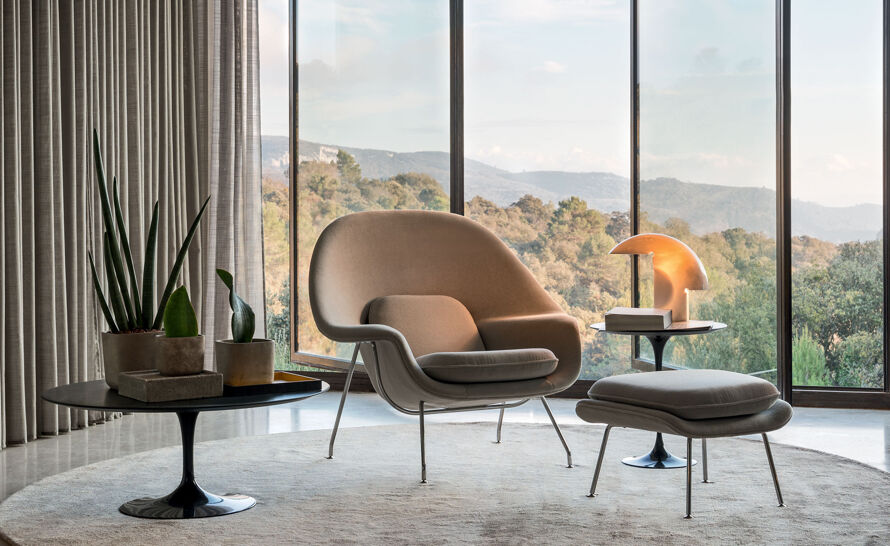
What Saarinen created was revolutionary for its time. The chair’s molded fiberglass shell—a relatively new material in furniture design—allowed for the sweeping, sculptural curves that define its silhouette. Upholstered in fabric or leather and supported by a thin steel rod base, the Womb Chair seemed to float, defying the heaviness typical of overstuffed furniture of the era.
The chair’s embrace-like design wasn’t just aesthetically pleasing; it was psychologically comforting. In the anxious post-war years, the Womb Chair offered a literal retreat from the world. Its high back and enveloping sides created a sense of security and privacy, while its generous seat allowed for multiple sitting positions—curled up with a book, legs draped over the arm, or settled in for conversation.
A Mid-Century Modern Essential
The Womb Chair, introduced in 1948, became an instant icon of mid-century modern design. It represented the era’s fascination with new materials and organic forms, showing that modern furniture could be both innovative and deeply comfortable. Unlike the stark functionalism of some modernist designs, the Womb Chair embraced curves, softness, and human-centered design.
The chair appeared in stylish homes, corporate offices, and design magazines throughout the 1950s, 60s, and 70s, becoming synonymous with sophisticated modern living.
It proved that cutting-edge design didn’t have to sacrifice comfort—a philosophy that resonates just as strongly today.
The Investment in an Original
An authentic Womb Chair, still manufactured by Knoll (the original and authorized producer), represents a significant investment. A new chair typically starts around $5,000 to $6,000, with the coordinating ottoman adding another $1,500 to $2,000. Prices vary depending on upholstery choice—premium fabrics and leathers can push the price up to $15,000. The quality, however, is exceptional – Knoll chairs are built to last generations, with meticulous attention to the original specifications and high-quality materials.
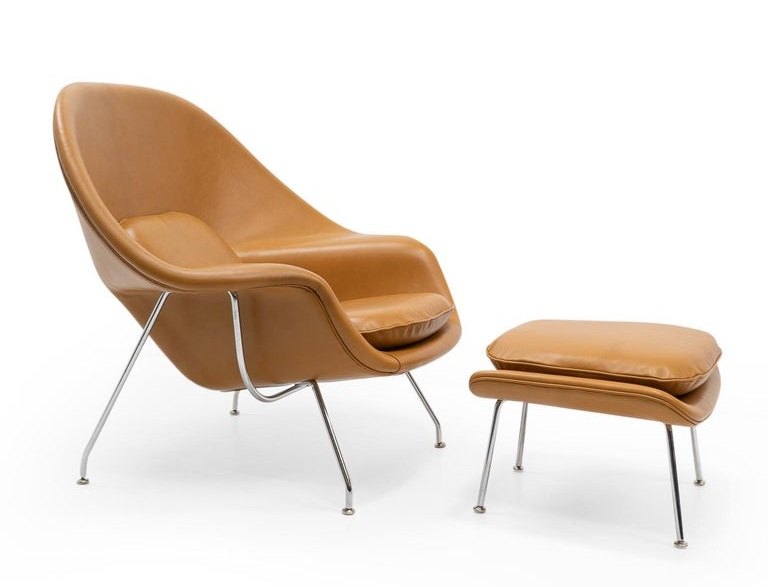
Vintage Womb Chairs in good condition can be found through mid-century dealers and auctions, sometimes at lower prices than new ones. However, pristine examples may actually appreciate in value over time. On 1stDibs, they sell for around $5,000 for a chair, and $8,000 to $11,000 for the chair and ottoman, so they hold their value especially well.
The Replica Alternative
For those who love Saarinen’s vision but need a more accessible price point, the replica market offers options. Wayfair carries several Womb Chair reproductions, typically priced between $1,100 and $2,500 depending on materials and construction quality. These replicas attempt to capture the chair’s distinctive silhouette and comfort, often using similar fiberglass shells and upholstery techniques.
The differences between authentic and replica Womb Chairs can be subtle but meaningful. Authentic Knoll chairs use precise specifications; the curve of the shell, the density of the foam, the quality of the upholstery, and the finish of the base all contribute to both comfort and longevity. Replicas may vary in these details slightly, but to most the difference isn’t noticable.
As a result, a well-made replica can serve as a beautiful and functional addition to a home, offering much of the visual impact and comfort at a fraction of the cost. In my opinion, the womb chairs at Modterior are very good, offering a great combination of high-quality manufacturing, high-quality materials, a wide selection of colors, at a reasonable price.
A Timeless Sanctuary
Whether you choose an authentic Knoll piece or a carefully selected replica, the Womb Chair remains one of the most enduring designs of the modern era.
In our increasingly hectic world, Saarinen’s creation offers something rare: a physical reminder to slow down, curl up, and find comfort.
That simple invitation to rest, delivered through masterful design, never goes out of style.
You might also enjoy our articles about “The Timeless Appeal of the Eames Lounge Chair” or “The Z Lounge Chair: Why This Cult Classic Has Me (and Everyone Else) Obsessed“
Leave a Reply