
Isamu Noguchi: The Designer Who Brought Sculpture to Your Living Room
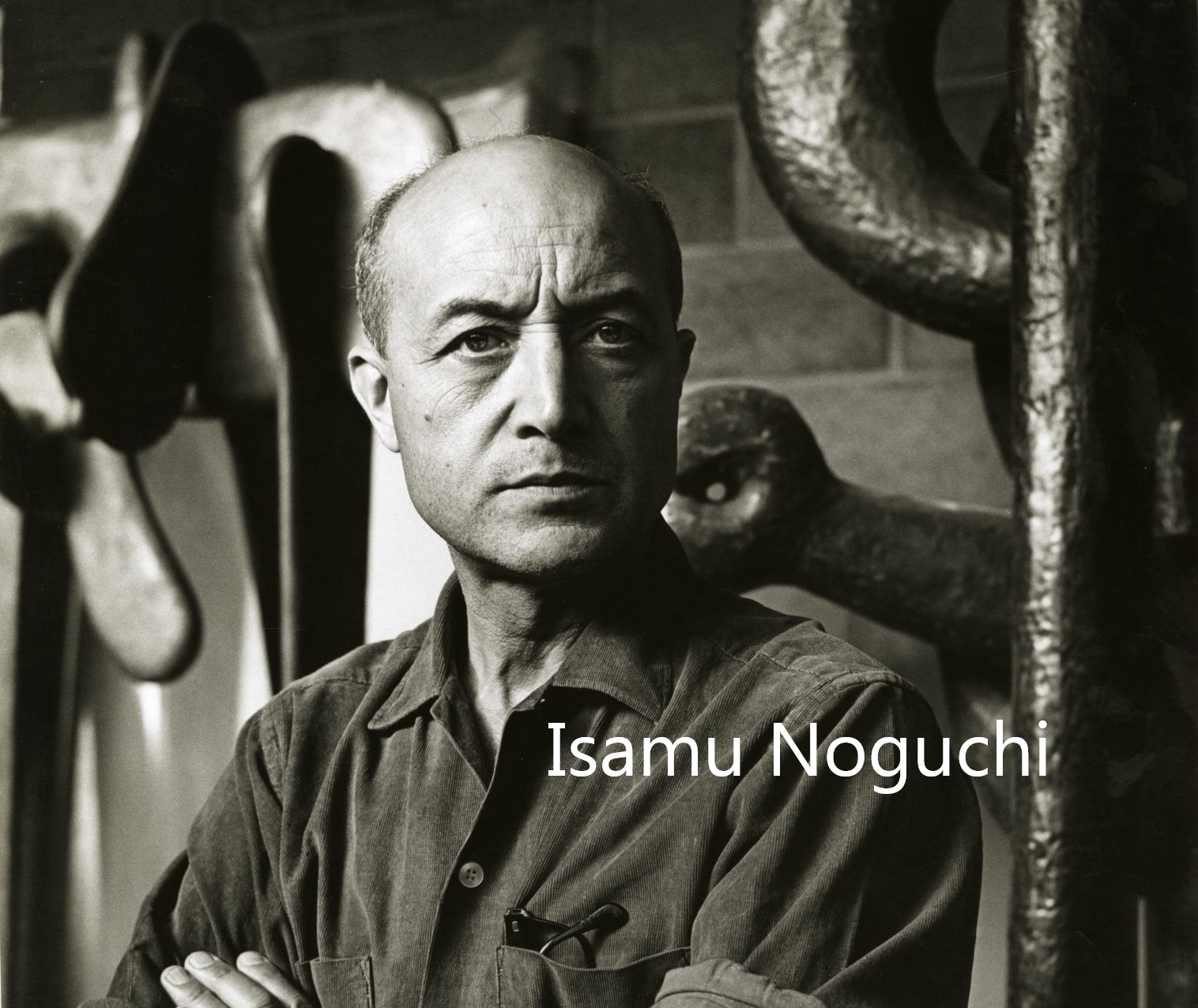
How a Mixed-Heritage Artist Defied Expectations and Changed Modern Design Forever
Picture this: Los Angeles, 1904. A Japanese poet abandons his pregnant American girlfriend three months before their son is born. That baby would grow up to become one of the most influential artists and designers of the 20th century, a man whose paper lamps and sculptural furniture would grace museums and living rooms around the world. This is the story of Isamu Noguchi—and trust me, it’s a wild ride.
The Artist Nobody Wanted
Isamu Noguchi’s life reads like a novel you couldn’t put down. Born to his father, Yone Noguchi, a celebrated Japanese poet, and mother, Léonie Gilmour, an American writer, Isamu spent his early years bouncing between two cultures, never quite fitting into either. When he was two, Leonie Gilmour moved them to Japan to reunite with his Japanese father, but the reunion was a disaster. By the time Isamu was nine, his father had married a Japanese woman and wanted nothing to do with his son.
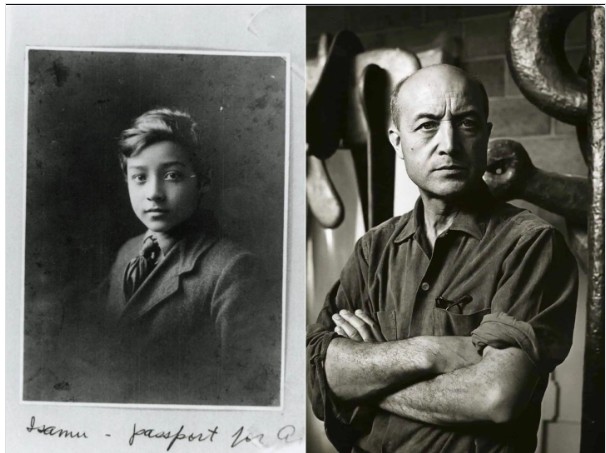
At 13, his mother shipped Isamu off to boarding school in Indiana. Alone in America, the mixed-race kid with the complicated family history threw himself into his studies—and eventually, into art. Here’s where the story gets juicy: his first art teacher, none other than Gutzon Borglum (who would later carve Mount Rushmore), told young Noguchi he had no talent and would “never be a sculptor.”
Ouch. But if there’s one thing Noguchi had in spades, it was determination.
From Academic Sculptor to Modern Master
Fast forward to 1922. Noguchi’s mother, still convinced her son belonged in the arts, pushed him to take night classes at the Leonardo da Vinci Art School while studying premed at Columbia University. Within months, he’d dropped out of Columbia entirely and opened his own studio, creating traditional portrait busts to pay the bills.
Then came the moment that changed everything. In 1926, Noguchi saw an exhibition of Constantin Brancusi‘s work in New York. The Romanian sculptor’s organic, abstract forms hit Noguchi like a lightning bolt. He won a Guggenheim Fellowship, headed to Paris in 1927, and somehow talked his way into becoming Brancusi’s assistant. For seven months, he learned to carve directly into stone and wood, absorbing Brancusi’s philosophy that sculpture should reveal the essential nature of its materials.
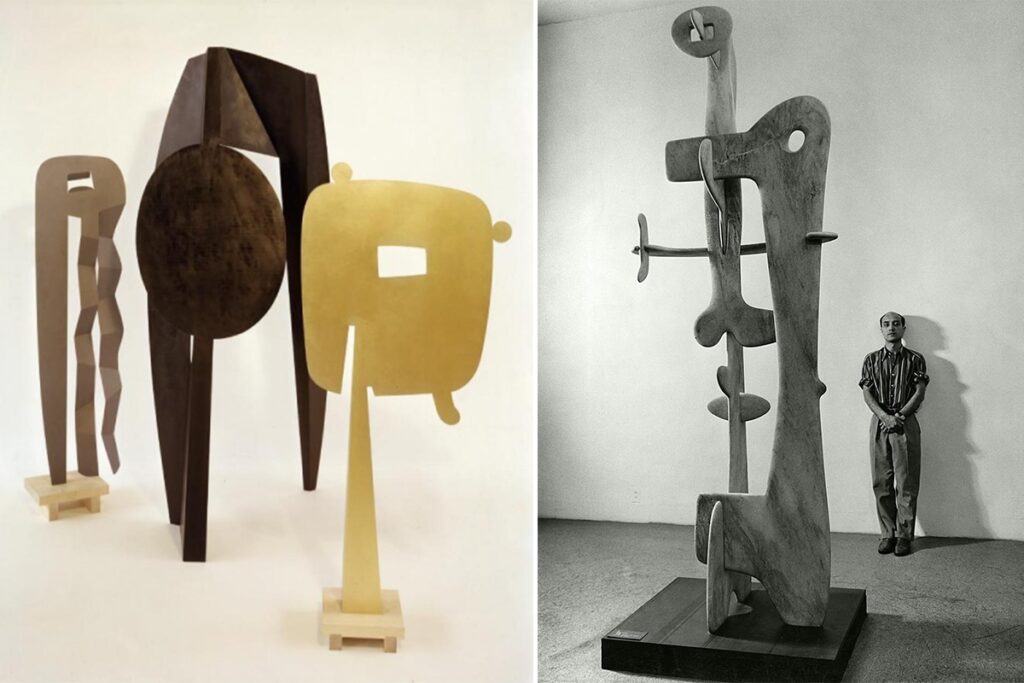
Noguchi returned to New York in 1929 a transformed artist, ready to shake up the American art scene. He exhibited abstract sculptures, befriended the emerging modernist crowd (including Alexander Calder), and started designing everything from stage sets for Martha Graham to public monuments. His work began blending Eastern and Western aesthetics in ways nobody had seen before—smooth, organic forms that felt simultaneously ancient and ultra-modern.
The Internment Camp and the Table That Changed Everything
Here’s where Noguchi’s story intersects with one of America’s darkest chapters. After Pearl Harbor in 1941, when the US government forced over 100,000 Japanese Americans into internment camps, Noguchi—living safely on the East Coast—voluntarily entered a camp in Arizona. He wanted to help his fellow Japanese Americans and document their experience. It was a noble gesture that turned into a nightmare when he realized he was essentially a prisoner, like everyone else.
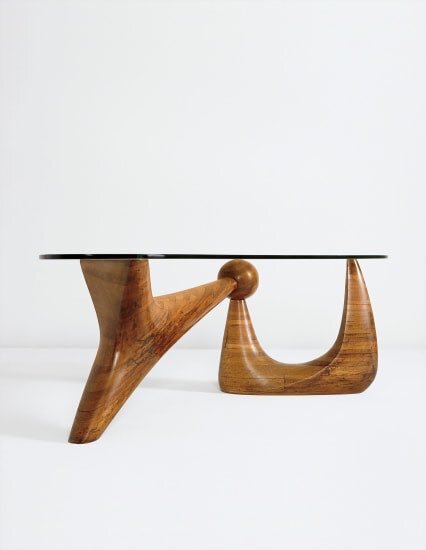
While stuck in the camp for six months, Noguchi saw something that made his blood boil: an advertisement for a coffee table that looked suspiciously like a design he’d created in 1939 for the president of MoMA. The designer, T.H. Robsjohn-Gibbings, stole Noguchi’s concept and ran with it. When Noguchi confronted him after getting out of the camp, Robsjohn-Gibbings smugly replied that “anybody could make a three-legged table.”
A Quite Revenge
“In revenge,” Noguchi later wrote, “I made my own variant of my own table.”
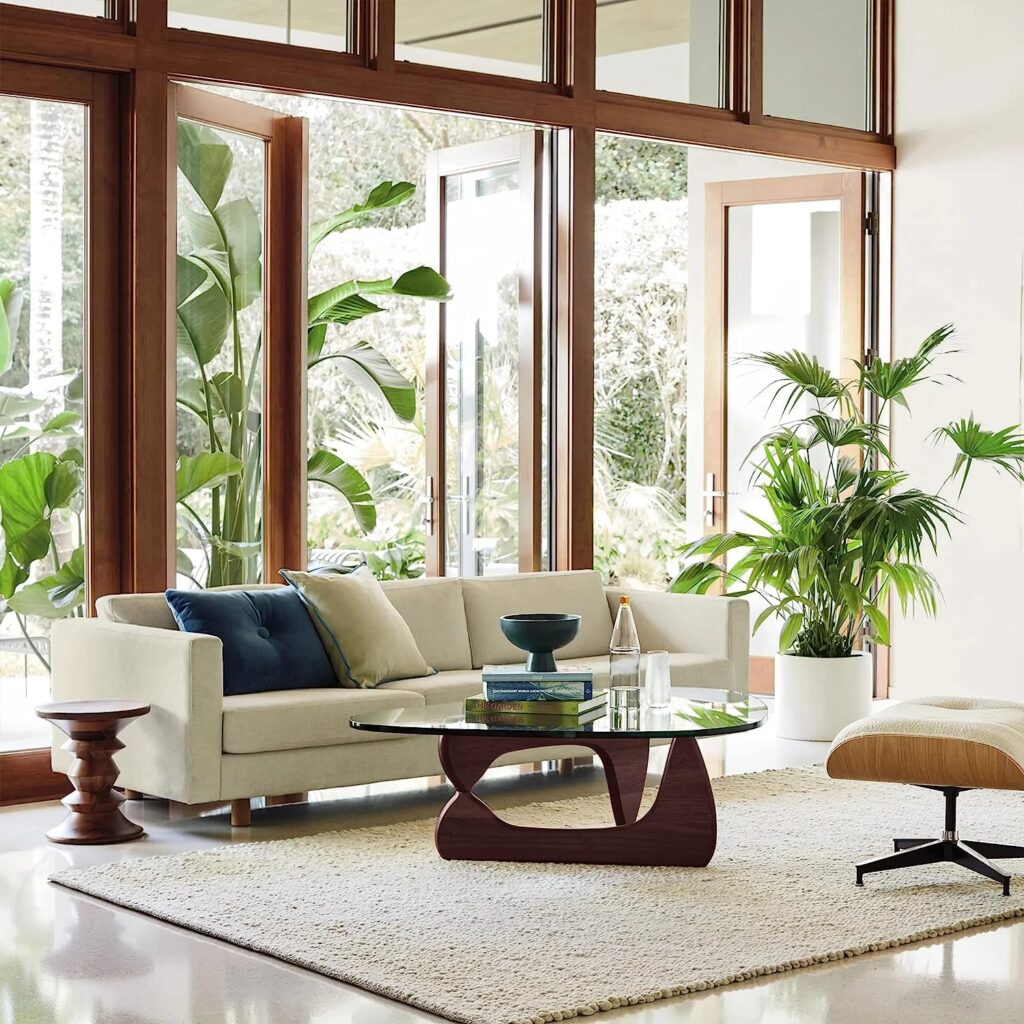
And what a revenge it was. In 1947, famous furniture designer George Nelson used Noguchi’s drawing to illustrate an article called “How to Make a Table” in a Herman Miller catalog. The furniture company loved it and put the design into production. The iconic Noguchi Table (model IN-50)—with its sculptural wooden base and elegant glass top—became an instant classic and remains in production today, nearly 80 years later.
Noguchi believed this table was his “only true success” in furniture design. It perfectly embodied his philosophy that “everything is sculpture” and that art should be part of everyday life, not locked away in museums.
The Akari Revolution: When Japan Called Him Home
Just when you think Noguchi’s story couldn’t get more interesting, it does. In 1951, while visiting Japan to design peace bridges in Hiroshima, he took a detour to Gifu, a town famous for its traditional paper lantern making. The industry was dying—cheap imports and the shift to electricity had reduced the skilled craftsmen to making tacky party decorations.
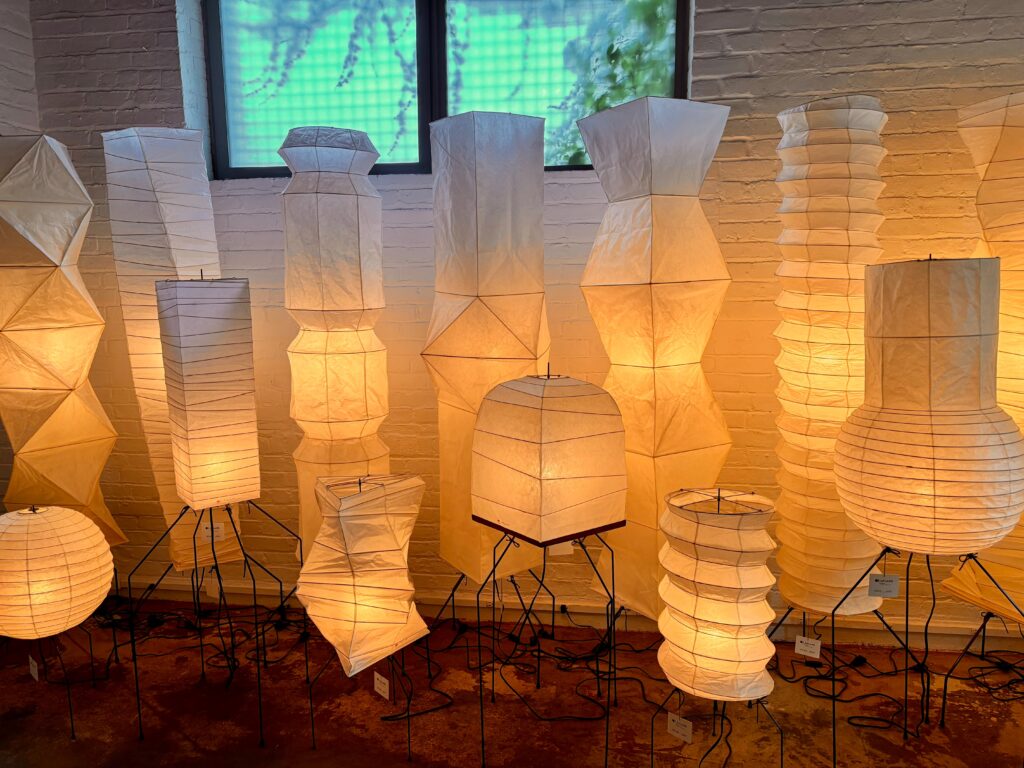
The mayor of Gifu approached Noguchi with a plea: could he help modernize their lanterns and revive the industry?
Noguchi visited the workshops, saw the beautiful washi paper made from mulberry bark and the intricate bamboo ribbing techniques, and was inspired. According to legend, he sketched the first Akari designs overnight. He replaced candles with light bulbs, streamlined the forms into sculptural shapes, and gave them a name that meant both “light” and “weightlessness” in Japanese.
The Rocky Reception Nobody Talks About
Here’s the part that surprised me when I dug into the research: the Akari lamps were NOT an immediate hit in Japan. Local reporters who saw the first prototypes called them “deformed Gifu lanterns.” The shapes didn’t conform to what traditional Japanese lanterns were supposed to look like, and many assumed Noguchi had designed them purely for commercial reasons—a bit of a burn coming from his own cultural heritage.
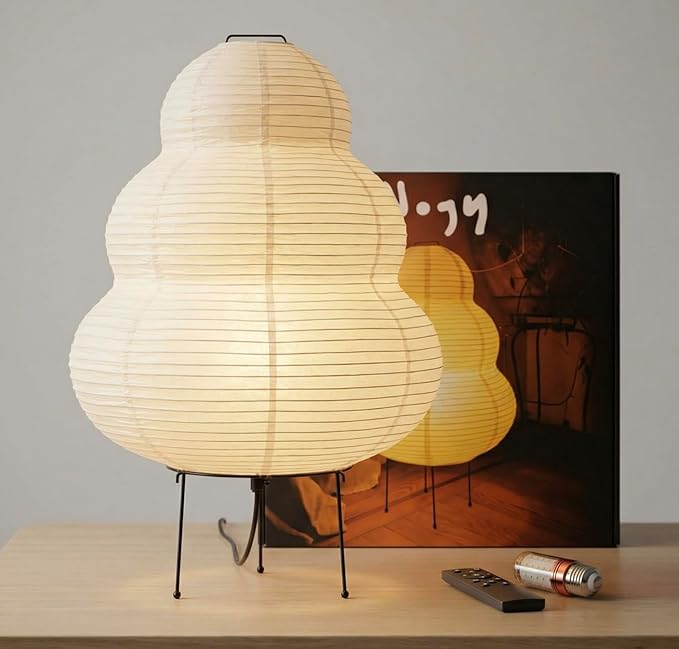
But Noguchi wasn’t designing for the Japanese market alone. He was creating what he called “light sculptures”—pieces that were simultaneously art and functional objects. And guess what? The West went absolutely crazy for them. By the late 1950s, despite competition from cheap knockoffs that flooded the market, Noguchi had sold his handmade lamps to renowned dealers across America and Europe.
The secret to his success? He stood firm on quality and authenticity. While competitors offered cheap imitations, Noguchi insisted on traditional handcrafted methods at the original Ozeki & Co. manufacturer in Gifu. He even created a distinctive sun-and-moon logo (resembling the Japanese character for “brightness”) to mark authentic pieces and combat the copycats.
Sound familiar? The same battle between authentic and replica is still happening today—which is exactly what we talked about in the lamp comparison article!
The Commercial Success Story
Now let’s talk numbers and market reception, because this is where it gets really interesting. Noguchi’s commercial designs weren’t just artistic statements—they were wildly successful products that are still manufactured today.
The Herman Miller Era (1947-1973, then 1984-present):
The Noguchi Table became one of Herman Miller’s most iconic pieces. Production ran from 1947 to 1973, when it was discontinued. The table immediately became a collector’s item, with vintage examples selling for serious money. In 1984, Herman Miller brought it back, and it’s been in continuous production ever since. Today, authentic Noguchi Tables retail for $2,000-$4,000 new, while early cherry wood examples from the first year of production can fetch over $10,000 at auction. The most expensive? That original 1939 Goodyear Table sold for a staggering $4.45 million in 2014.
The Knoll Partnership (Late 1950s-1960s):
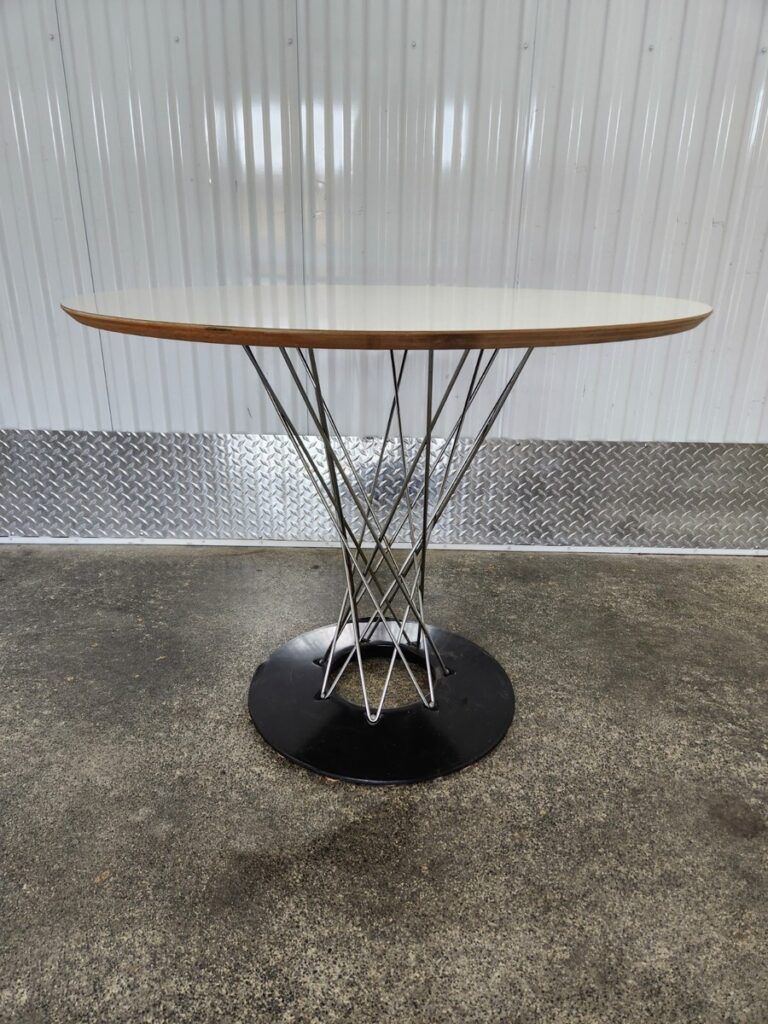
Noguchi also designed for Knoll, creating the dynamic Cyclone table (1953) and rocking stool. These pieces, with their cast-iron bases and modernist flair, became instant classics. Vintage Cyclone tables regularly sell for $1,500-$3,000 today.
The Akari Phenomenon (1951-present):
The Akari lamps might be Noguchi’s most commercially successful design. Over 35 years of visits to Gifu, he created more than 200 different models, ranging from 24 to 290 centimeters. They became icons of 1950s modern design and helped establish the Japandi aesthetic decades before that term even existed.
Despite fierce competition from replicas, authentic Akari lamps commanded premium prices. The handmade quality, authentic washi paper, and traditional bamboo construction justified the higher cost. In the 1950s and 60s, Bonniers—a pioneering New York department store on Madison Avenue—became the first US distributor and held the first international Akari exhibition in 1955.
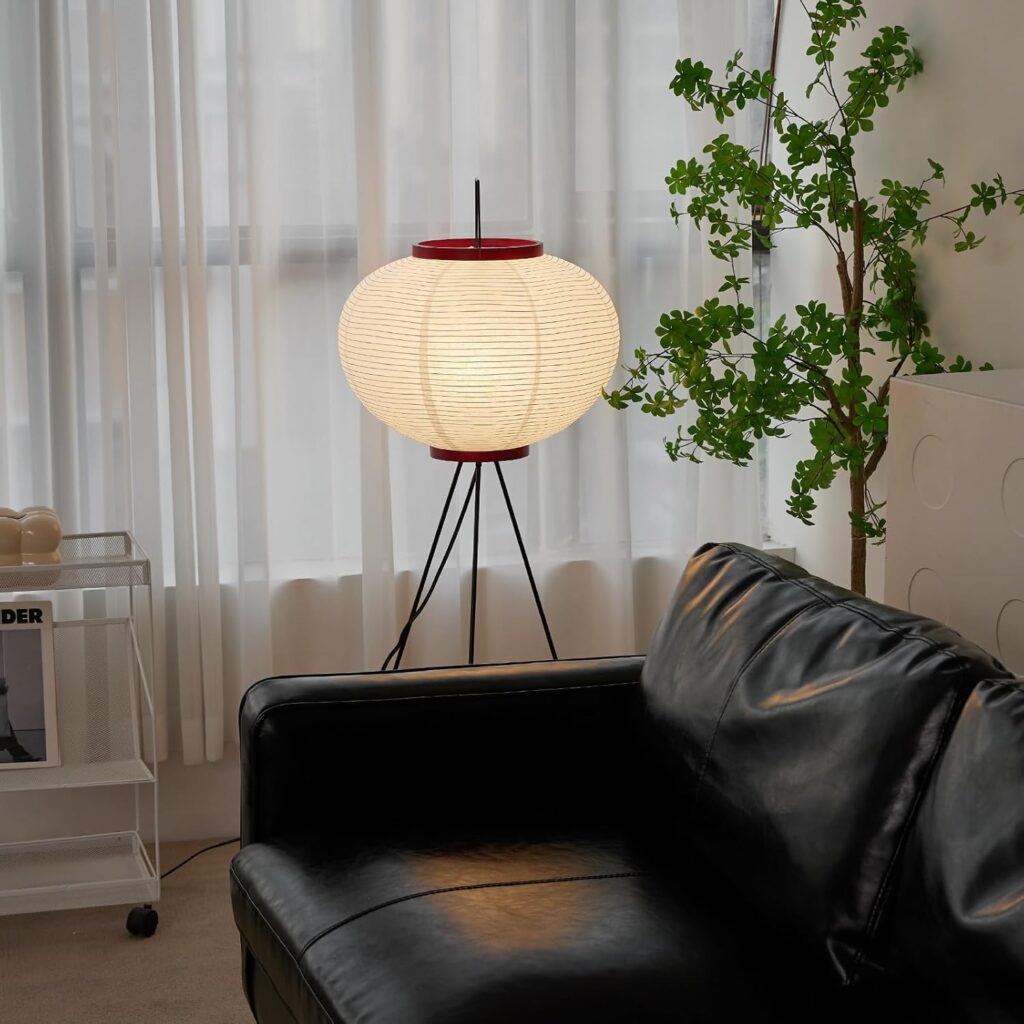
By the 1980s, Noguchi’s reputation had grown so much that he represented the United States at the 1986 Venice Biennale, showcasing his Akari light sculptures to international acclaim. Today, authentic Akari lamps retail from $200-$1,000+ depending on size, while vintage examples can sell for thousands at auction.
The Recognition He Deserved
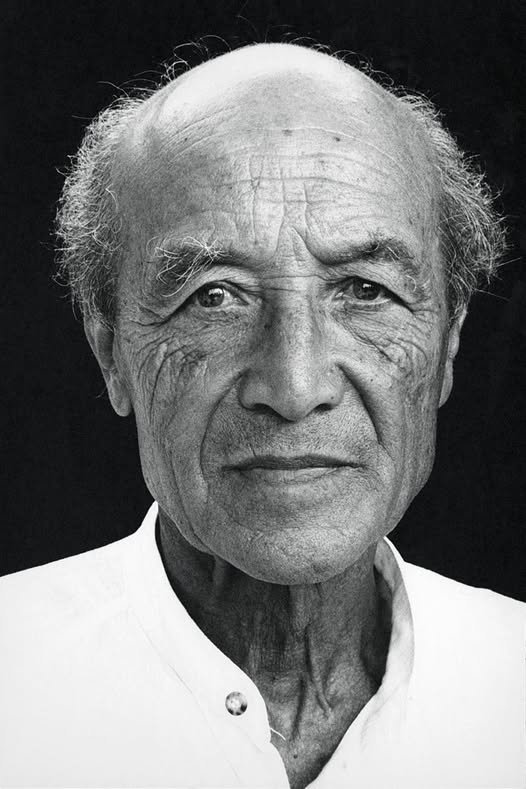
The art world eventually caught up with what furniture buyers already knew: Noguchi was a genius. In 1968, the Whitney Museum gave him his first major retrospective. Awards followed: the Edward MacDowell Medal (1982), the Kyoto Prize in Arts (1986), and the National Medal of Arts (1987).
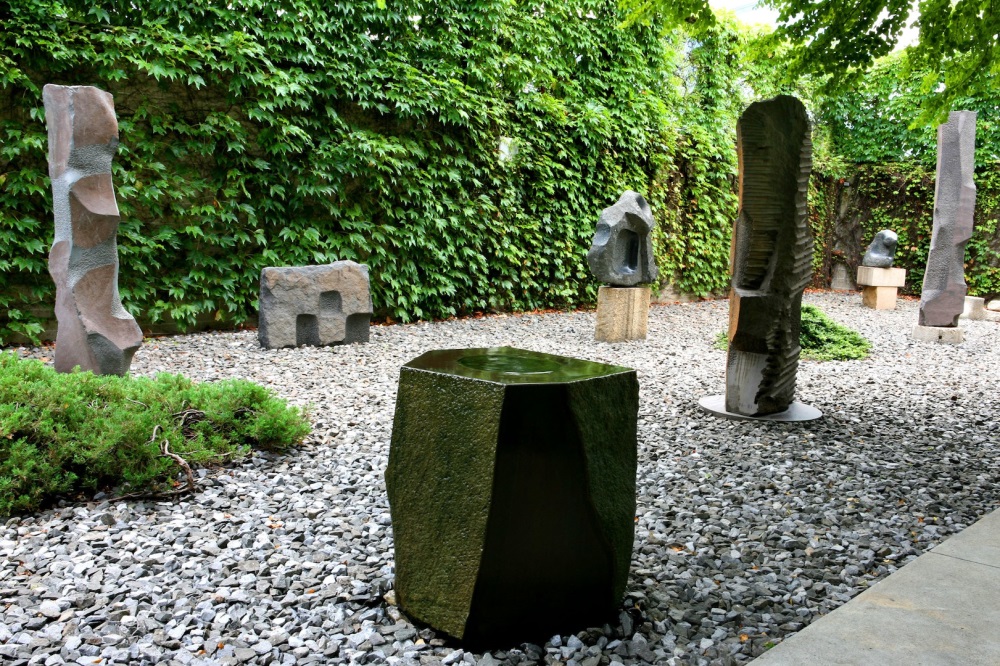
In 1985, Noguchi opened The Isamu Noguchi Garden Museum in Long Island City, New York—a serene space designed to showcase his life’s work. It was the culmination of his belief that sculpture should exist in public spaces where people could experience it as part of daily life.
When Noguchi died in 1988 at age 84, The New York Times called him “a versatile and prolific sculptor whose earthy stones and meditative gardens bridging East and West have become landmarks of 20th-century art.”
His Legacy & Why It Matters
What makes Noguchi’s commercial success so remarkable is that he never saw mass production as selling out. While many fine artists looked down on commercial work, Noguchi actively sought opportunities to bring his designs to a wider audience. As early as 1937, he’d designed a Bakelite intercom for Zenith Radio Corporation. His philosophy was simple: if art could improve daily life, why shouldn’t it be accessible?
This approach paid off brilliantly. Today, Noguchi’s designs generate millions in annual sales through Herman Miller, Vitra (which produces his designs in Europe), and the original Akari manufacturers. His work appears in every major design museum in the world, from the Met to MoMA to the Art Institute of Chicago.
The secondary market for vintage Noguchi pieces is equally robust. Collectors pay premium prices for early examples, especially first-year cherry wood Noguchi Tables and early Akari lamps with the original red seal stamps. Even his lesser-known pieces—the Rudder table, various stools, and experimental designs—command strong prices at auction.
Why It Matters
Noguchi’s story isn’t just about a talented artist who made beautiful things. It’s about someone who refused to be limited by categories or expectations. He was too American for the Japanese, too Japanese for the Americans, too commercial for fine art, too artistic for furniture design. So he carved out his own path, creating work that defied all those boundaries.
Not bad for a kid whose first art teacher told him he’d never be a sculptor.
Leave a Reply